May 10, 202220 min readBertran Ruiz
Project management tips that drive success

Contents
Are you a CIO, a Research Director, a Senior Project Manager or a PMO looking to build a strong project management culture and lead a successful business transformation? Do you want to optimize your project management? You're in the right place!
After successfully launching the CIO Revolution podcast, we now want to build the community of Transformation Pros to share a hidden know-how: "HOW do you actually succeed at transforming?" With this in mind, we're offering you a large-format guide, a hand-picked selection of articles packed with practical, operational tips to help people challenge their organizations in a pragmatic and efficient way.
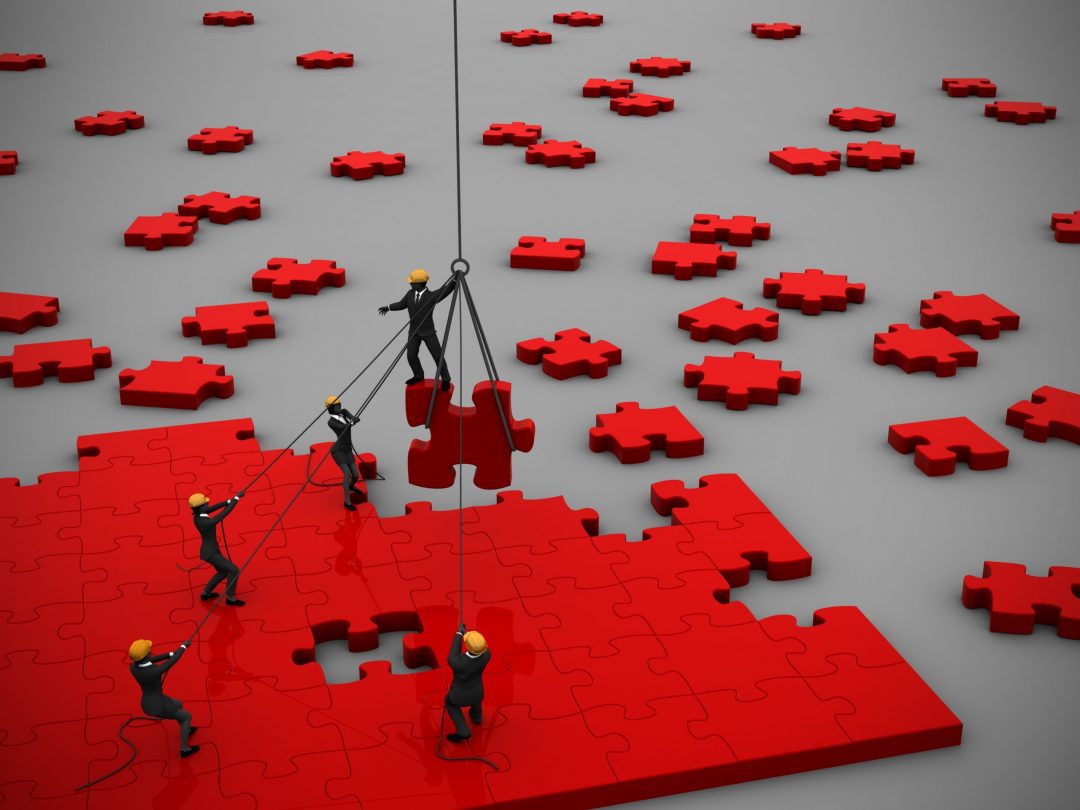
Helping your company embrace project management
Does knowing how to type in Word make you a good writer? No! Likewise, mastering a PM tool or a Gantt chart will never make you a project management champion.
Responsibility sharing, task parallelization, reporting, risk analysis... The idea of a project management approach is about how you steer, the art of using the tools, and, ultimately, the best way to coordinate the action.
An academic definition reminds us that a project covers "all the actions carried out by a work team over a predefined period to create or change a product or service in order to meet the need of a company or a client."
The issue: everyone knows what a project is, but, generally speaking, no one puts the same definition and delivery approach behind it.
Far removed from the traditional structure companies are used to, this approach means properly taking project typologies into account: micro, strategic, multi-project, cross-functional, internal... In short: really starting from a clear typology to pin down the three main types of framing / execution approach.
Standardizing your approach will make your delivery culture more effective and will also meet the need for uniform reporting across the company.
More than a universal method, what interests us here is a whole — several steps you can't afford to miss to dodge the pitfalls of project management.
To find out more, follow the guide: read this article: "How to set up a project management approach in my company".
How to succeed in a cross-functional project?
Collaborating on a cross-functional project means breaking down company silos. This is not something you can improvise. A transformation project involves many actors and processes that usually come from different departments. It's not easy to be efficient and present on every front!
In this context, project management has to be reinvented to work cross-functionally.
There are three main prerequisites to keep in mind:
- Alignment with the company strategy
- The issue must be "P.U.R." — Painful, Urgent and Recognized
- A specific allocated budget
We're going to change the way you look at (really) collaborating with no reporting line — but not without structure!
Building the cross-functional team, streamlining, a method to de-risk: we tell you everything about the key elements of good execution in project management in the article: How to succeed in a cross-functional project?
How to do a good project scoping?
No matter your company, its size, or its industry... 80% of delays on IT projects are due to poor scoping!
We're going to look at the content of the scoping document in project management. In a way, a preparatory version of the specifications, including the technical aspects.
The document is used to optimize the future execution of your projects. To help project management teams ask the right questions (problem to solve, expected benefits, goals / programs it contributes to, essential criteria and features, effort / budget I'm willing to invest, etc.). Doing this scoping collaboratively with the business or IT on standardized project templates is a very good practice. It's the price to pay to get ready to run an effective project!
Discover how to do a good project scoping in this article.
How to conduct project risk analysis?
Experience teaches us that nothing ever goes as planned in project management. And that, if you're not careful, there's a good chance you'll "blow up" the deadlines and budgets — and, on top of that, the expected quality won't be there! More than just hazards and surprises, the goal really is to reduce accidents through genuine, continuous awareness and control of risk.
In traditional project management, the common practice is to identify, assess and prevent (or mitigate) the risks of a project that could impact the desired outcomes. In reality, this practice is often a "once and for all" action, at kickoff — and, lacking real control, it often tended to look like an Excel bureaucratic nightmare.
And yet, risk management has perhaps never been as important as it is today. Beyond mastering an initial goal and the famous "cost-quality-time" trio, how do you keep risk analysis alive throughout the project ? A project risk analysis will help you multiply your chances of success. We tell you everything about why and how to implement it — and above all how not to turn this vital process into a "deadly" bureaucratic nightmare!
Do you like risk? Read the most up-to-date article on project risk analysis !
Everything about the project scoping document
The project manager's only mission is not to oversee execution. They are also involved in the upstream and definition phases of the project's actions.
And at this stage, our best advice might be to suggest you delay the pleasure of launching a project to check its viability. To make sure it has the minimum qualities needed to reach completion.
That's the purpose of the scoping document. To be able to approach it in the best conditions, they will need, in a single document, to gather all the key information from the prior technical analyses before launch. A document that will let them define the "scope" and the goals of the project and share its essential information with everyone who will be involved in running it.
It's the first precise "medium" that will be assessed by your stakeholders. A fundamental element of your project management.
This summary document is called a scoping document. It presents the context of the project, the goals to reach, the overall organization... In short, everything needed to properly frame the project and secure its execution.
Discover the must-have content to include in a scoping document : Everything about the project scoping document.
How to create a project budget?
If, after several months of work, you realize you don't have the budget needed to bring the project to completion, it looks bad... And yet it's one of the most common causes of project failure!
Hence the importance of knowing how to define a budget and, above all, of quantifying a problem to prioritize investment plans.
Take, for example, the classic trap of a 100% "build" budget that skips the costs of operating and maintaining the RUN. Or the static budget that's never re-evaluated. Or the great classic: the perfect budget — which leaves out the cash reserve you need to handle the unexpected. In large real-estate programs in the construction sector, nearly 30% of costs are set aside for contingencies linked to delays and defects.
In the article "How to create a project budget?", we share our best tips to do better with the same means and take care of your wallet. And why not let the steering committee hand out well-deserved raises!
You're one click away from everything about the project forecast budget.
Budgeting a project without messing it up
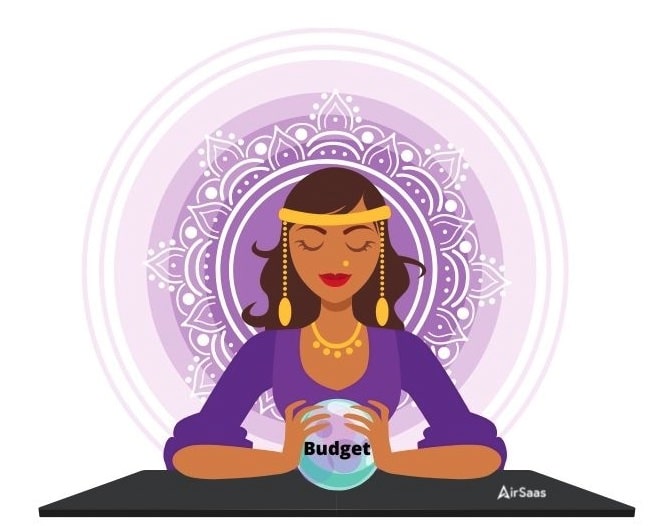
The budget is the key medium in your project approach. Beyond giving you detailed visibility over all your project's revenues and expenses. Thanks to it, you can anticipate the obstacles you might run into and set a course!
You think you've mastered the basics of the forecast budget?
And yet 53% of projects exceed their budget forecasts by 189%!
Improve your vision by discovering empirical & pragmatic implementation strategies. Analogy method, phased breakdown method, no-estimate method, product-budget vs project-budget approach ? Common mistakes and lessons learned from Matthieu Grymonprez, CDO/CIO of Adeo Group (Leroy Merlin, etc.)
In the article "Budgeting a project without messing it up", we'll do everything to reconcile tech and finance in the service of business transformation.
How to organize your project management?
The project milestone: a technique to sequence your projects intelligently
We share one conviction: strategic project steering must not / cannot be done by the task, but by the milestone!
Milestones give rhythm to projects, they allow better alignment of teams on the goals and a breakdown of projects into several key stages.
And above all, they are an alternative to micro-managing tasks and to the Gantt chart!
You still have to be able to define them well. To choose the right keywords for the milestone.
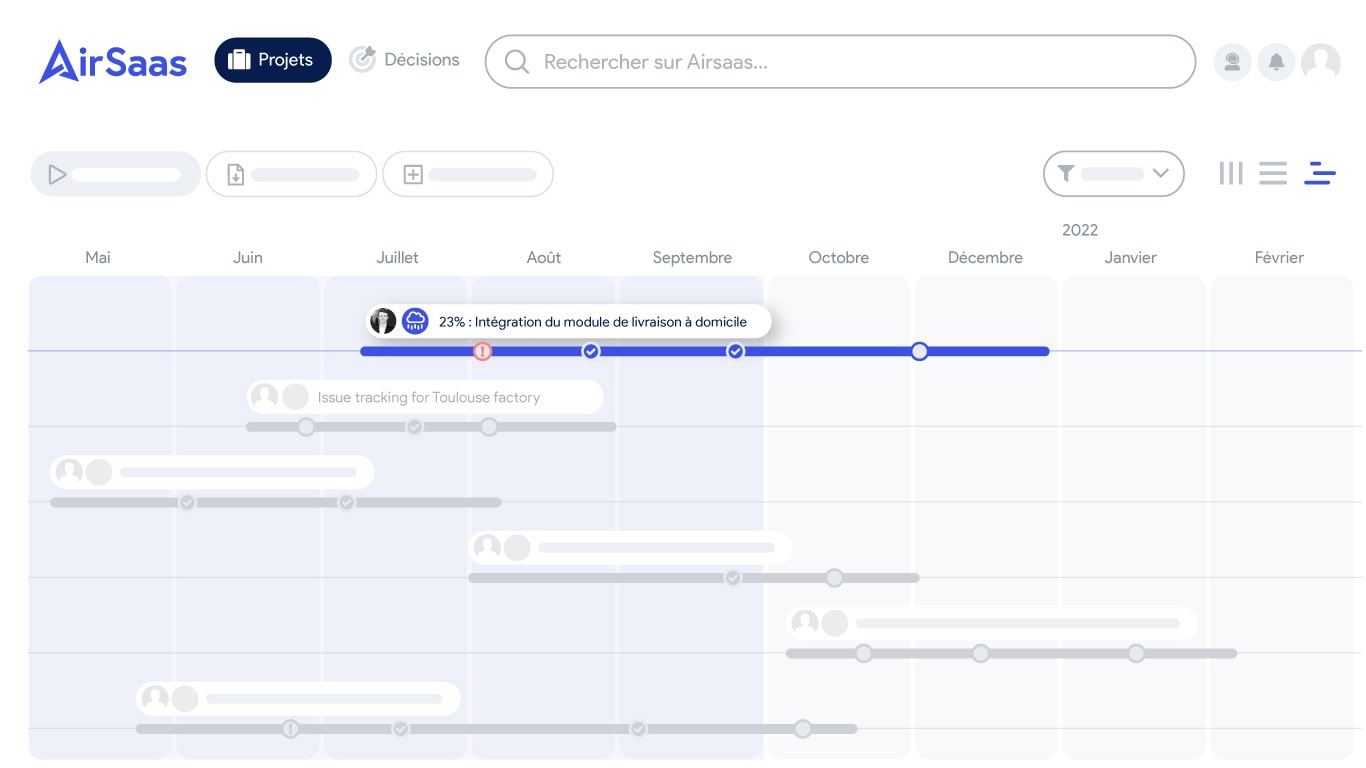
On AirSaas you can add project milestones and mark them as "done." They appear on the timeline and turn red when you're late.
To find out more, browse this reference article on the subject: your life is going to change! The project milestone: a technique to sequence your projects intelligently.
Macro planning: why and how to use it?
Your project management will quickly require a schedule to share with all stakeholders. The project team can help you produce this first snapshot, a kind of initial dashboard that clarifies a goal.
The macro plan specifies how you envision the projection of your project over time. We also call it a " project roadmap ". Produced right from the initiation phase, when there is no specifications document yet, this document will detail the tasks to carry out and the key stages. You'll also indicate which phases will run in parallel and which others must follow one another. A true "helicopter view" of the future project, this tool logically accompanies the project scoping document.
To find out more, read the article: Macro planning: why and how to use it?
The Gantt chart: How to use it?
Gantt and its cousin the CPM (Critical Path Method, which appeared in the 1950s) are methods used to simplify project tracking. The Gantt chart is an essential foundation for anyone who wants to talk about project management.
Thanks to its simplicity, the Gantt chart lets you grasp at a glance the various activities to carry out to execute the project, as well as their organization over time.
It's worth pausing for a moment on the origin of this tool.
Flashback to 1917!
Henry Laurence Gantt was an engineer, a disciple of Taylor. He was given responsibility for optimizing the output of a workshop. Several manufacturing stages coexisted. He observed that some operations depended on others being completed, thus weaving a network of dependencies between them. From this he deduced that some operations could be carried out in parallel, and that others could follow one another.
Aiming to optimize manufacturing time by using this option of working in parallel, he developed a system of graphical representation of activities on a time scale: the bar chart. Each task to be carried out is represented by a bar whose length is proportional to its estimated duration.
His key contribution? A graphical display, a kind of medium, a communication tool between the actors in the process.
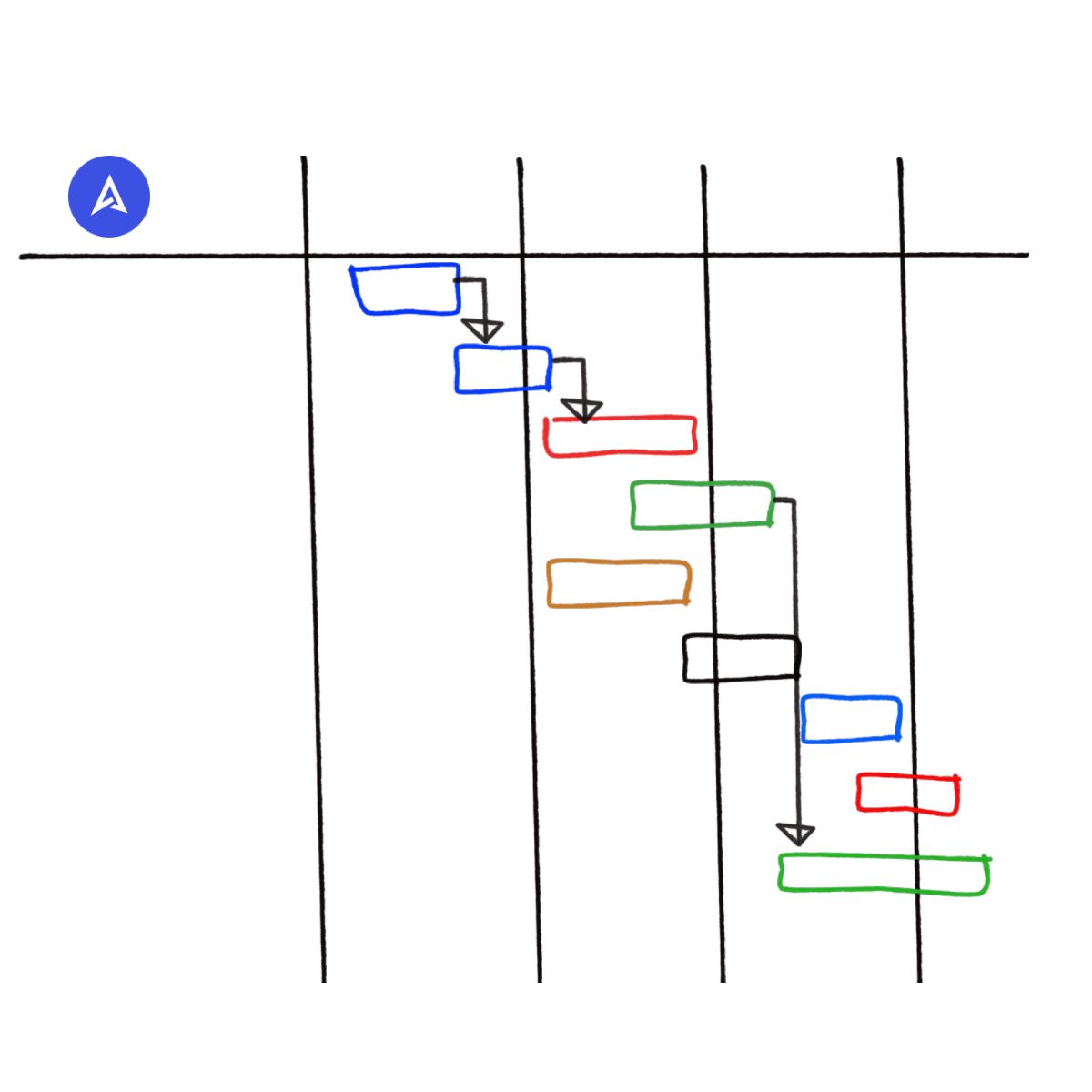
The information is represented visually:
- On the vertical axis, the list of tasks to carry out
- On the horizontal axis, the units of time
The Gantt chart is therefore one of the ways to avoid running into a bottleneck and falling behind on planned deadlines.
Whether or not you're a seasoned project manager, we recommend a little update, to discover why and how to use and go beyond the limits of the Gantt chart, nearly a century after it was created! What are the alternatives to task control and micro-management? How can the milestone, on the contrary, help you sequence your projects intelligently?
We tell you everything in the reference article: "The Gantt chart: how to use it?"
How to set a relevant "project weather"?
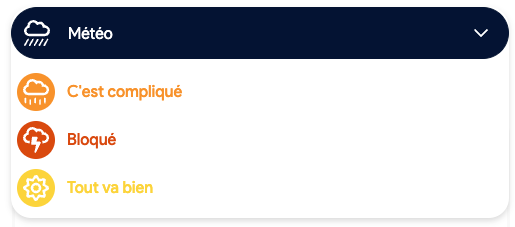
The project weather uses the metaphor of the weather to communicate about a project's status. It's even the number-one indicator of a project's health!
Intimately tied to the continuous-improvement process, the tracking and analysis of indicators provide essential information to teams.
Often mocked for its simplistic side, the weather process is nonetheless an unsuspected lever for effective management.
To be relevant, ideally, this reporting indicator should be:
- Understandable by all : ideally, its definition will be the result of the team's collaborative work
- Targeted : the information-sharing needs it addresses must be clearly defined
- Shared so that everyone moves in the same direction, toward one and the same goal
Yes. Running a project takes us through emotional "roller coasters". Using a simple visual language will let you pass on clear messages to management. Among all the tracking tools it's your best ally.
Rediscover a powerful tool to make your communication readable: How to make a clear and understandable project weather?
The modern project management dashboard

Digital acceleration has made many approaches obsolete, along with the project management dashboards tied to them. No account taken of collaboration. No integration with existing tools. Unsuitable data granularity. User interfaces that aren't up to par. And yet, the success of digital projects is becoming a sine qua non condition for organizations' competitiveness !
Paradox: any data warehouse or CRM tool offers a good overall view of sales performance with varied reports, whereas the operational performance of business transformation programs is, for its part, very hard to visualize and share.
How do you design your dashboard in light of your company's own characteristics ? How do you co-build it with involved business leaders ?
To step into the 21st century, discover the modern project management dashboard your teams have been waiting for!
4 meetings to ensure the day-to-day management of your projects
Project tracking to keep your stakeholders aligned
No good strategy execution without the buy-in of your stakeholders!
A reminder: project tracking aims to check that execution follows the schedule set, the expected quality, and that human, material and financial resources are well used. It remains a tool for control and validation.
Let's also remember that the project sits inside a bundle of three constraints: time, quality, cost. Any significant drift will inevitably make it "bump" into at least one of these constraints.
Take the example of the time constraint: a delay occurs on a task on the critical path. But the time constraint is imperative: to meet the deadlines, either you keep the planned quality but at a higher cost (you bring in reinforcements on the team, who have to be trained, you call on more subcontracting...), or you stay within the planned cost envelope, but agree to compromise on certain aspects of quality. This is the kind of situation you'll be facing.
To be able to make these kinds of decisions with full knowledge of the facts, several factors must come together:
- Being able to spot the slippages : this will be the role of dashboards and tracking tables, along with the whole information and alert system put in place
- Being able to analyze the real causes of the problem to establish a reliable diagnosis
- Establishing an action plan, i.e. finding suitable solutions and making decisions — decisions that fall to the project manager first, calling on the sponsor when the decisions are outside their scope of responsibility, and calling on the steering committee in the most impactful cases.
That's the purpose of project tracking methods and tools.
As for stakeholders, they are people who have some interest in the outcome of your project. Either because they will affect it or be affected by it. And believe it or not, there are always more of them than you think! This somewhat vague notion covers very different realities.
Let's admit it: project tracking usually deals little, or badly, with stakeholders. The arrival of new generations of PPM tools and platforms connected to the various tools has changed the game.
In this article we chose to highlight 5 levers to consider to maintain a win-win relationship and keep your stakeholders aligned.
Use of platforms, the place of communication, change management, the importance of rituals, IT best practices, use of the power/interest stakeholder-positioning matrix. The article to read to set your relationships in a good direction: Project tracking to keep stakeholders aligned.
How to do a good project progress review?
Which frequency should you choose, which standard presentation should you use, how do you adapt your reporting to each type of person, of reader?
The 3 levers of an effective progress-tracking process are:
- A continuous frequency
- A standardization
- An adaptation of the formats to the types of projects and to the target audiences
On this last point, a reminder is in order: 1 type of project = 1 type of progress review.
The issue: since everything is a project (micro-project, cross-functional project, corporate, "POC", sandbox project, strategic, legal, executive, department...) it's easy to get lost.
By not typing them, you risk the "cannon for a fly" effect. That is, wheeling out the heavy artillery of your project management for nothing.
The fundamentals and advanced uses of this process are within our reach. The importance of visual tools, the use of platforms, the sponsor's role, automation, synchronization with your other tools...
We selected 12 practices and / or lessons learned from PMOs/CIOs. We take stock of how to do a good project progress review.
The project review: a checkpoint to learn the lessons from your mistakes
Project reviews take place at the end of each major phase and are often planned from the very start of the project. Whether they cover technical, product, timeline, or sprint-phase aspects, the decisions made in a project review serve as a basis for the rest of the project's execution .
It's one of the main ingredients of a tight-knit project team. A moment when you collectively decide on validating a milestone, on the actions.
During your project reviews, using project management KPIs will help you be sure you've moved on to the next phase of the project, without having missed any of the lessons you should have drawn from your difficulties.
Discover the reference article on the subject: The project review: a checkpoint to learn the lessons from your mistakes
"Project review" example and methodology
The review matters as much as the scoping and execution of a project. This key step will mark the end of your active management, of the contractual link. Succeeding at the project review is also about taking care of your exit, your image!
What is a project review? How do you run it effectively? What should it include? Why carry it out? What are the new trends? What are the 7 good habits of effective project reviews? How do other sectors run project reviews? And finally, are there template outlines you can use?
All these questions — and their answers too — are on the menu of the article: How to run an effective project review?
Project communication plan: how to avoid failure?
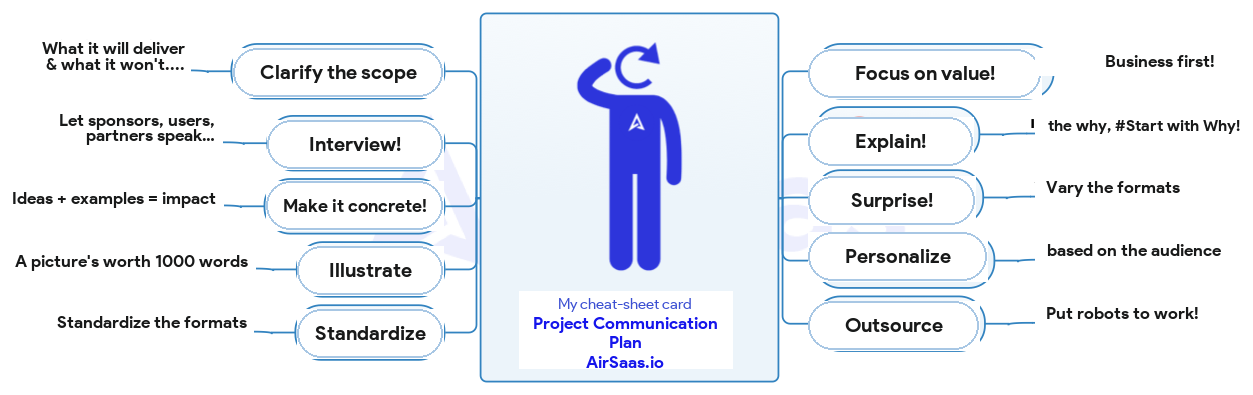
99% of project failures are linked to a poor communication plan! (unverifiable statistic from the Totally Subjective Institute :)
The communication plan is the operational, structured breakdown of a project's communication actions: "who says what, to whom, why, when, where? by what means and with what effect?".
To build it, you can use a 7-step method, based on the Lasswell matrix.
Let's say it clearly: the project team must take ownership of communicating. It's more than fundamental to properly organize the flow of all information, attention points and decisions made. It's the lack of transparency in written communication that is responsible for many failures.
It's worth remembering that "thinking through" your communication, investing the "right amount of time" in it, will let you align your stakeholders, give them a positive experience and save time on the operational side. Yes : the design of the communication plan is key to the project's progress.
Discover how to generate a "one-click communication" deck. We've also prepared five hacks to build a "21st-century" project communication plan. And finally the Do's & Don'ts of a project communication plan.
How to build an effective project report?
The importance of reporting in the efficiency of transformation projects is fundamental. It's with qualitative — versus quantitative — reporting sent at a high frequency that PMOs manage to better rally the whole company around cross-functional projects. The problem? Reporting takes a lot, far too much time.
And yet, used with a good methodology, project reporting is an action-oriented tool! It will help every reader, whatever their involvement or role in building the future product or service, to decide, with discernment, in full responsibility.
A true staging of information and data about a project, its analysis, its formatting and its interpretation have become the real challenges of effective management. With a common tool on which to share figures for your projects, it will be easier to build a shared vision and move in the same direction.
Collection, frequency, number of indicators, format, tools, the little extras that make all the difference... How to build an effective project report?
The "Flash Report" or flash report
Flash reports are decisive in your project management. They facilitate your decision-making processes and enable better execution.
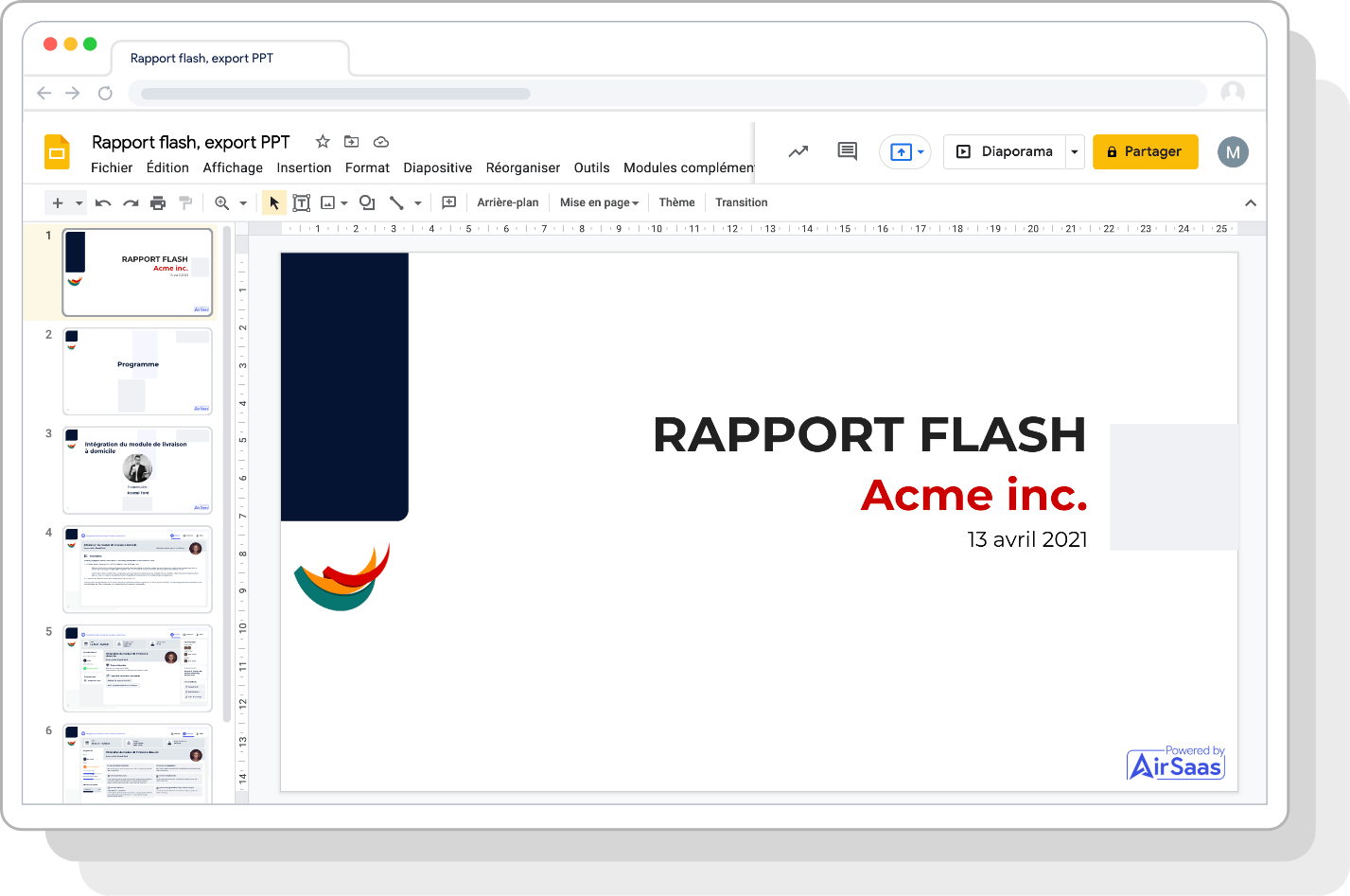
AirSaas's flash report is made up of two slides: one recaps all the scoping information, while the other contains all the information needed for the project's proper execution.
A good flash report is a concise summary of the progress of the various ongoing projects. Its purpose is to keep stakeholders up to date. The AirSaas solution's flash report includes introduction slides (schedule reminder, dashboard-report metrics, timeline, etc.) and, for each project, two slides containing the following information:
- A recap of the context
- The projects' progress "metrics"
- The data on how the teams feel
An "optimal" communication medium, the "flash reports" are crucial for better involvement of the company's stakeholders and, consequently, for the success of your project management. They complement good steering and schedule tracking.
Everything about the project sheet
The "ID card" of your project, this sheet contains the essential information for a first definition of the scope and the delivery: goals, sponsor, execution, supporters, organization, delivery-frequency of deliverables, resources, risks...
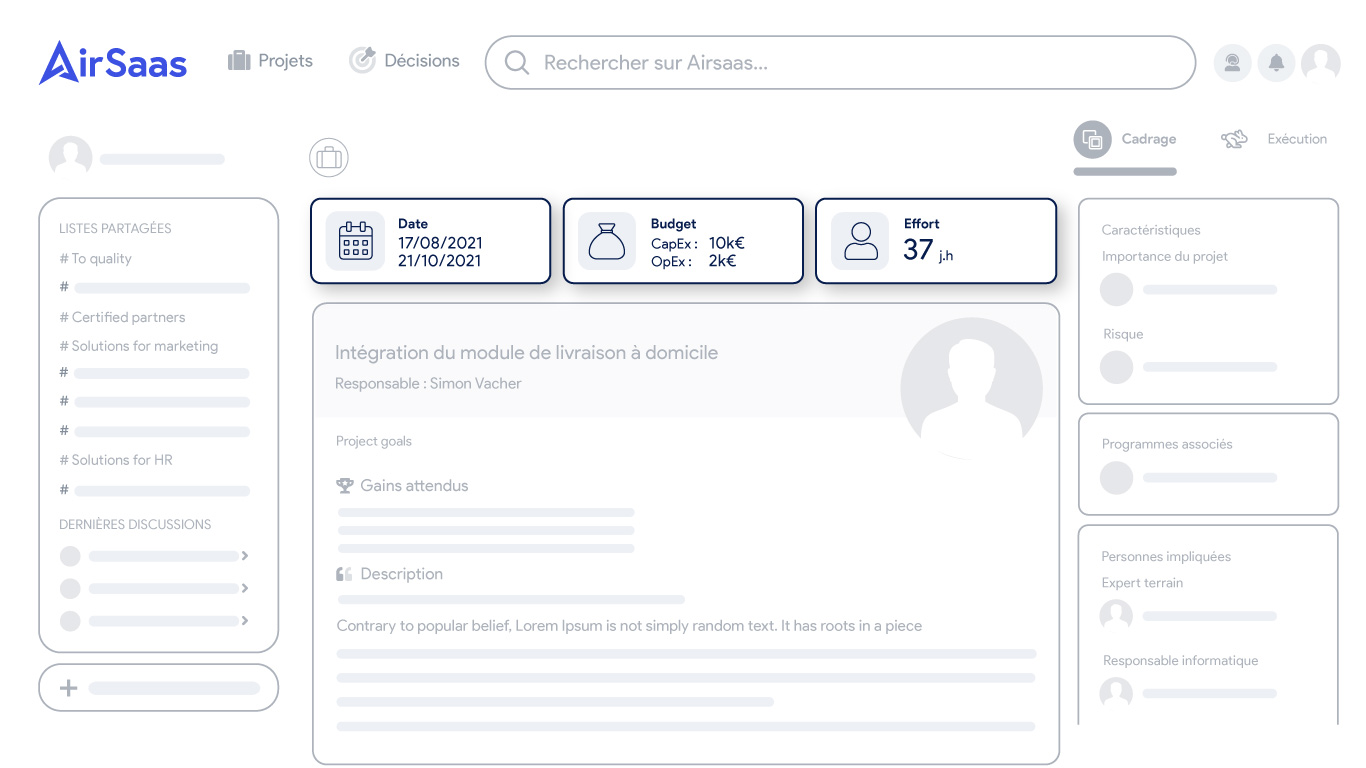
A project sheet is an essential tool because it contains the whole organization of the project or of part of it. It's a fundamental deliverable because the project manager lists in it all the phases, stages and actions that will have to be accomplished in running the project.
Point of vigilance: all projects are different! There is still no "one size fits all"! Your sheet must therefore adapt to the contexts as well as the stakes.
The most common project-sheet templates are the following:
- Pre-project, before validating a project
- Internal project, for contacts who are colleagues
- Multi-project: a single sheet can therefore group several sheets together
- Micro-project: a very brief document can suffice
But who writes it? Who validates it? What difference depending on the type: pre-project, multi-project, micro-project, internal project? And finally, is there a template to adapt? Don't reinvent the wheel and download our project-sheet template. Good news: we've prepared this project-sheet methodology (example).
Modern project management
Pandemic, Great Resignation, proliferation of topics, cross-functional management, hybrid work, AI, no-code... You've clearly noticed: you no longer run a project like in 1917, when Henry Laurence Gantt invented a model to optimize the work of a manufacturing workshop.
This VUCA world (Volatile, Uncertain, Complex and Ambiguous) has arrived!
Faced with this new context, a new kind of steering has emerged:
- Milestone-based steering
- Centralization of decisions
- One-click reporting
- New governance in project leadership / steering committees
- Collaborative methods
- Hybrid project management...
Which beliefs should we revisit to suffer less and fail less in project deliveries? What should we add to keep enjoyment and efficiency in the approach? Are there new trends to watch to track and anticipate the changes in project management?
Modern project management: the article to read to release the handbrake on your project management and the speed limiter on your company's transformation!
What if you took back control of your project portfolio?
Book a demo and discover the tool in 30 minutes.