October 10, 20217 min readBertran Ruiz
Project charter: methodology & example


Contents
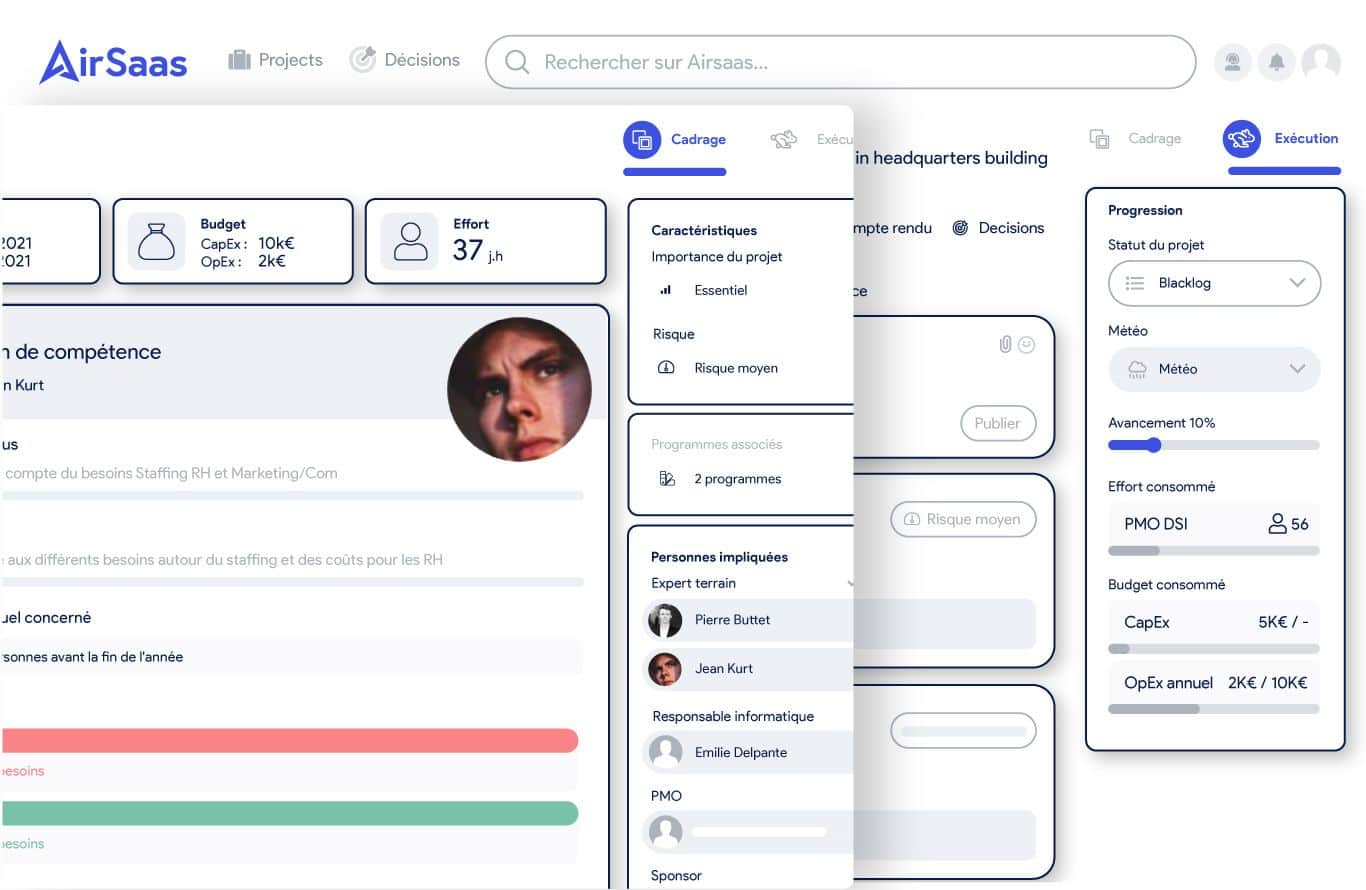
Project framing and execution
A project charter is an essential tool because it defines precisely the entire organization of the project, or of part of it. It's an important deliverable: the project manager must list all the phases, steps and actions to be carried out in project execution. When you review your projects, you can send a flash report that centralizes the up-to-date project charters for the various stakeholders.
If you want to download our project charter template, it's right here:
What is a project charter or project plan?
It's a bit like the project's recipe. Some would say "the ID card of the project(s) you're working on. Without organization or planning, teams take unnecessary risks and jeopardize their results. Project charters are deliverables that contain all the necessary "ingredients". They serve to make projects understandable for all stakeholders and to highlight the main stakes. The project charter is not a contract, but it brings transparency between a vendor and their client, or between stakeholders within the same company.

What questions should the project charter answer?
Essential information must appear in your project charters. They should make it possible to answer a few key questions:
- What are the project's main objectives?
- Who is the decision-maker / who executes? / with whose support?
- How will project management be organized?
- What is the delivery frequency of the deliverables?
- What resources are available?
- What are the risks and the constraints tied to the project?
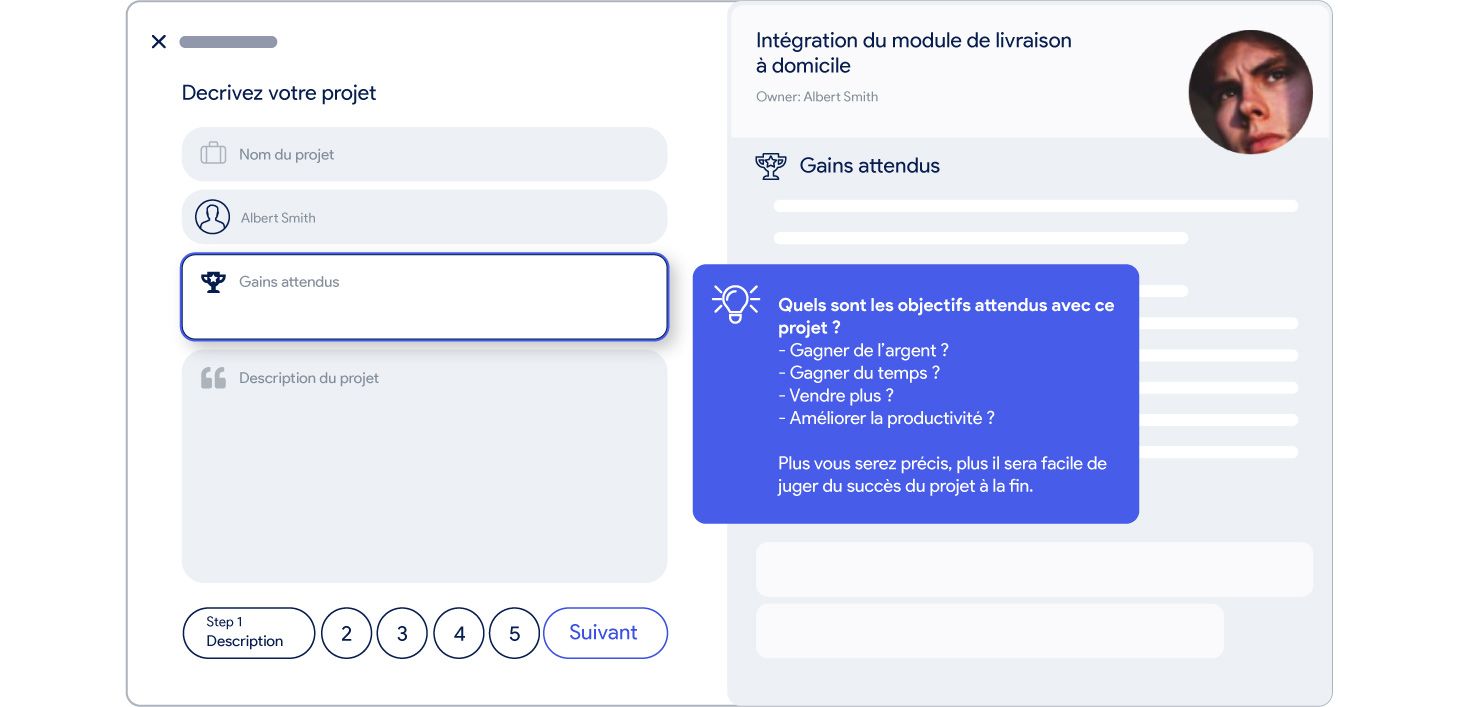
Project gains
A document to steer all the activities related to a project
The project charter is therefore a true management tool for your projects. It centralizes in a single place all the useful information for the project to run smoothly, and clarifies its context.
In a way, it's a simplified summary of the project that lets you steer its main lines. At a glance, thanks to the charters, without digging too deep, every contributor gets a clear view of the project.
Within a project, charters are tools for exchanging and sharing, available at any time to your team, whether you all work on the same site or remotely.
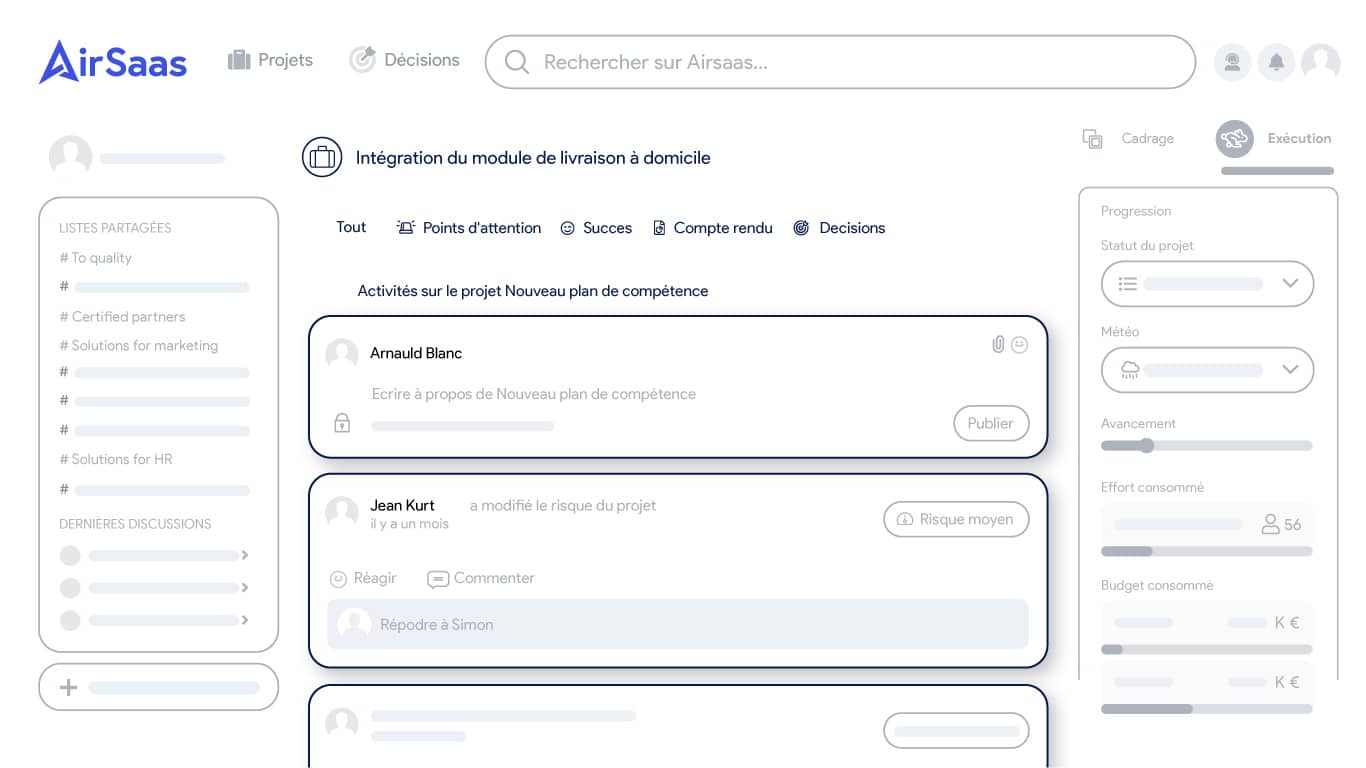
Steering project execution
Who writes project charters?
It's often the project manager who takes on the description of the project and proposes a first version. Many formats are possible. Some simply use Word.
Depending on the context, a program like Microsoft Word lets you write project charters in a simple way, following a predefined template. But beware, this tool has its limits. A project charter written in Word has the drawback of not allowing collaborative updates.
In any case, the project manager will need the support of the other stakeholders to write the charter well, and to avoid spending too much time in the research phase.
Here is a project charter example:
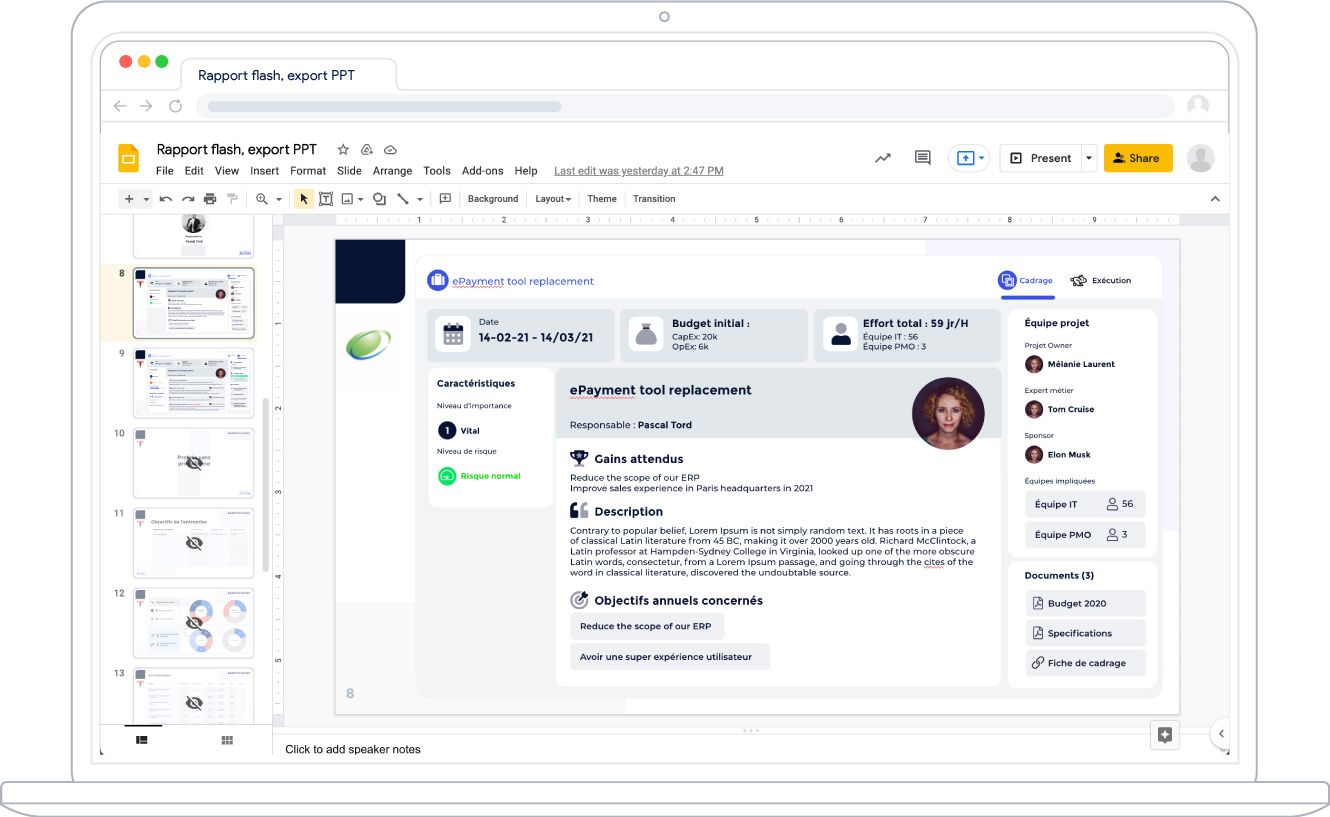
Flash report template
The downsides of a static project charter
Be careful: by using Word for your project charters, you'll also tend to use the same document template over and over, when everyone knows that each project is different — in how it unfolds, in its overall objective, or in the day-to-day actions to carry out. In practice, once your project charter is written and sent, only one version will be available, and it will be hard to add anything or clarify certain points since the document isn't available online.
Other charter templates exist
Project management tools offer other ways to write project charters. By going directly to fetch the information from your IT system or your reporting tools, writing your charters becomes easier and you can choose between different versions.
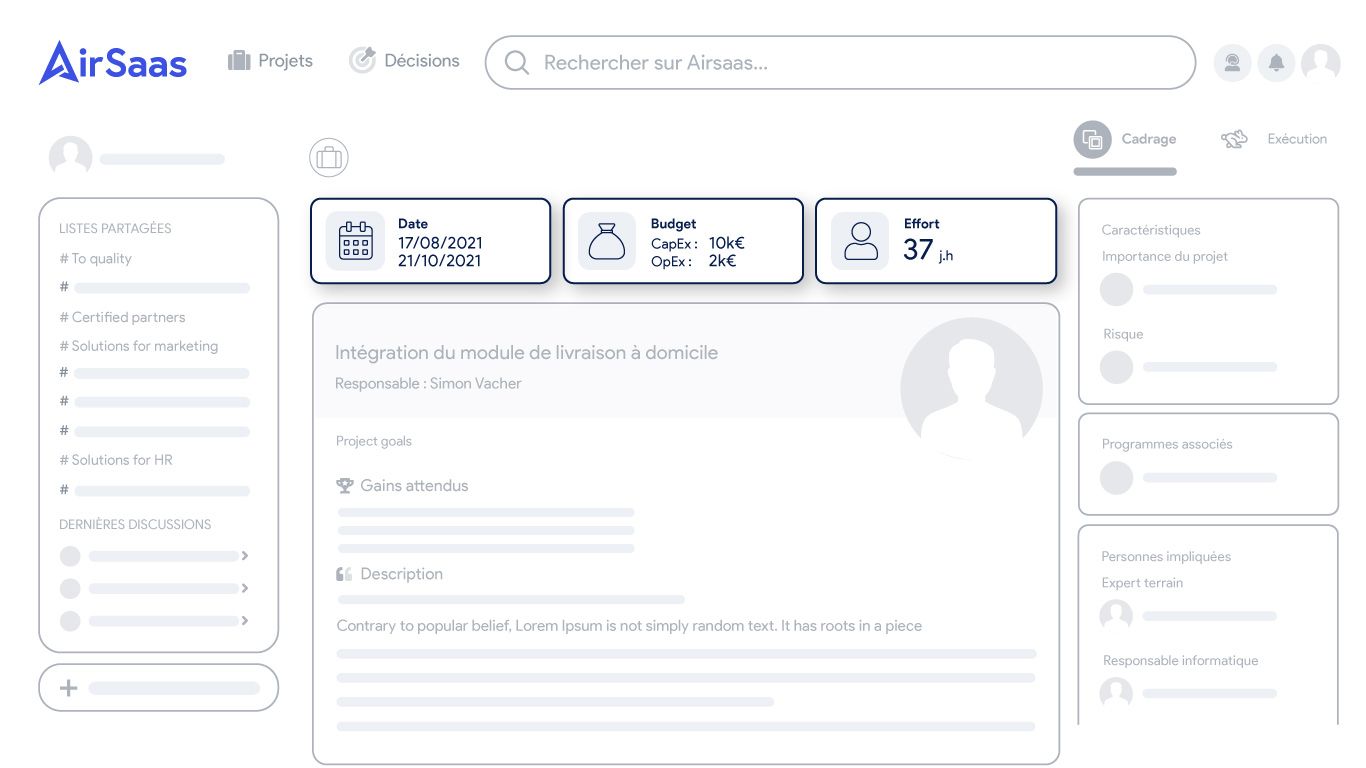
Project framing charter
Several charters depending on the projects
All projects are different, and the charter must adapt to the context as much as to the stakes. As a result, each project's description is unique. It's therefore advisable to have several project charter templates. Of course, these different versions can be reused later on to save time on a future project.
The most common types of project charters are the following:
- Pre-project. Before validating a project, it's sometimes necessary to request internal approvals. A pre-project charter is sometimes needed.
- Internal project: this charter is often more concise than for a classic project because it addresses people who are colleagues. They already know about the project, and the charter must get straight to the point.
- Multi-project. Some projects are part of a global rollout strategy. That's often the case in digital product development projects. A single charter can therefore group several charters together. You would use the same kind of template as for a classic project.
- Micro-project: sometimes a project involves only very few people and requires neither complicated management nor significant resources. A very succinct document may then be enough.
If you want to download our project charter template, it's right here:
What makes a successful project charter?
The project charter shapes the project's future and its results. There's no magic recipe, but there are several actions you can take to make sure you don't forget any task or any step in your project charter.
Meticulous research work
The research phase is a crucial attention point. Like a journalist or an investigator, the project manager must gather all the information related to the project before starting to write the charter. Put yourself in the shoes of someone joining the project midway who knows nothing about it. List all the important points, all the activities and steps needed to deliver the project. A charter is a practical document, aligned with the objectives to reach.
Ask yourself the right questions
What information do you need for your charter to be useful and to let you interact with the other stakeholders? Think of all the questions you could be asked in meetings. Not every participant necessarily masters your field of expertise. It's up to you to be explicit in meetings.
Keep it concise
Force yourself to describe your project in one sentence, and one only. This step is fundamental and will demonstrate your ability to synthesize to the sponsor and to the other contributors whose support you're seeking on this project. Your charter must fit on one page, and one only. Push yourself to simplify every time it's possible.
Don't leave anyone out of your charter
It's the classic mistake. Charters must absolutely reference every player involved. You need everyone's support, and your charter must involve everyone. Also include the contact details of each player, client or vendor, to reach them more easily.
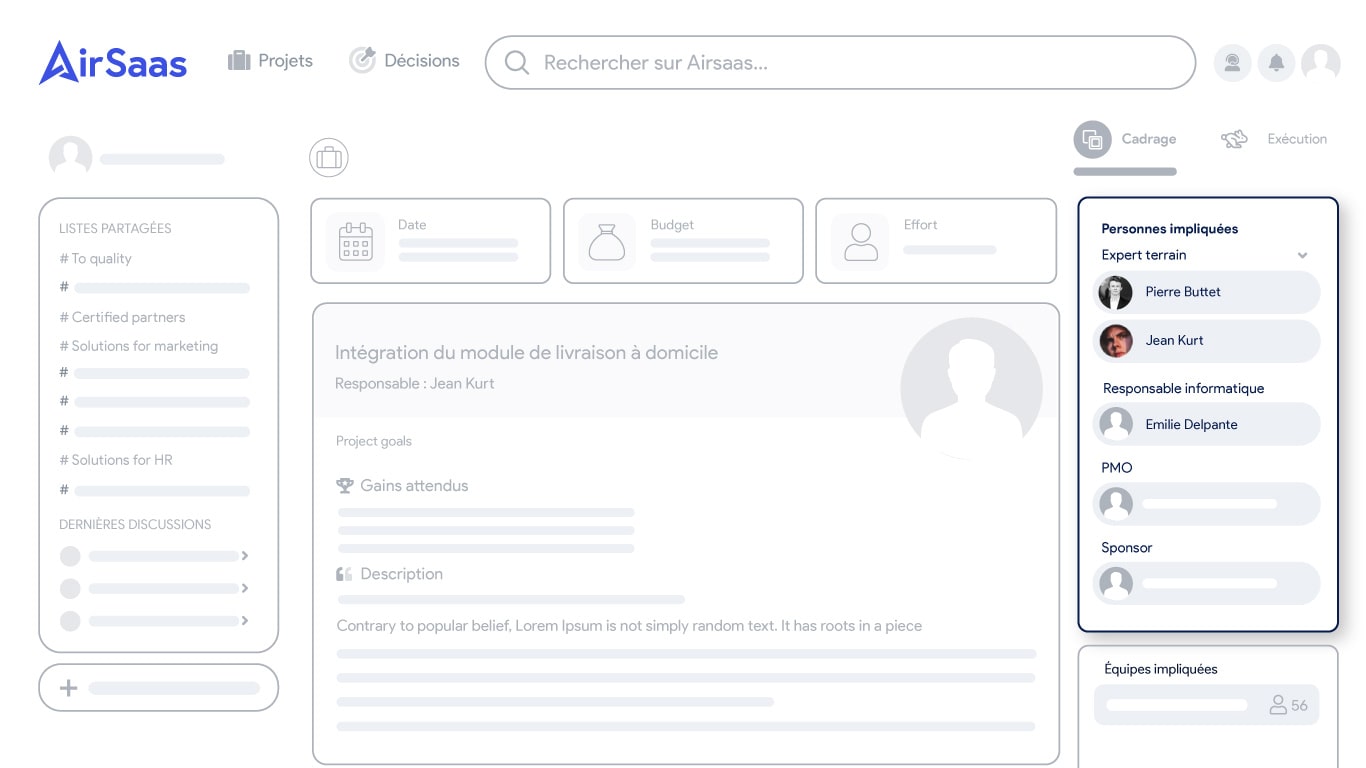
Highlight the people involved in the project
Include the key information following a defined outline
What are the objectives? How much does it cost? What are the deadlines? (what's the delivery date) What are the risks? What are the attention points, and which action should be tackled first? Don't answer these questions lightly. If you're missing information, contact the relevant department beforehand and verify your assumptions. Once you've gathered all the elements, then you can start your work.
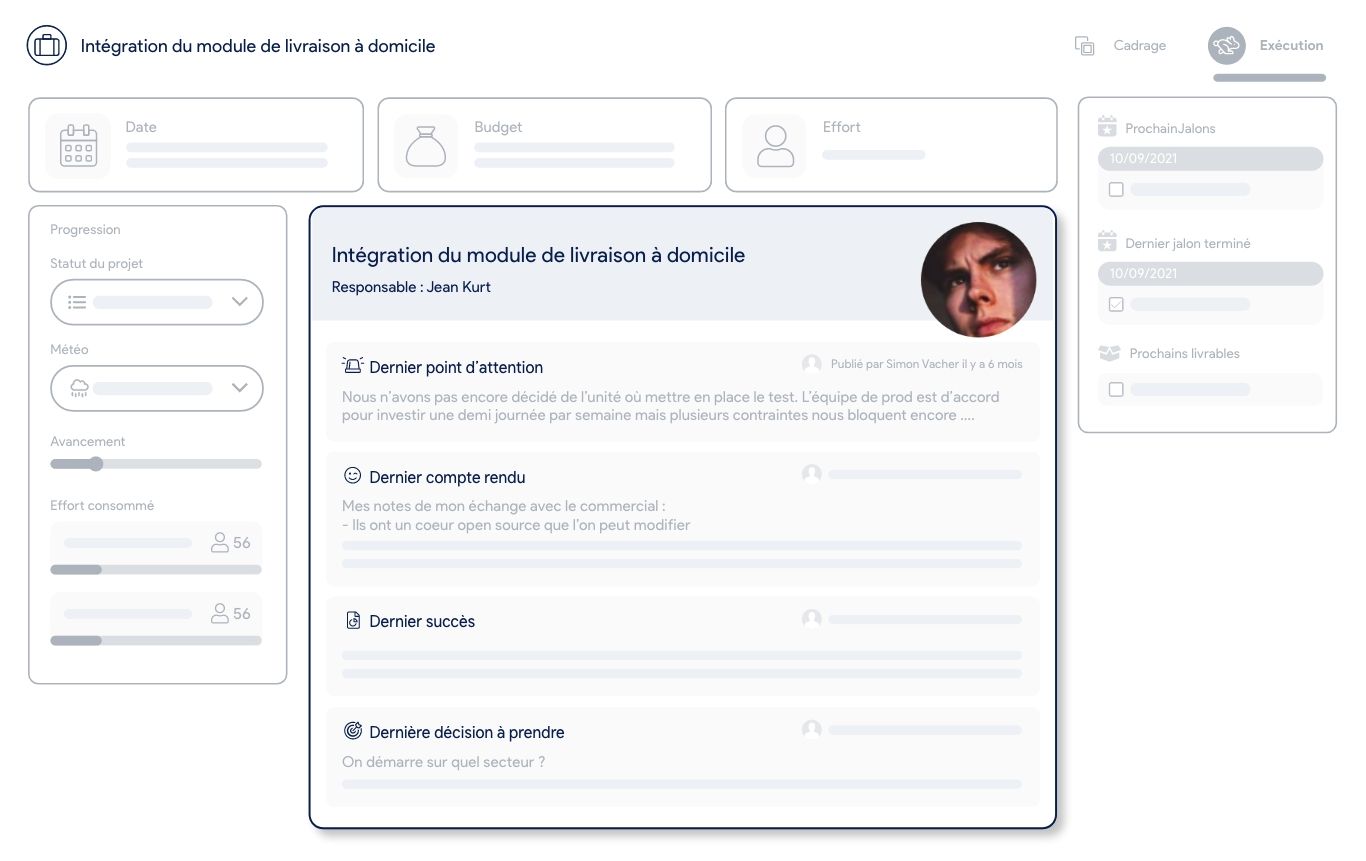
The project's key points
Be realistic when writing your charter
A charter must serve the project and bring it a sense of framing, describing the key steps without embellishing the situation. By promising too much when writing your project charter, you risk putting some people in an awkward position, and that wouldn't be doing them a favor. At the end of the day, as the leader on this project, you have a duty of transparency toward team members and vendors when designing the charters.
How to present your project well?
The project charter is only the first step of the project. You now have all the cards in hand to present your project and make it explicit for the rest of the stakeholders.
Don't isolate yourself
It's a mission that looks simple on the surface but can actually prove tricky. You're sometimes caught in a political game that harms the project. Don't lock yourself into a top-down posture that may feel comfortable at first.
Communicate, anticipate
On the contrary, the good project manager is a communicator, and they also know how to anticipate. Through frequent exchanges, they build an ever-finer perception of the project in all its dimensions, to integrate it as well as possible. Perceiving the project's impacts on the organizational, technological and cultural levels is one of the rules of success.
Sell your project first and foremost!
A good project still has to sell, even internally. The good project manager is also a "marketing expert". Of course, you must take care to study, with the managers concerned, their own vision of the project. But it's also about presenting the stakes in their best light. It's the only way to build the alliances needed for success. On this point, read the article on how to succeed with a project communication plan.
If you want to download our project charter template, it's right here:
What if you took back control of your project portfolio?
Book a demo and discover the tool in 30 minutes.