March 1, 202321 min readJérôme Dard
Project portfolio management: 10 PPM best practices

Let's be honest: sometimes, organizations can no longer manage their priorities. Sometimes, top management has an incomplete view of how resources are used and of project performance, sometimes new project requests are approved without even knowing whether the capacity to deliver is realistic... and sometimes... the link between IT's business plan and the company's is clearly disconnected!
Does this sound familiar?
Yes, today's organizations have a vital need, for both modern tools AND a different approach to manage their transformation plans and associated project portfolios!
Wikipedia reminds us: Project portfolio management is the discipline that deals with projects from a general standpoint, with a view to selection and arbitration. While project management focuses on "doing projects right" — the operational domain —, project portfolio management aims to "do the right projects" — the decision-making domain.
Simpler and more effective project portfolio management is essential to the success of any organization, because it helps to decide what gets funded and what does not. It helps you see what is realistic and what isn't. It helps you tell apart what goes against strategic alignment and priorities from what supports it. In short, what is effective and what is not...
Indeed, companies must find ways to strike a balance between investing in daily operations and taking on strategic initiatives to transform.
Yes, but how can you focus on selecting the initiatives that (truly) maximize the value delivered to the company as a whole?
New portfolio management approaches exist precisely to facilitate and develop the decision-making, execution and cooperation capacities of our organizations, and to make them more efficient!
- by arbitrating between the different priorities,
- by centralizing all the data from the various projects and resources,
- by aligning better with the overall strategy.
The catch... is that these are precisely new approaches. Years of task-level project micromanagement run deep. You install a macro tool... and they bring you right back to action tracking! ....This guide is here to help you use pedagogy and patience — not to play politics, but to bring all your stakeholders on board at the right level of understanding.
Like a stock portfolio... choosing where to invest your budget and your time is no small task. We have collected testimonials and feedback from CIOs, project managers, PMOs and top management. Discover their innovative and pragmatic approaches in this comprehensive guide to portfolio management, which will also lead you to thematic articles to dive deeper into each of the practices presented.
Enjoy the read.
1. Bring meaning back to major transformation programs in your project portfolio management
A program = a group of projects whose name should speak to everyone.
An "ERP, Finance IS, ERP" program will never spark excitement!
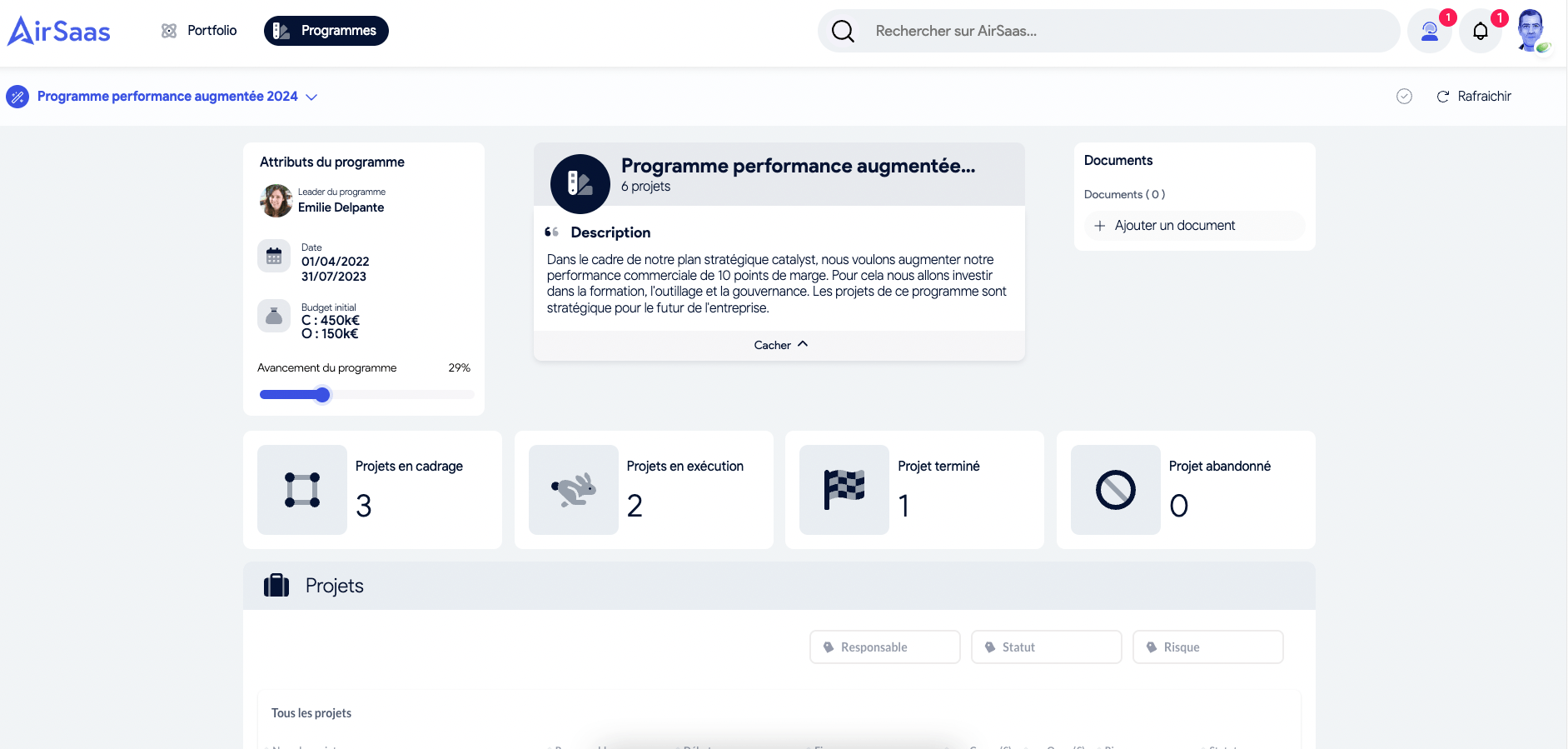
A portfolio management tool suited to organizational transformation will let you publish your program and "file" your initiatives and projects into it so they contribute to a whole that is clear to everyone. A shared meaning available "on demand," not only during PowerPoint presentations in the steering committee.
Indeed, team members must know where to find, whenever they need it — almost in self-service — a shared meaning in their actions, some reference points. Before adapting and transforming, you first have to find your bearings. It is the team members who will have a significant impact on the project, which in turn has a significant impact on the company's evolution.
Beyond the "marketing" effect, we find here the parable of the stonecutter, that tale about our relationship to desire and pleasure! Depending on the meaning you give it, two relationships to work stand opposed: "I'm just building a wall." VS "I'm building a cathedral."
The continuous communication of strategic stakes therefore acts as a lever, and team members must find meaning in the new actions in light of their main mission; they often take part in a project that equals or exceeds, in importance for the company, the stakes of their main mission. It is from meaning that commitment is born, and each party plays a decisive role.
To align the business, top management and IT around a common vision, rely on: AirSaas: a new-generation PPM tool - PPM software
2. Shorten the projects in your portfolio
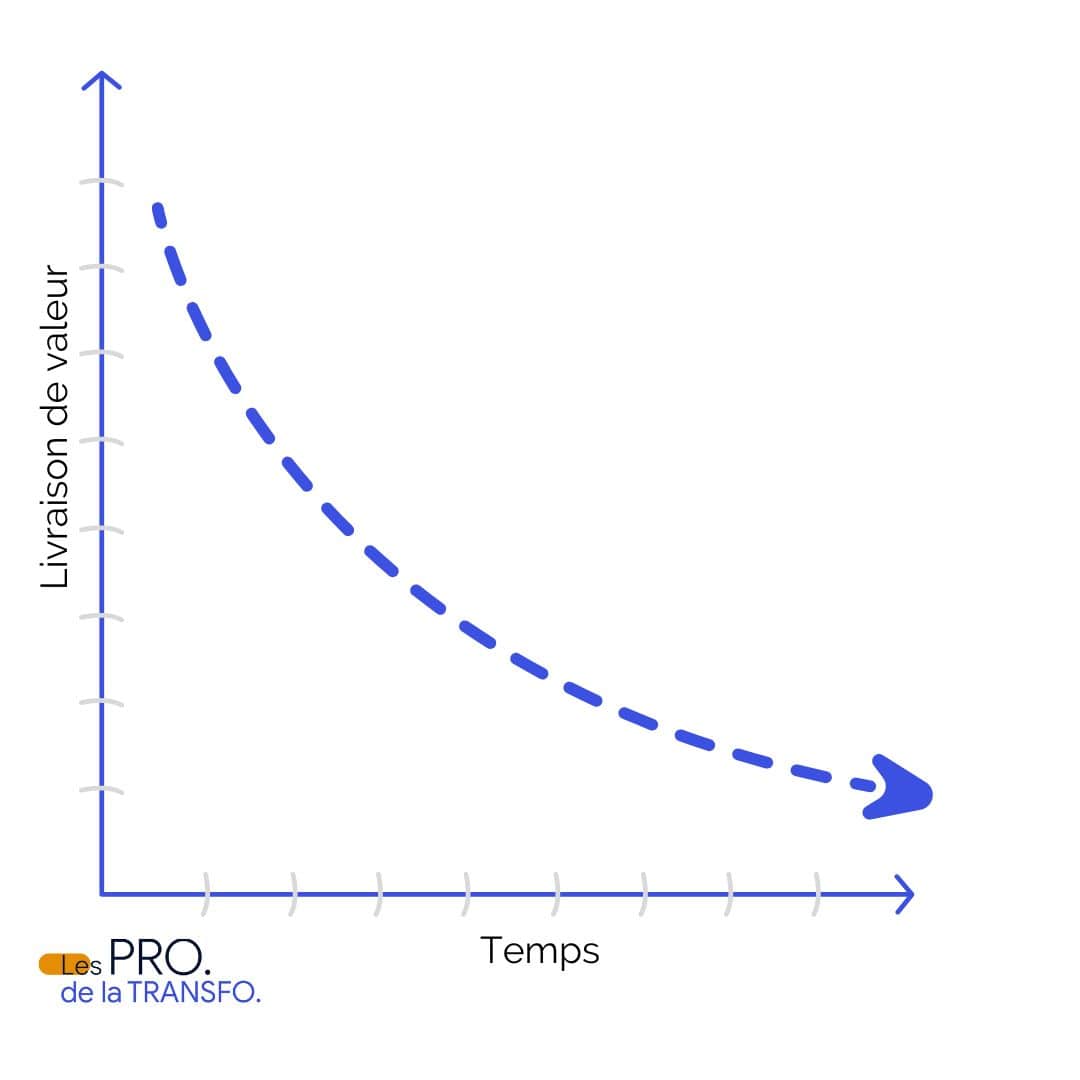
Aiming for a (real) reduction in development lead times will generate more potential for progress than any other approach.
Agility, digital acceleration, "uberization" — the pace of innovation is now faster! Yes, slowly but surely we are witnessing the end of the master plans / information-system roadmaps spanning 3 or even 5 years that we used to know.
Because yes, the pace of the projects on your roadmap matters!
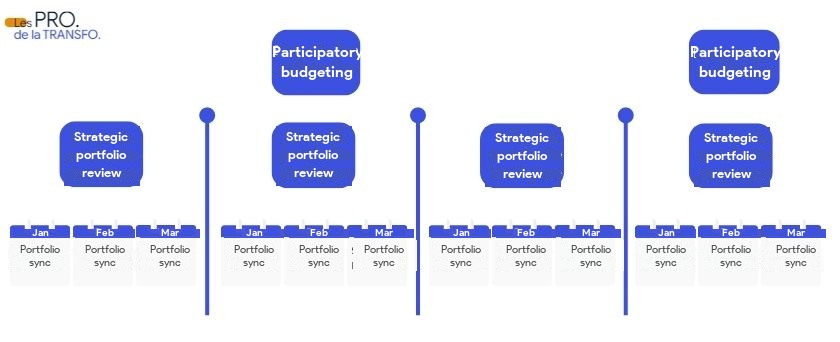
In an optimal organization, a project should not exceed 3 months. It's a challenge!
The skeptics will tell you:
- Impossible, I only have 18-month projects
- You can't break an ERP project into 3-month projects!
- I don't really see the point ^^
The "trailblazers" will retort:
- On "long" projects we already break them into phases, so it doesn't add any work
- It's great — thanks to it we get into a company-wide dynamic
- By holding an event every quarter, it helps us converge everyone's energy with the business units and sponsors
- With this we manage far more easily to energize the roadmap with all the stakeholders.
It's up to you to find your new breakdown and target pace for the "recommended" durations of the projects in your project portfolio.
To go further and modernize your governance, discover the article: Three innovations and trends shaking up project portfolio management.
3. Redefine the role of each member
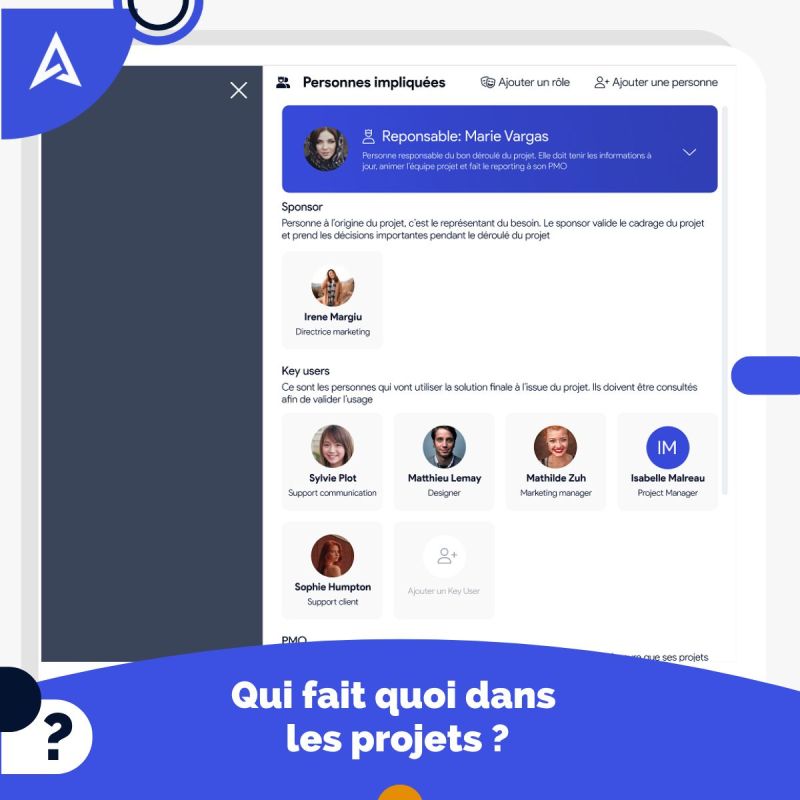
What exactly does it mean to be a "key user," "project manager," "business reference," project manager or "sponsor"? In the context of your organization?
What are the powers and duties of each person in governance and project management within your company? Without rules of the game, no one will be responsible for anything!
Alan Zucker, founding director of Project Management Essentials, says that defining roles for individuals and groups is an important first step. "Many organizations fail to set expectations at the start, which leads to confusion and conflict down the line."
He calls out three key questions to ask:
- What is the role of the project management office - PMO / project office?
- Who plays which roles in setting the organization's strategic priorities and approves the projects that align with the strategy?
- Who "owns" the projects and is responsible for ensuring they respect their scope, schedule and cost objectives?
Like Scrum, "lean-agile" culture sets key roles. At a higher level, in project portfolios we also have to address this work of defining the accountabilities tied to the roles.
Explaining the prerogatives of each project member is the basics, but it is sometimes invisible in everyday tools!
To simplify defining and upholding everyone's role in a project, we've improved this feature in AirSaas. You'll be able both to define who does what and to align all contributors on what is expected of each of them.
During scoping or the life of the project, you can add:
✔️ Either people, and then assign them a role
✔️ Or roles, into which you then add people
Beyond simply assigning a standard role to someone... a sentence will give context on each of the project's roles. It lets you align all contributors on what is expected of each. This definition is of course configurable in AirSaas, depending on your organization's culture.
To try something other than a RACI matrix that will be forgotten in the slides of a kick-off... I try AirSaas, the portfolio management tool that will modernize your governance!
To carry on and deepen your approach, we recommend reading the following article: Lean Portfolio Management to continuously align top management, IT and the business units
4. Create rituals, not meetings!

You know SCRUM rituals, Christmas-dinner rituals, birthday rituals, Halloween rituals, the tea ceremony... It's time to take a closer look at your project governance rituals.
Reminder: a ritual is a set of fixed rules and habits. Not to be confused with a routine, which is a mechanical, unthinking habit resulting from a succession of actions repeated over and over.
We're thinking in particular of routine meetings!
In portfolio management, setting up new rituals will be one key to your successful cultural transformation (along with the roles and the program).
It's up to you, PMOs, CIOs... to agree with the teams involved to "design" and name this particular new workflow that will carry your new governance rituals and support your company's transformation.
The underlying goal is really to develop new decision-making, communication and cooperation habits, from the day to the year!
What matters next is regularity. To set and keep the pace of these routines.
As an illustration, below we offer a series of management practices, set up in a context specific to one organization.
Examples of rituals in project portfolio management
The P.W.P. — Project Weather Progress
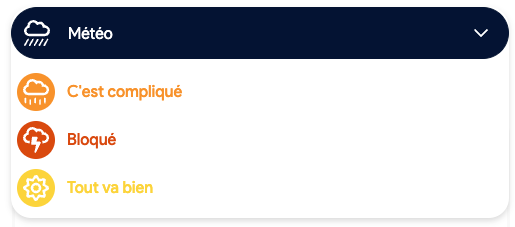
- Weekly or fortnightly cadence depending on the project steering committees
- 1 IT project manager with the business unit
- Project review with the AirSaas steering-committee presentation —> which enables interactive visual management, facilitating cooperation between stakeholders. Set a day (Tuesday 9 a.m.) for this ritual when all projects will be up to date: decision / attention point, milestone) ⟶ With the business units
- Ritual during progress updates —> systematically look for and post a success point.
The P.S.R. — Portfolio Sync Review
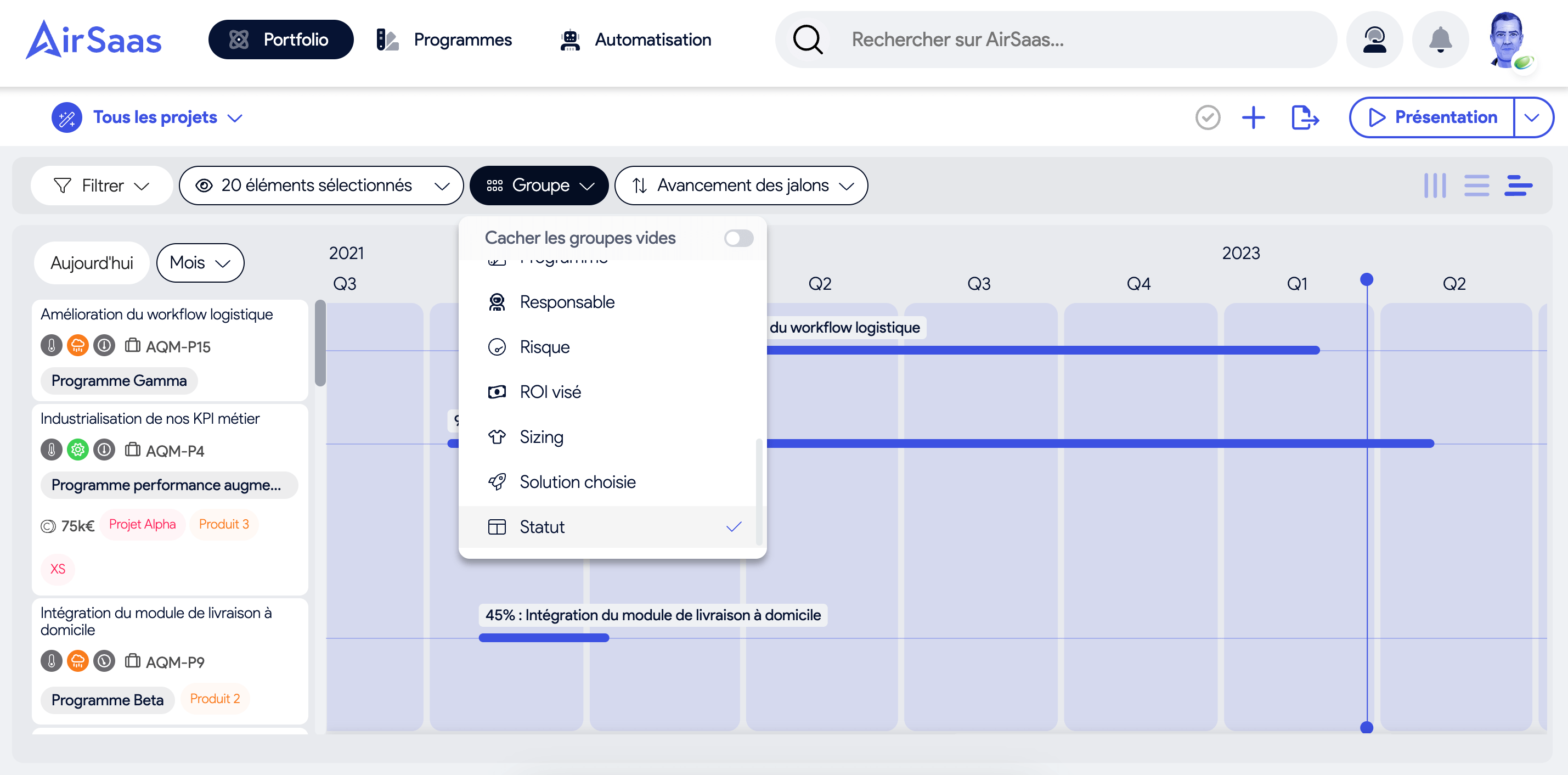
- Governance ritual internal to the IT department with PMO / project managers
- Flash report sent beforehand
- We go straight through, in AirSaas, the attention points, successes and decisions to be made on the projects
The P.O.D — Prioritize or die:
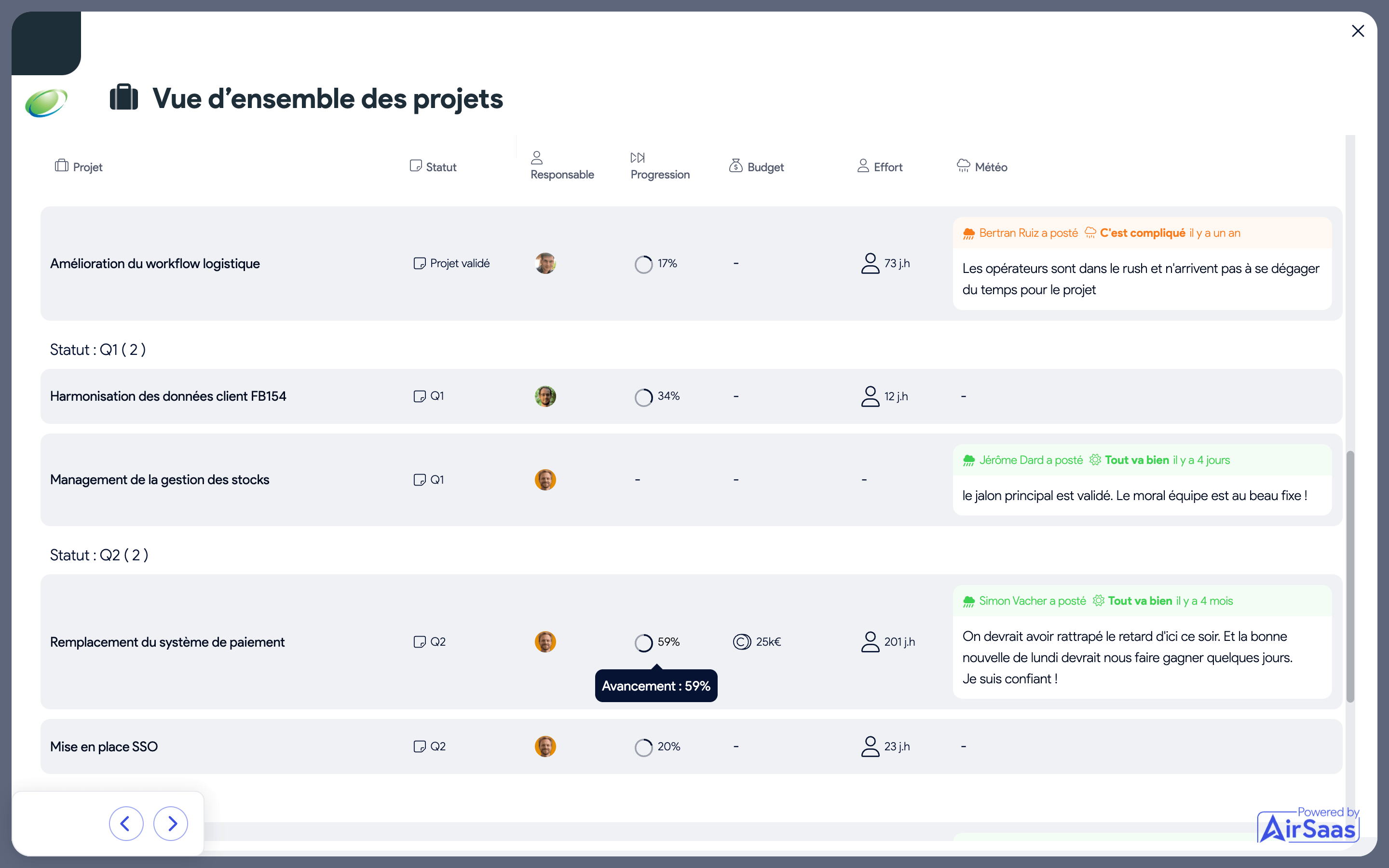
- Every quarter, a 2-hour steering committee focused on the strategic portfolio review is held to assess.
- CODIR level, including the business-unit heads.
- Objectives: Re-examine the state of resources and priorities. Take the opportunity to gather insights from the business. Run the lessons-learned on the projects delivered. The budget review. A re-prioritization of the roadmap
- The ritual is run with the support of the platform. (Based on the AirSaas COPIL view, for example.) Anything not up to date in AirSaas cannot go through the POD committee.
The F.D.M. — Flash Design Métier
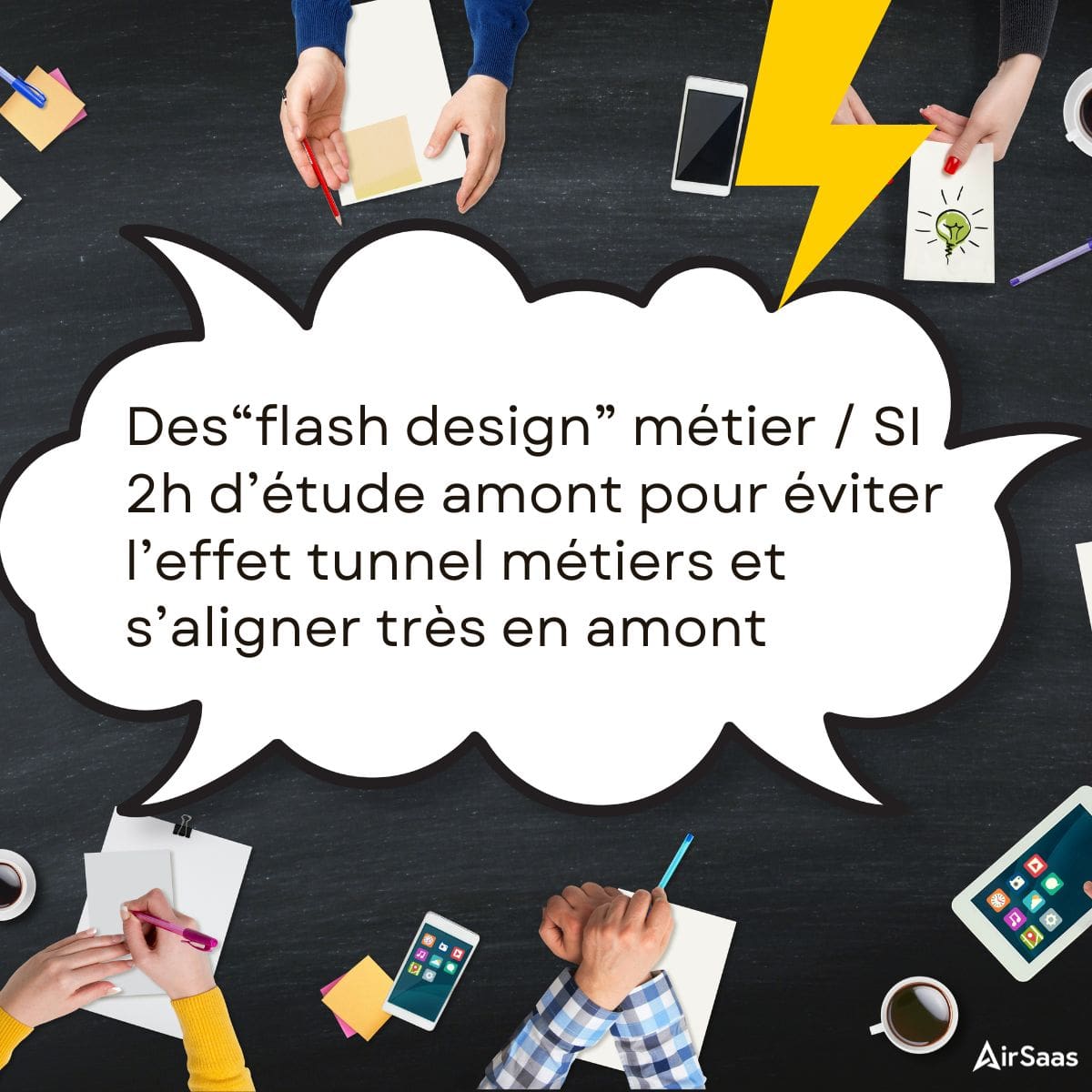
- Every week, 2 hours of flash design to work with the business units on the insights / issues raised.
- Rather than starting to think about scoping a business need when you have time to handle it, you organize 2-hour flash-design sessions as soon as the business unit files its "ticket." 2 hours of brainstorming bringing together the business and IT to rough out the need, study the "miracle" SaaS solutions that could address it, and finally give the need time to mature. All of this happening well upstream of the scoping phase.
The F.R.A. — Automated Flash Report
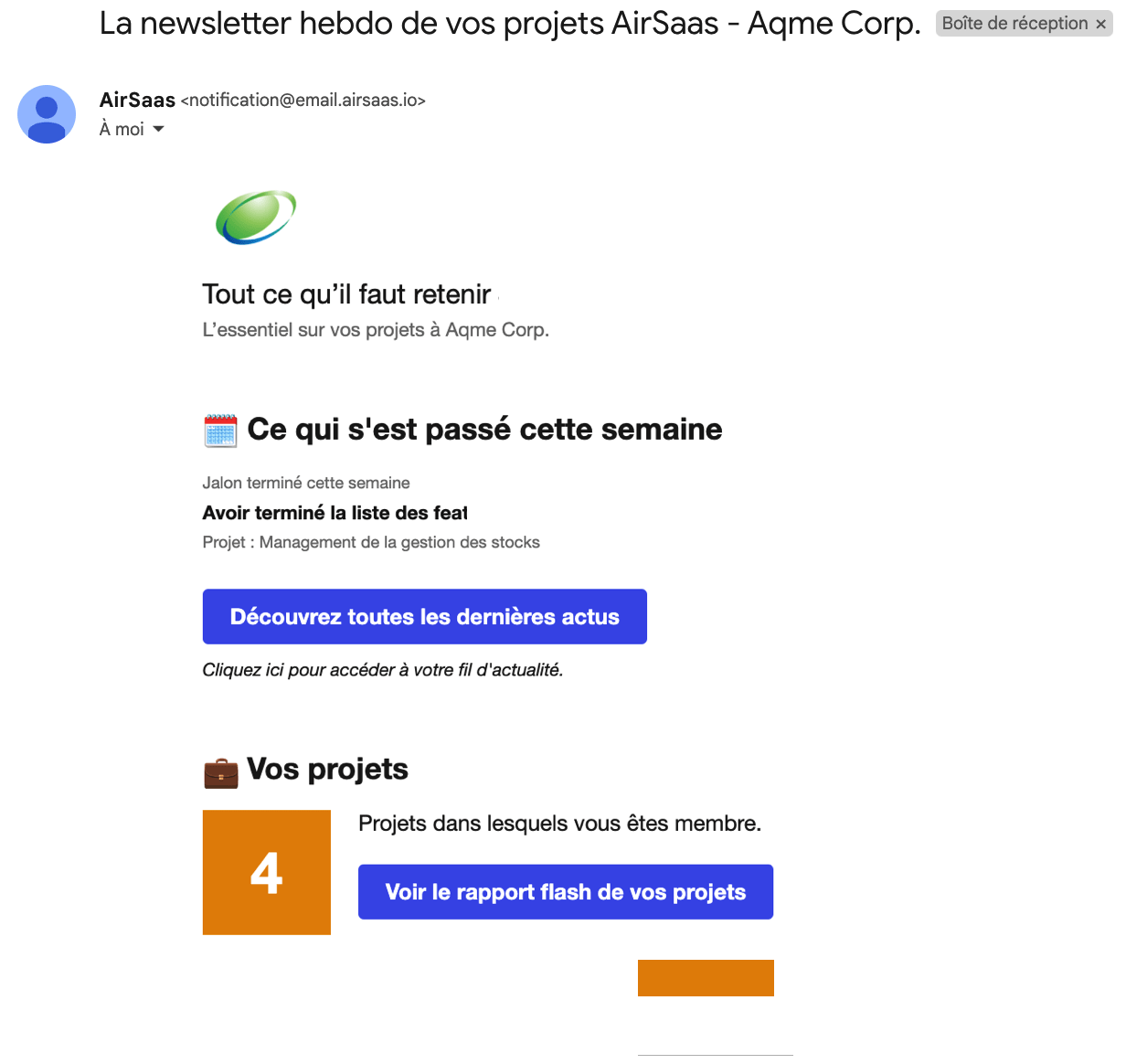
- The automated newsletter of your projects
- Automated ritual —> via AirSaas notifications —> every week on Friday evening at 7 p.m. you receive a summary (Progress status / contextualized project weather, attention point, urgent and important decision for the coming week).
The Q.T.C. — Quarter Transfo Celebration!
- At the end of each quarter: invite the project managers to a meal!
- Use every project milestone as a success point to communicate on. On top of that, it will help get across reminder messages about what you're doing. Because yes, there are a lot (too many!) of topics competing in the portfolio
To create your own rituals and manage to embed these new behaviors, get help from a platform!
Bye bye Email, Excel! Support for portfolio management is within your reach: Portfolio management: why you have to be done with Excel!
5. Define what's vital! Then the order of execution

Once meaning, responsibilities and rituals are clarified... it remains to agree on the order of things... To take the time to agree on defining what is vital (and what is not). Even if it takes you months to move this notion forward with all the members of the codir, it's worth investing your energy and being a good teacher! In any case, generally speaking, just the vital projects alone already overload the teams' capacity to work!
Order the vital projects by order of execution
Prioritizing projects - by designating them as having high, medium or low importance - is a common practice within organizations. However, Alan Zucker, founding director of Project Management Essentials, reminds us with humor that management tends to rank most (if not all) projects as highly prioritized. "This type of system alone does not properly allocate scarce financial and human resources."
He recommends an additional step of ordinal ranking, in which the initiatives are listed in the order they will be executed: first, second, third, etc. "This forces leaders to think about trade-offs and to make hard decisions about the (truly) most important projects for the organization."
Avoid favoritism
Do you know the HIPPO syndrome? An English acronym meaning Highest Paid Person's Opinion. In other words, the opinions of the highest-ranking person among the committee members have a natural tendency to be the ones that stick.
One of the basic tricks to try to avoid this bias in project portfolio management can be to ask the most senior person present at the steering committee to speak last in every roundtable...
Many project portfolio managers do often fall into the trap of favoring certain topics, which can distort the perceived success of your project portfolio management. These are usually the initiatives the manager is personally invested in, and — what an incredible coincidence — the manager will probably give them more time and attention.
The result: the favored projects are less likely to run into problems or suffer from neglect. However, being too short-sighted about the favored themes can cause other projects in the portfolio to suffer and face challenges that could otherwise be avoided if they got the same attention.
6. Make all the portfolio's projects clearly visible

Why add this project to the portfolio when it's only 10 days long and everything is going fine? We still hear CIOs/PMOs and project managers saying this far too often.
In total, the cumulative volume of man-days of these small, invisible projects, a kind of shadow project management, is probably equal to or greater than that of the so-called medium projects!
The idea behind it is to value what works. To value the trains that arrive on time. The pilots who know how to do vs those who make sure everyone knows.
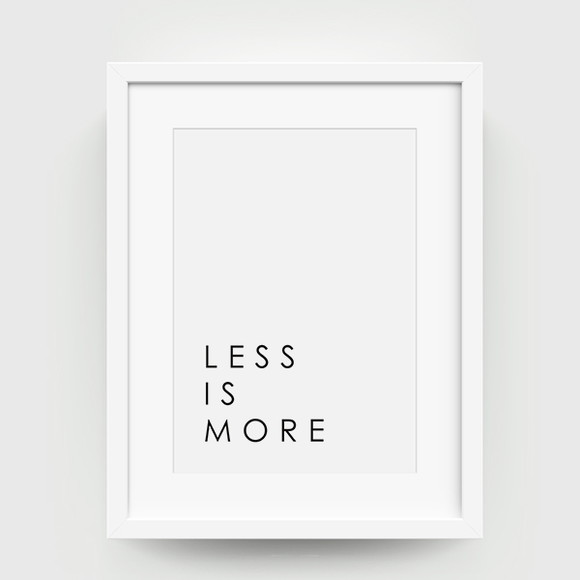
Less is more
Another common-sense reminder: Working on many highly prioritized projects at the same time can lead to significant problems in project portfolio management, and in particular: inefficiency!
It means that you can't finish what you haven't started and that you should never start what you haven't committed to finishing. Q.E.D.!
Many organizations do focus more on "getting planes to take off" than on landing them," explains Alan Zucker, director of Project Management Essentials (him again). In other words, they focus on starting projects but don't pay as much attention to following them through to completion.
Rather than starting a large number of projects that might not reach the finish line, Zucker notes that focusing on completion translates into better results for the organization. "Minimizing the number of simultaneous projects will speed up the work, which means you'll be able to see the value generated by those projects sooner."
Making better decisions to "do the right projects"... that's the promise of this category of tools and practices in project portfolio management! Yes, here we enter full subjectivity! That's why we invite you to read the article: Project portfolio management: how to select the right projects?
7. Don't wait to be "mature" in project management to modernize your governance!
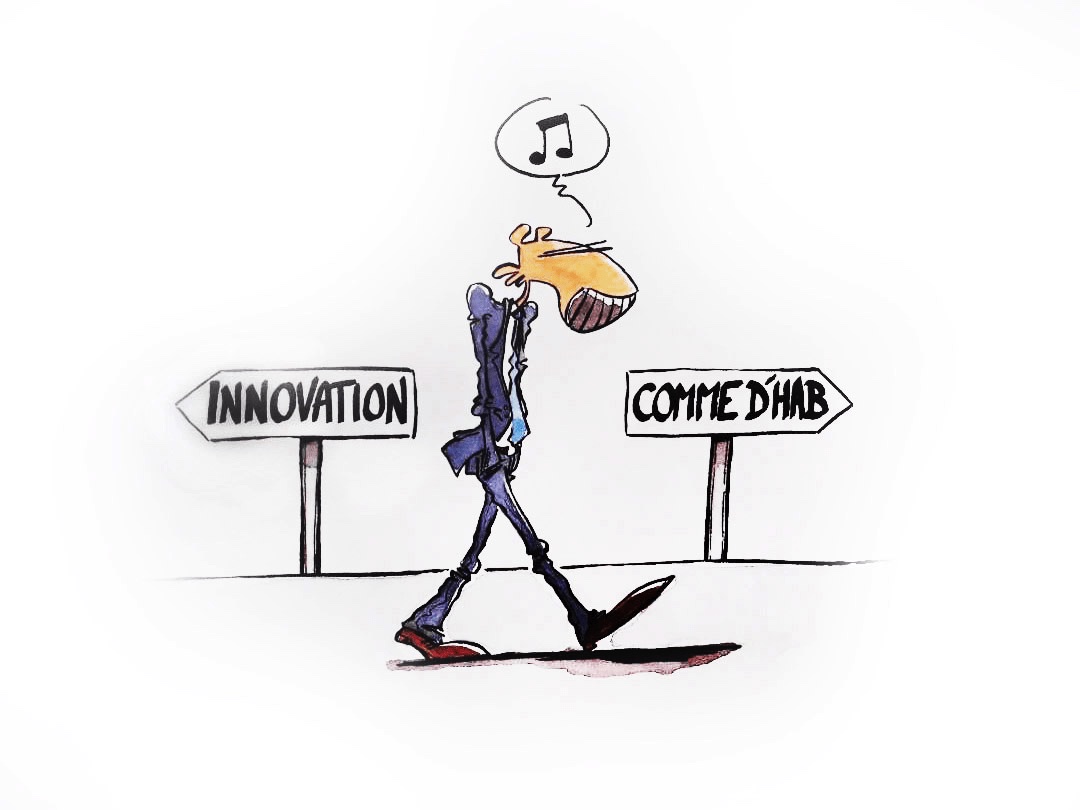
You've modernized your project management... that's a great start! Now go up a level to improve the governance of your transformation programs.
Data centralization, decisions, scoping and execution tracking — tools can assist you in steering the project portfolio. With a project portfolio management platform like AirSaas within your company, you'll enjoy five benefits:
- Uniform, collaborative project scoping
- Automatic decision-making reporting
- Focus on decision-making and attention points
- Steering by milestones
- Project review in a single platform.
To "unbolt" the preconceptions about the maturity thresholds needed to tackle project portfolio management approaches, we invite you to discover:
👉 The five levels of project management maturity for a company. From the basic level to 🥋 competitive advantage.
👉 The 7 arguments for/against setting up a project portfolio approach in an organization that isn't "mature" enough in project management.
🚨 Spoiler: don't wait for your company to be "mature" in project management to launch a portfolio management approach, otherwise it never will be!
👉 As a bonus, we asked a PMO member of the Pro de la Transfo community for her feedback on rolling out the Project Office function in a low-project-maturity structure. (Thanks 🫶 Constance) 💡
"Like a tea bag in hot water, you gradually infuse the company with project culture, from project management to PPM, toward operational excellence."
To dig into these three points, I discover the article : The project portfolio to grow employees and the organization
8. Change is now — or never!
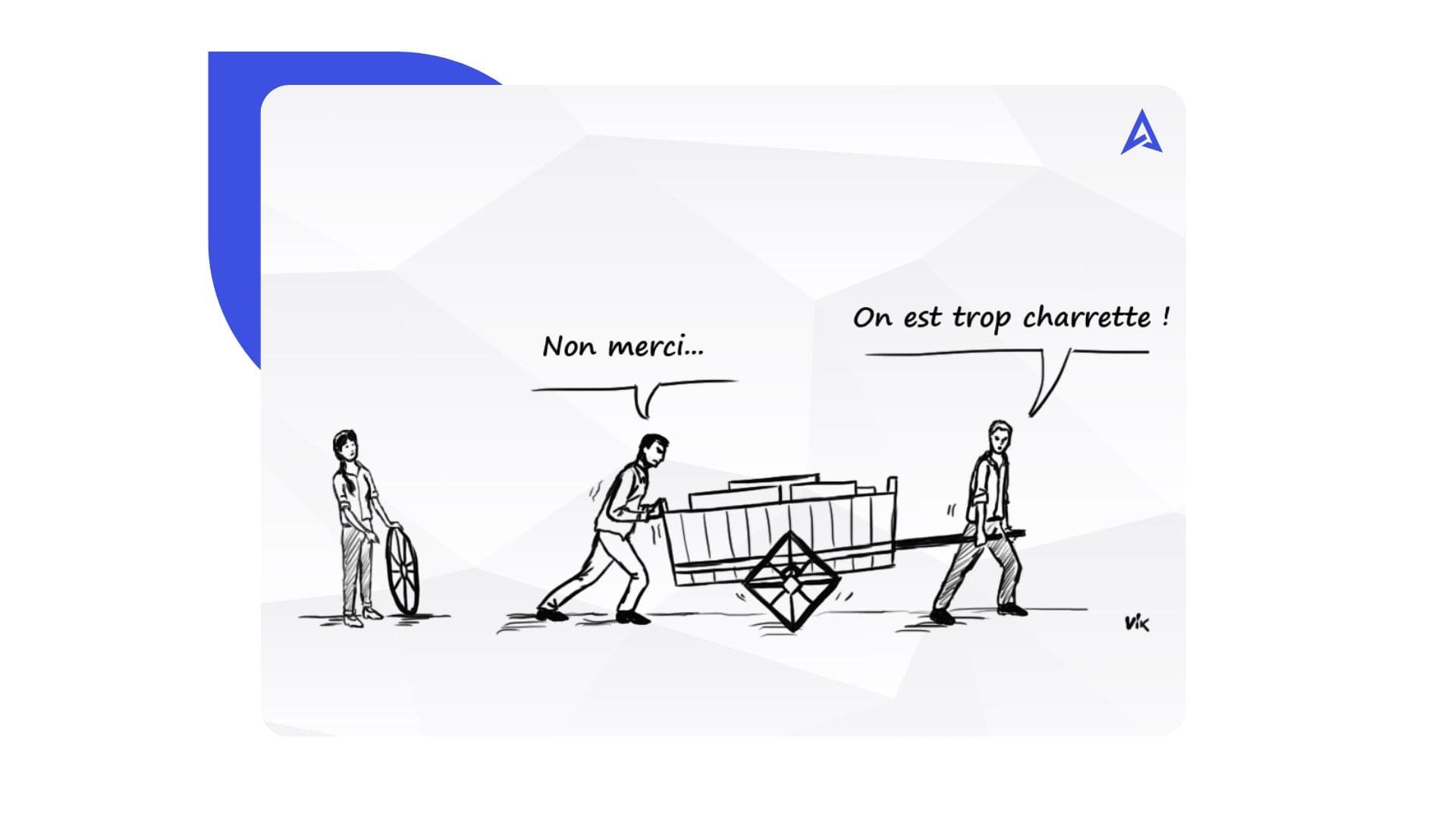
A project portfolio management tool, however simple it may be, requires a minimum of support in driving the approach. It's of course partly the role of management to share the meaning, the expectations, the limits and the scope of the tools. That said, by relying on resources such as a PMO / facilitator / project portfolio manager who has already led this type of mission, you'll really put more of the odds on your side.
Invest in support so that your employees gain confidence and steer clear of the classic pitfalls of a PPM / program management approach from the outset.
The more your employees are aware of this approach, the more you'll benefit from your PPM.
Just as for a business project... you must consider the implementation of the PPM solution as a whole. Ideation, scoping, execution, transfer, roles, rituals, change management... AirSaas is a business tool for transformation!
In short, make sure your employees really understand the ins and outs of the approach, beyond the tool. For that, there's no secret: you have to communicate, train, coach, support.
If you don't feel like taking the time to get support, a "plan B" will be to upskill internal facilitators. To raise their awareness of this culture through the content and exchanges within communities of practice. We can only warmly recommend ours :) The Pro de la Transfo club. It can be a precious help in driving your transformation!

To discover the "Les Pro. de La Transfo" club, it's over here: lesprodelatransfo
9. Cultivate transparency so everyone can (efficiently) stay informed about the project portfolio
Efficiently here means continuously... without waiting for a CODIR / COPIL / COPROJ... and above all... relying on reliable data. Not "dressed up" in a PowerPoint report. Authentic data, then. Because let's remember: "Without transparency, no commitment."
Even so, rest assured, it's still the role of the tech & business pilots to actively contribute to entering the key reporting information, etc.
Nevertheless, we have moved into the era of cooperation. Making it easy for the sponsor, the business units and/or top management to access the key information on milestones and decisions is a very strong and indispensable act of transparency. It constitutes a lever for alignment and engagement.
Sylvain Bourdette, CIO of Proxiserve and an AirSaas user, told us:
It's essential that the business units can know where to find the information on the follow-up of their requests. Knowing that it's available to them can help strengthen the bond of trust. And that's true whether they go and check it or not. They know that if they need it... the info is there!
On this new accessibility of reporting data, be careful. Faced with the growing volume of information, you quickly fall into the portfolio's Christmas-tree syndrome. In an overloaded report — pretty but not very effective for deciding!
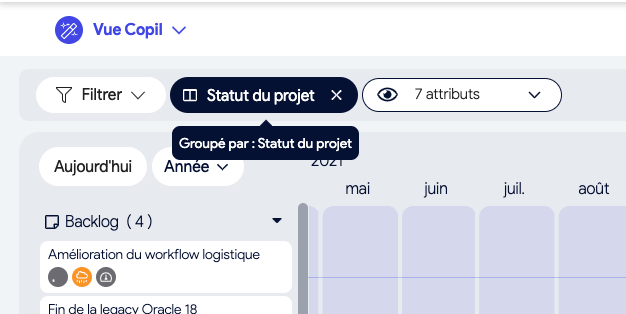
In AirSaas, with smart views you have the ability to customize the project view to show exactly what you want to see at a glance. To "rotate the cube."
Since the project portfolio has 1000 facets, AirSaas lets you create public or private views adapted to the context and the audience: marketing quick wins, late projects, HR, prioritization by program...

What matters is to offer not one view of the portfolio, but a number of views — and therefore a near-unlimited set of prioritization criteria! By letting each audience see what it (really) needs in the portfolio.
For example, a Kanban view of the decisions to be made. A list view of the teams' initiatives whose weather is in a "complicated" status and on projects of a certain size...
The only limit is your need. ;-)
Discover an example of an AirSaas Copil View below:
To finish on this 9th best practice out of 10, let's remember: not all tools are equal! They are more or less simple, a token of a potentially wider adoption. They are more or less innovative, a token of better potential time savings.
To discover what's taking shape in the new uses of modern portfolio management, discover this article devoted to these questions: AirSaas: a new-generation PPM tool.
10. Strengthen (sustainably) the culture of transformation in your organization
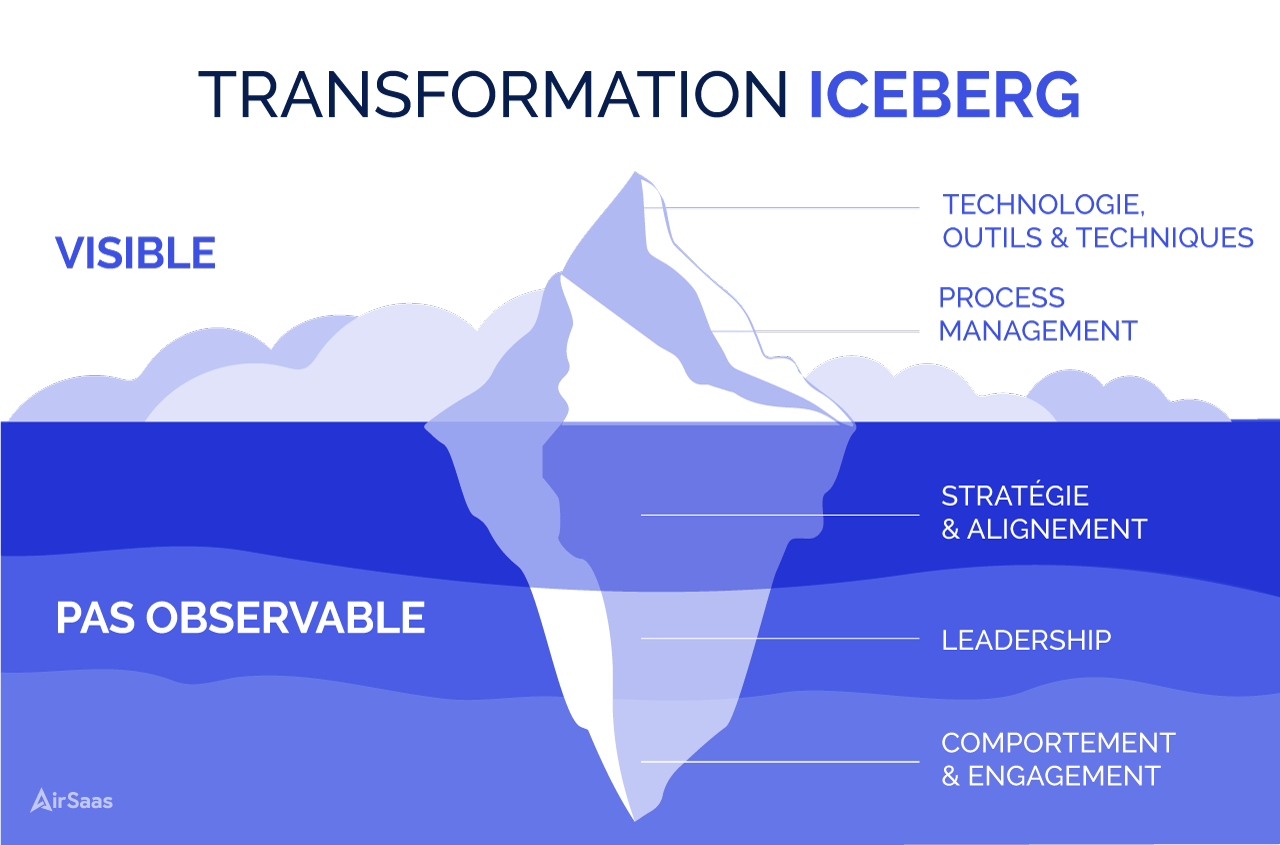
The pragmatic PPM approach implies a new mindset. You "switch" between the old and new approaches: Command & Control VS trust & commitment!
Get management and employee engagement over the long run
Today's mainstream portfolio management focuses too often on the rational side of the process. Task management, technical and budget aspects, processes, objectives.... In a context of great resignation and team discontinuity... strengthening the culture of your organization is one of the foundations of the success of your transformation with lean portfolio management!
The key = The stakes of alignment, behavior and leadership engagement are to be activated, and cultivated.
On the definition of culture... here we share a quote heard at an agile conference, whose author is unknown. "Culture is what you do when no one tells you what to do." It's "what is common to a group of individuals, what binds them together".
A principles-based approach to the portfolio
Any change that limits itself to an effort on an attitude and a behavior often turns out to be counterproductive. For more effectiveness, the focus must be on deeper perceptions and beliefs. By going to seek out the "hidden" beliefs, the unspoken.
And beware the confusion between principles and values. Principles are not values either. The members of a mafia might share values of friendship, compassion and respect, but in violation of the principles most humanly recognized as the foundations of morality and ethics.
Lay out your major principles of action. Three minimum, seven maximum! Here are a few that may inspire you.
Sincerity, empathy and trust, self-organization, transparency, win-win + win cooperation, for example. It's up to you to compose your mix of principles that will ring true in your context. An authentic and original "mindset" is essential to successfully co-steer your portfolio!
One last point, on the scope of project portfolio management in companies. It is above all not a process reserved for mid-caps and large accounts! On the contrary, it's precisely where the lack of steering and PMO resources is most critical that a PMO-as-a-service platform can make all the difference. How to start simply? Find feedback and key advice in our next publication: Why develop project portfolio management in an SME?
What if you took back control of your project portfolio?
Book a demo and discover the tool in 30 minutes.