September 26, 202210 min readJérôme Dard
Three PPM trends and innovations shaking up project portfolio management

In a study published at the Program & Portfolio Management Summit in June 2020, research firm Gartner announced that "by 2030, 80% of project management tasks will be eliminated as artificial intelligence takes over traditional functions of the discipline, such as data collection, tracking and reporting."
Gartner refined its forecast by adding that "The market will first focus on delivering additional user-experience benefits for project management professionals and, later, will help them become better planners and managers."
Marketing hype aside, what does this actually look like in company practices today?
What do our algorithms dream of? ;-) How will innovation management be impacted by technology?
More and more aspects of project management will be handled by AI. Examples: resource and cost management, reporting dashboards, detecting drift in budgets or plans, and more.
In this article we'll focus on a concrete dimension, zooming in on three usage-driven innovations that strike us as particularly relevant.
- The growing use of APIs for ever-stronger interconnection between project portfolio management tools and the application ecosystems within your company.
- The rising importance of interface design and mobility in the design of project portfolio tools
- And finally, technological advances around AI — automation, data-to-text, predictive analytics, big data, chatbots...
And, spoiler alert! We won't only be talking about cutting-edge technology, but also about shifts in usage. Particularly in the second innovation area, related to the design of today's project portfolio management solutions.
Closing the gap between vision and execution. That's the promise of project portfolio management tools! Let's take a closer look at what can help make this happen!
PPM: three innovations that make the difference
The underlying trend: tool interconnection
Innovative PPM tools no longer try to do everything on their own!
SaaS integrations and connections have grown rapidly in recent years, and companies want a project portfolio tool that works with their existing technologies.
After all, each business team in the company has its favorite everyday tools.
Tools like Atlassian JIRA, Wrike, Microsoft Azure DevOps, Asana and Trello have changed the way project managers plan, assign and share actions.
Business analytics tools like Power BI and Tableau have simplified dashboard creation.
Finally, tools like Slack and Teams have helped streamline part of the communication within organizations. Especially since the pandemic.
Remember: there's no point running change management on every front at once. Interconnecting tools through APIs lets you reinforce well-established habits while enjoying a macro view via a strategic steering tool — like AirSaas, for example. :-)
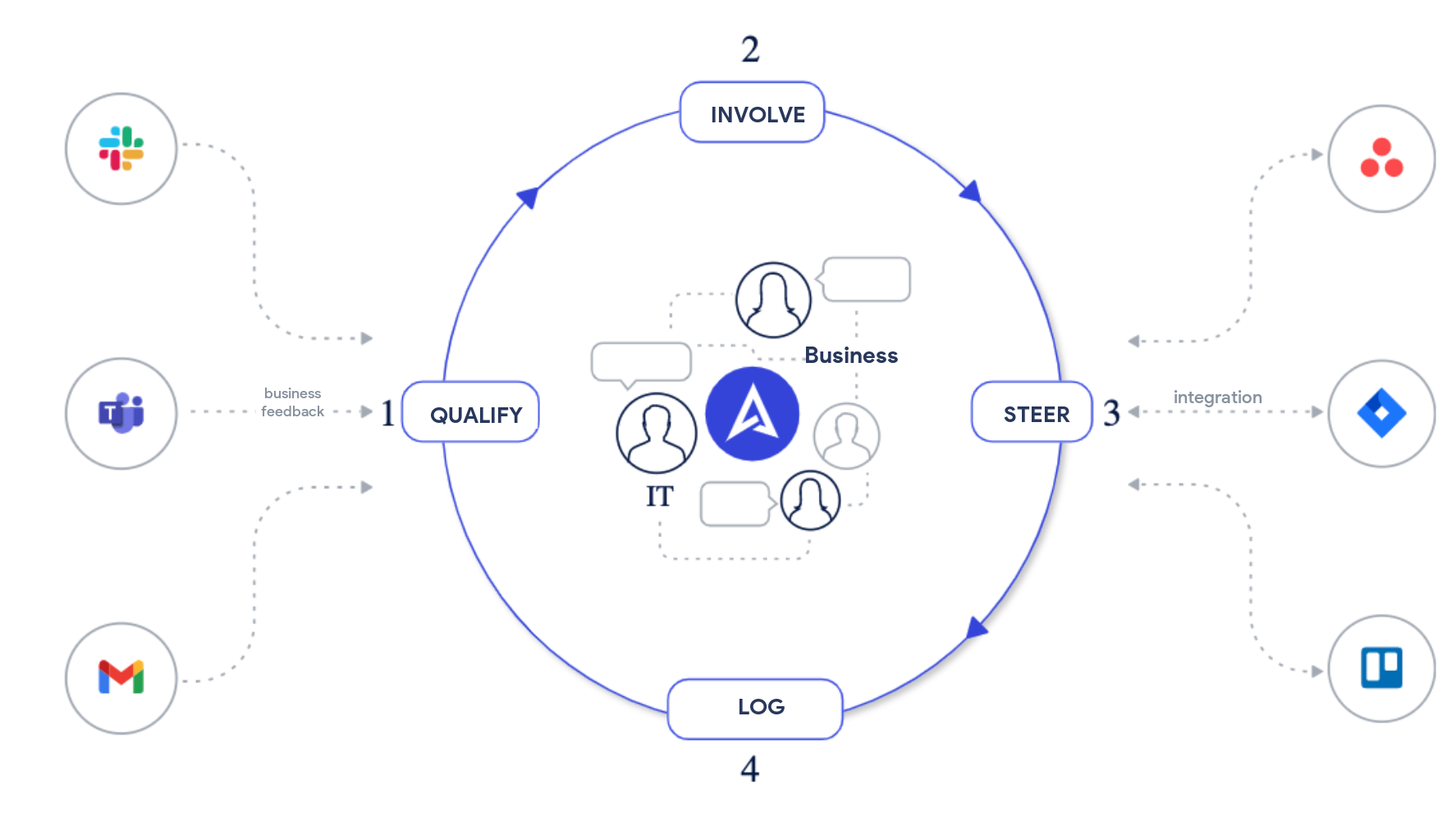
Your operational hub integrated with your tools - Whether with your project management tools (Wrike, Jira, Asana) or your communication tools, AirSaas brings your project data together
In this extended "best of breed" context, using a macro solution interconnected with your various tools will give you the best of every usage. In some cases the term "umbrella software" is used to describe this meta positioning.
A word of caution, though: with a proliferation of SaaS tools scattered all across the company, it can be useful to regularly step back and formalize a usage charter for your internal SaaS tooling. The known record so far: 224 SaaS tools in use at Doctolib. Source: Sébastien Louyot - IT Services Director at Doctolib, in episode 37 of the CIO Révolution podcast produced by AirSaas
At the portfolio level, this approach concretely enables real-time collection, automation and synchronization between a platform and your data ecosystem.
Within AirSaas you can, for example:
- Retrieve your list of projects with their attributes
- Add the time spent per team per project to your AirSaas projects
- Retrieve the list of milestones for a project
- Retrieve and update a project's budgets
- and more to come
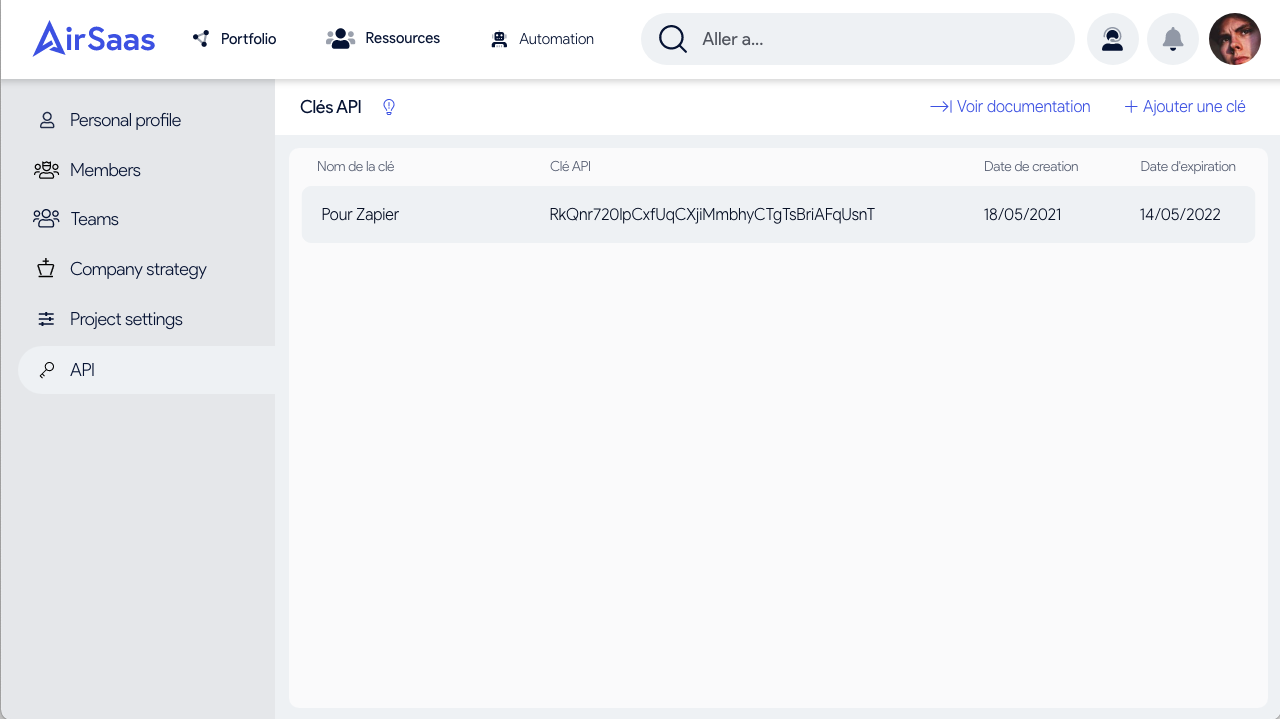
API setup - AirSaas platform
The latest AirSaas integration: Teams
Teams has become the leading internal communication tool in companies.
Not every employee in your organization has an AirSaas license, yet you still need to bring key users on board your projects?
Once Teams is added to your AirSaas workspace, you can connect a project to the Teams channel of your choice.
Concretely, once the two applications are "plugged in", the project's important posts can be pushed to Teams (standard updates, wins, attention points, decisions and meeting minutes). Changes in decision statuses, attention points, project health and risk are pushed too (only when a message is attached).
With this AirSaas/Teams integration, you'll also have the ability to retrieve the list of decisions awaiting you and make a decision in a project without leaving Teams. QED!
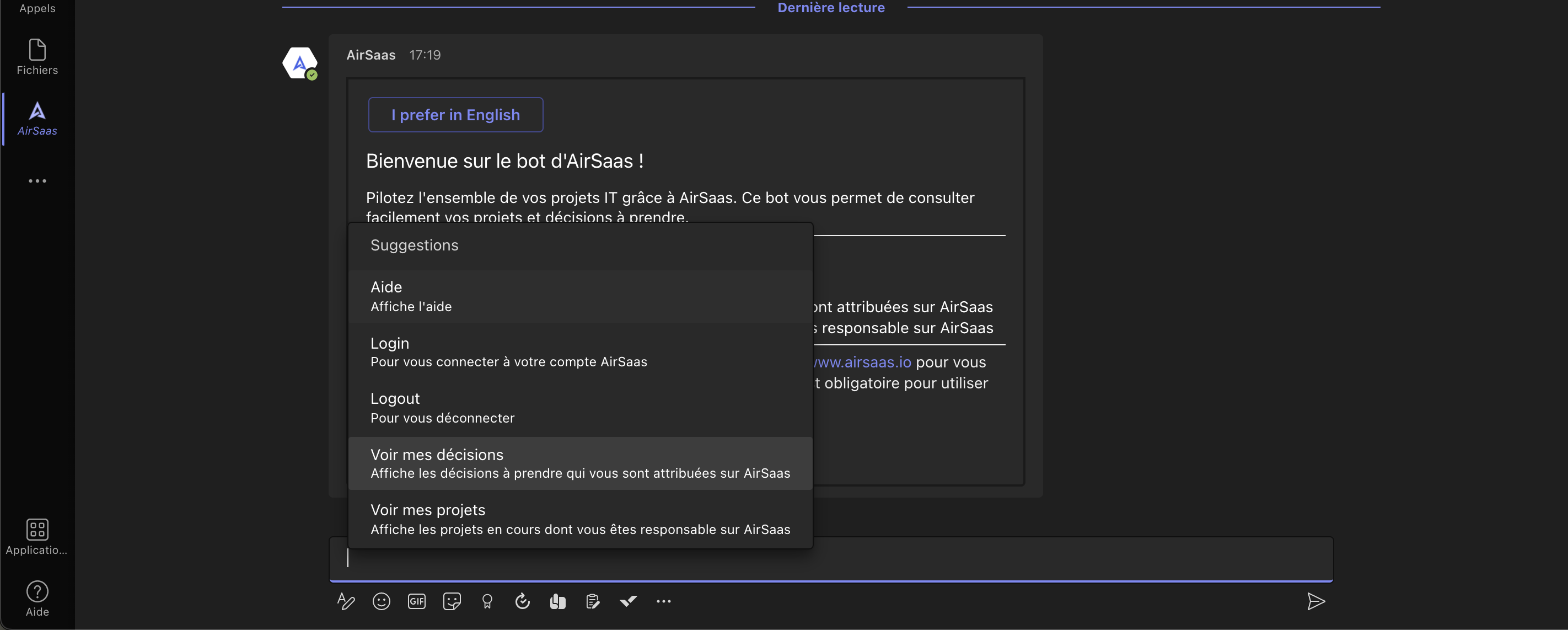
The AirSaas / Teams interconnection in action: retrieving pending decisions
New-generation PPM tools therefore enable better application integration. Integrated or synchronized applications will let all stakeholders join forces on projects, merging interests and ensuring that the technology investment pays off in terms of market share.
Integrations are essential because they automate certain steps and eliminate many of the errors people make.
The minimalism trend & strong UX and UI design serving the employee experience
One of the best pieces of advice ever given :-)
Innovative PPM tools make business teams actually want to spend time in the tool!
Asking business teams and transformation leads to contribute in an ERP, an Excel file or a Gantt chart... those days are over. Top-notch UIs are a must-have.
If you want people to be motivated... offer a solution that innovates on this front too. Give this criterion a prominent place in your selection grid. Once again, what matters isn't the tool's functional coverage... it's the broadest possible adoption! The goal is to make it easier for information to flow up and around through different tactics — in particular by making users want to "tend" their data regularly.
When you go digital, you inevitably have to pay attention to the user journey. Ergonomics matter far more than in an SAP system. You look in detail at how users work and try to understand how the tool you're going to offer them will be effective in improving their daily work. A user who no longer has to make an effort to use their tools can focus on something else: so they inevitably gain in productivity!
On the theme of minimalism, let's not forget the importance of mobile!
CNBC reports that 72.6% of people will use phones to access the Internet by 2025.
As digital becomes "mobile first", this raises design challenges, such as creating light, responsive interfaces suited to these new usage patterns.
You get the idea: minimalism in project portfolio management is trending!
Take, for example, the rise of Lean Portfolio Management (LPM), which illustrates this quest for simplicity... the buzzword of the moment.
Finally, innovation in the field of user / employee experience also comes down to how the vendor communicates with its user communities. Offering an open space to interact around current and upcoming features. Providing short videos focused on key use cases... none of this is technological innovation. But it brings a shift in usage through an open product approach. For ever-greater stakeholder buy-in. Here again, as you'll have understood, this understated criterion is worth factoring in. Yes, a PPM tool can have a top-notch UX and efficient product communication!
Innovation is sometimes simple!
One example: the day a famous ketchup brand suggested simply flipping the bottle to stand upside down on the table... everyone followed. But beyond the anecdote, usage of these bottles — better suited to consumers' real lives — exploded! That's exactly what's at stake in portfolio management innovation: adoption beyond IT, by the rest of the company and its business teams!
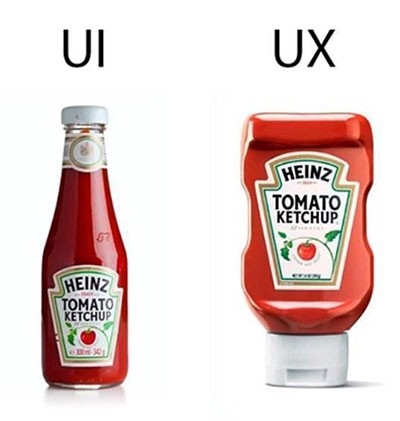
Simple R&D for innovation in user practices
The "algorithms & robots" trend: automation, hyper-personalization and AI serving project portfolio management
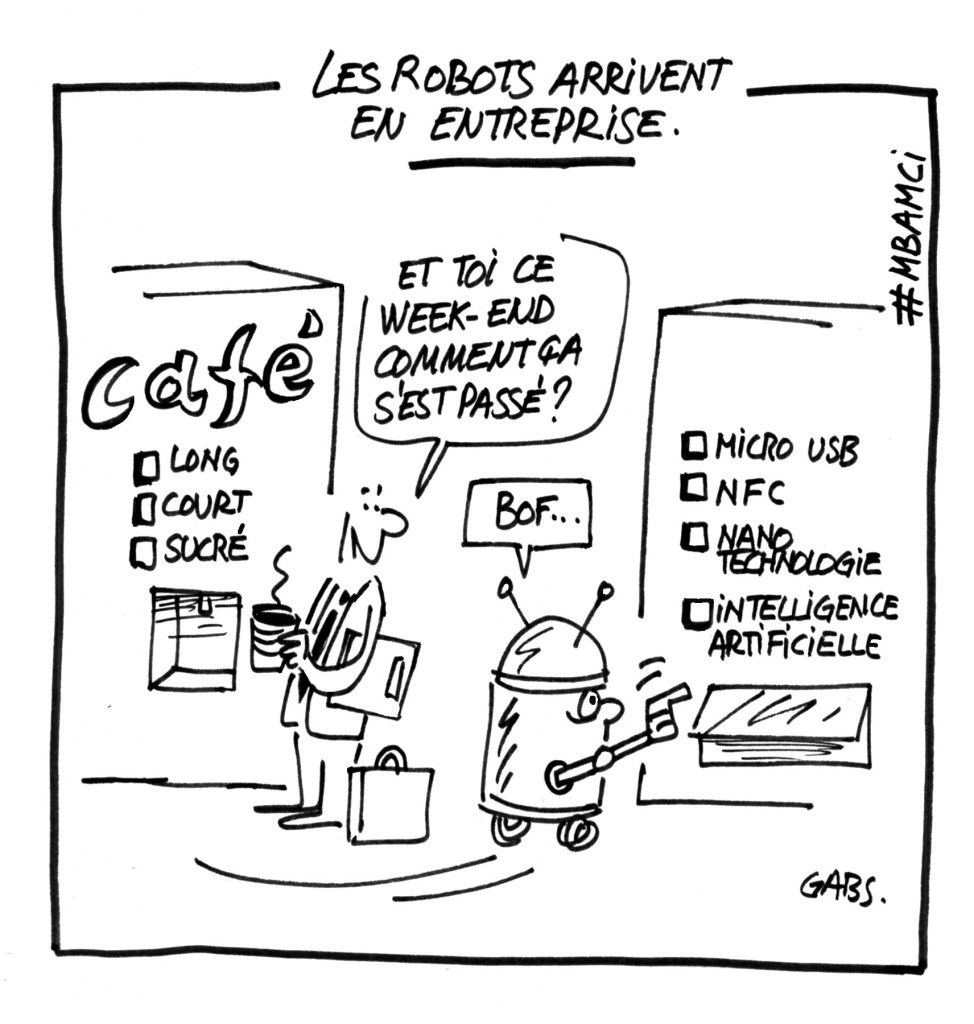
Digital acceleration / Transformation and change are the daily reality of organizations
Artificial intelligence (AI) refers to "an application capable of handling tasks that are, for now, performed more satisfactorily by human beings insofar as they involve high-level mental processes such as perceptual learning, memory organization and critical thinking". That's how the American scientist Marvin Lee Minsky, considered the father of AI, defined the concept in 1956.
While many of these capabilities have been available for years (the concept dates back nearly four decades), recent technological advances now provide better assistance tools for steering transformation.
Example 1: AI as an assistant, with text-generation technologies
Text generation is one of the current trends in machine learning: AI systems that learn by absorbing billions of words pulled from the internet and generate text in response to all kinds of prompts.
In practice, the point here is to help users generate content. Because yes — not everyone enjoys writing, or always wants to take the time.
Text-generation technologies are based, among others, on GPT-3, OpenAI's algorithm.
This is AI that helps people grow their skills. Think, for example, of tone-detection features in messages that can suggest alternative options to writers.
Example 2: Automatic decision-support report generation
At AirSaas we offer an automated dashboard that dramatically reduces the overhead of manual reporting. The management team and all stakeholders have the data at their fingertips to make decisions in real time.
This approach lets you intelligently automate the collection of the information you need to build your reporting.
Data collection, analysis and communication make up a large part of the PPM discipline. AI will improve the outcomes of these tasks, including the ability to analyze data faster than humans and use those results to improve overall performance.
Projects rely on large sets of structured information. Until recently, data scientists had to "connect the dots" manually. No wonder artificial intelligence is reaching portfolio-level management.
Let's also mention the alerting use case, for when something in the project is at risk of going wrong. For example, automatic interdependency alerts.
Beyond collection, automating report distribution is another "nice to have" feature.
Of course, none of this replaces a project or steering committee... that's not what we're saying. But used well, these various automations free up time for project managers... And as a bonus... no one will be able to say "I didn't know!" anymore.
Key takeaway: technology is a precious ally for steering your project portfolio
We've just walked through three of the technology and usage innovations that are shaking up project portfolio management.
AI's promises as a steering assistant are well on their way to being kept.
- High-quality assistance services such as chatbots and other automated assistants can lighten your workload.
- Natural language processing (NLP) and voice commands make software simpler
- The magic equation for a successful transformation with project portfolio management tools is: User experience + Automation x Service!
Let's not forget, though, that the biggest change is human. And that's another story — one we'll cover in an upcoming article on the Pro de la Transfo blog!
That said, as a teaser, we'll close this article with a look ahead at two macro organizational trends worth considering today when designing your transformation strategy.
Business-led IT
The decentralization of IT is underway. Business-led IT — where employees, not the IT department, decide which technology to use — promises to make workers more productive, respond faster to market conditions and increase job satisfaction. Companies can prepare for this trend by adopting policies to govern and secure technology acquired through a decentralized purchasing process, rather than a command & control approach that ignores shadow IT and the decentralization already in motion.
Toward an adaptive portfolio management model focused on value creation
The idea is to focus on transforming the organization from "Projects" to "Products", because projects are always late, while products ship continuously.
Many organizations have "flirted" with PPM. They tried formal numerical or measured assessments for project selection and prioritization, then quickly rejected them as rigid, time-consuming or producing flawed results.
Old-school PPM is gradually giving way to new-generation PPM tools with lean portfolio management and its value streams, which look like the next "big thing" — a super-trend in portfolio-level management. Value streams are large "teams" — able to form, organize and, apparently, make better portfolio-level decisions in a race to deliver more value, faster.
What if you took back control of your project portfolio?
Book a demo and discover the tool in 30 minutes.