November 14, 202211 min readJérôme Dard
Lean Portfolio Management: continuously aligning leadership, IT and the business

Contents
Prioritization and the quest for operational efficiency in transformation are topics that keep many executives busy. "Everyone is scratching their head," as an experienced CIO and member of the AirSaas Pro de la Transfo community summed it up with humor during an interview.
And let's be honest: executive leadership and business teams can be hard to bring on board with a Lean-agile culture of project portfolio management, often seen as a purely IT topic.
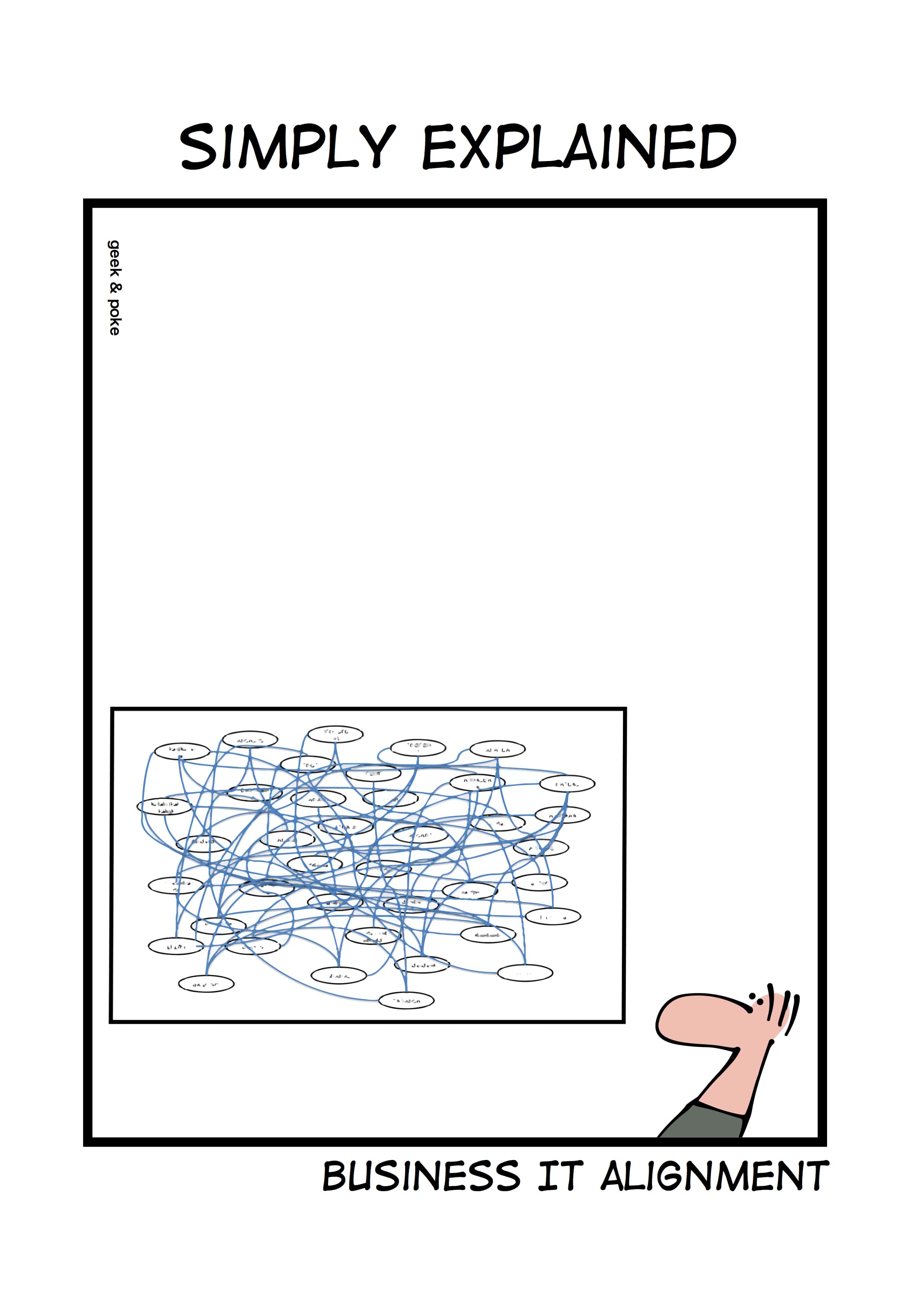
The art of aligning IT and the business in organizations
In this article, we'll look at executing your company strategy continuously, and at executing your business strategy through the lens of Lean portfolio management. At the dialogue and cooperation between silos, at your value stream, at how budgets are allocated. We'll dig into approaches that promise to improve your agile process and increase the value your projects deliver. In a word: strengthening the effectiveness of your portfolio management.
We'll talk about Kanban, value stream mapping, agile-at-scale frameworks, visual management — and maybe even an agile release train!
Disclaimer! These topics are complex. So if you were looking for a no-brainer article... stick around anyway!
Our goal here is to cover these themes by sharing convictions and staying as pragmatic as possible — all with the "no corporate-speak" filter switched on.
Along the way, we'll sprinkle in a few pinches of history and semantics about Lean, especially when it comes to understanding where the key concepts come from and what they mean. Because going back to what words actually mean makes for an approach grounded in principles and method, rather than a simplistic, toolbox-style one!
The 3 problems with project portfolio management today
Portfolio management today is too static
Planning a year ahead is no longer realistic. In this famous VUCA world (volatile, uncertain, complex and ambiguous), when the market, management or scope go through rapid change and disruption, traditional product portfolio management methods no longer allow you to manage effectively.
One example among many: agile teams deliver in 2-to-3-week sprints while, in many cases, portfolios are locked in for the whole year!
This temporal contradiction also applies to decision-making, which operational teams often see as taking too long and involving too many people.
Likewise, on 18-month horizons, budget estimates are pure fiction! And in the end, the substance hardly matters: what counts is convincing finance to secure the budgets.
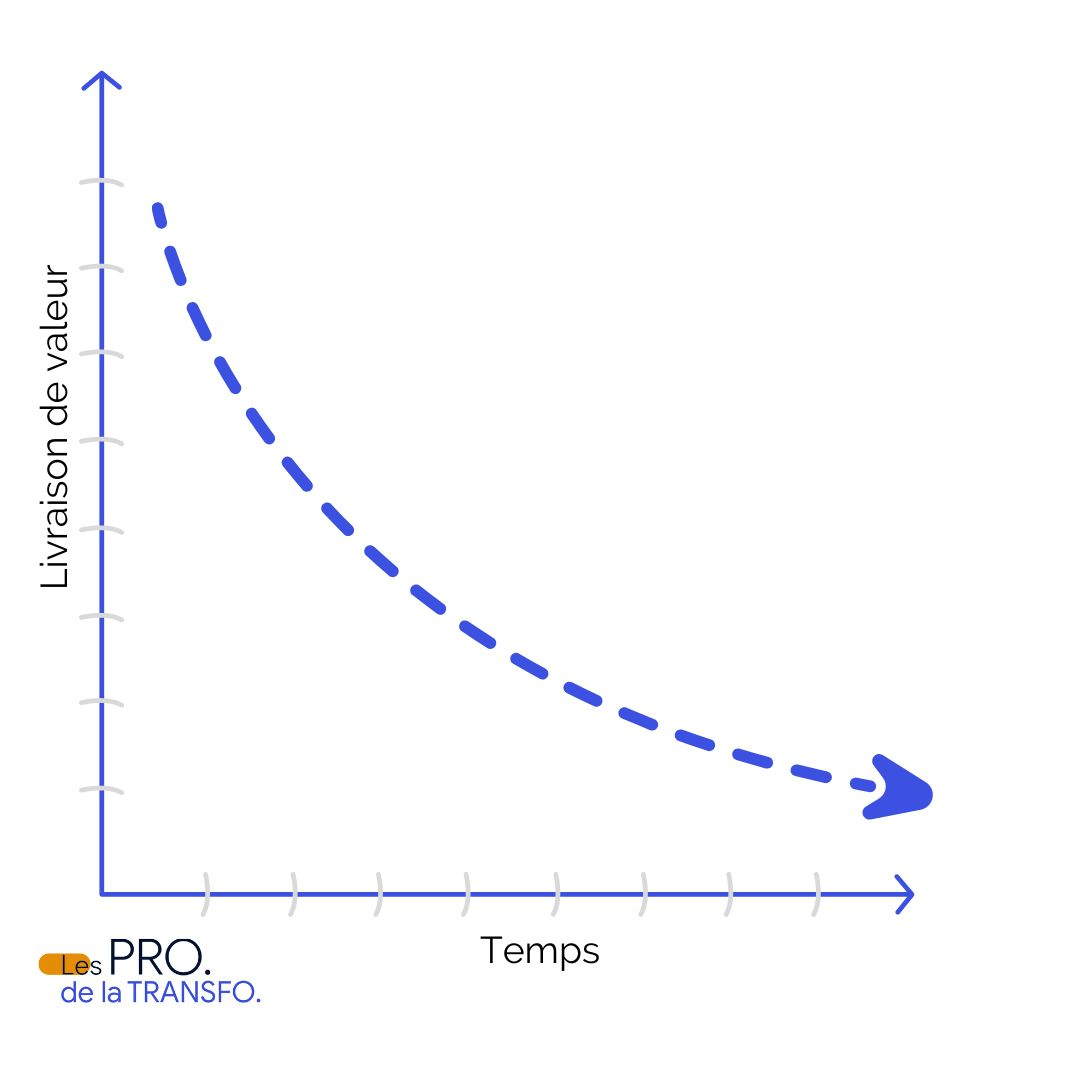
The value delivered is inversely proportional to the time spent
It bears repeating: the value delivered is not the quantity delivered!
The agile philosophy emphasizes delivering value-adding features within a short timeframe as one of the team's success indicators.
The diagram below illustrates this trend, and invites us to fight the "always more" syndrome disconnected from delivered value.
No need for a three-day training course... A picture is worth a thousand words
We don't see enough of the transformation "big picture"
To prioritize better and stay aligned continuously, we need to see a "big picture"!
Generally speaking, let's say it: executive leadership, IT, business teams and project managers have too many topics to address. Without synthetic groupings, it's very hard to genuinely work together, to cooperate.
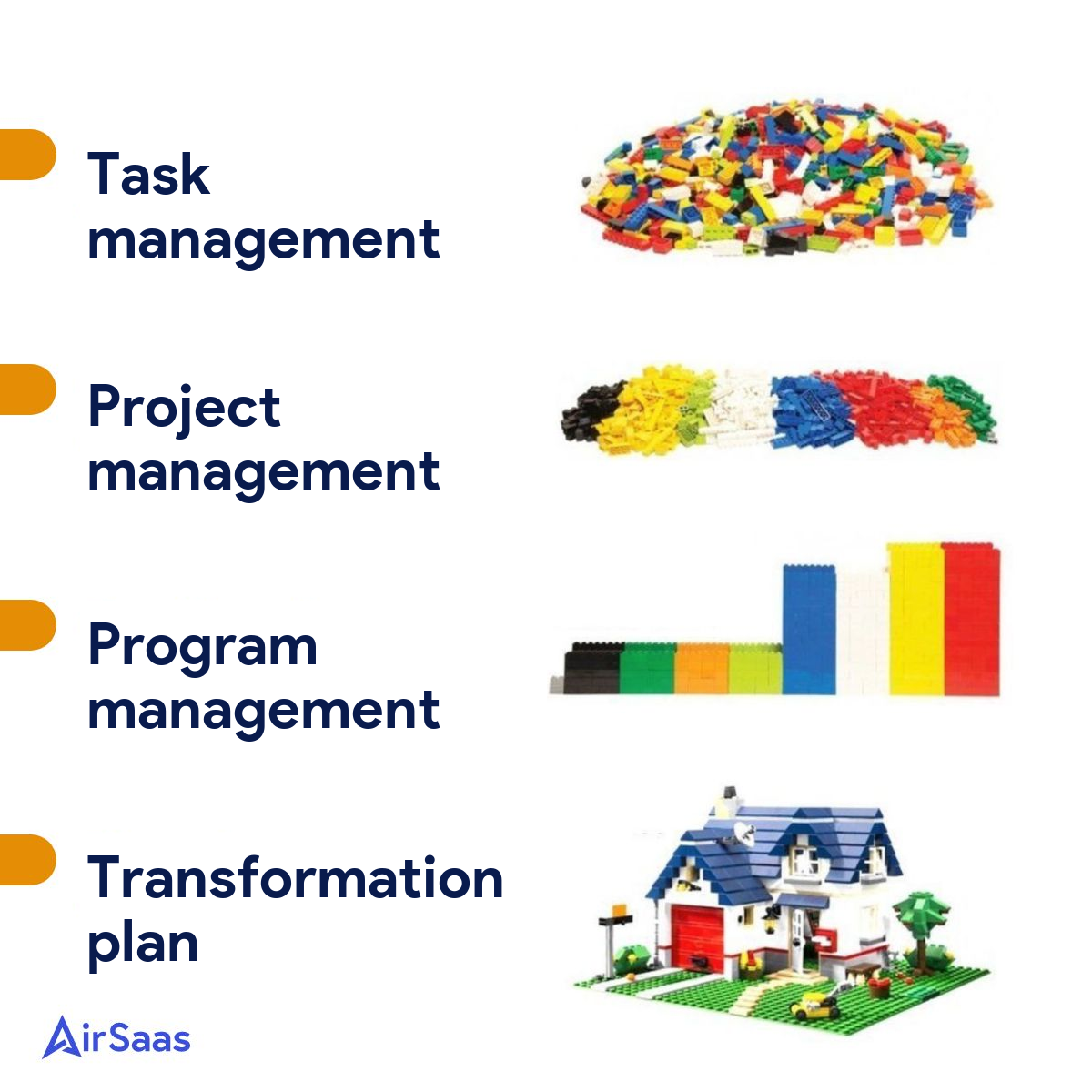
A clear vision that makes sense for everyone!
From a "big picture", the various stakeholders will be better able to assess the relative individual importance of each of the projects submitted.
And even better: thanks to this global view, we'll be able to group certain requests together, perhaps spot synergies, and combine these different project ideas to create a program! A program and/or a transformation plan that makes sense to employees.
The Lean-agile approach
Lean story: where the concept comes from and why it's useful
Lean thinking, startup, Lean enterprise, manufacturing, Lean budgeting, Lean management, governance, Lean office, Lean PMO, Lean Portfolio Management...
Help — Lean has been slapped onto everything! So before focusing on Lean portfolio management, let's go back to the roots.
The literal translation of Lean is "thin". Among its common meanings, the one to remember is "just enough, no excess".
The objective is to drive toward performance (in productivity, quality, lead times and costs) through continuous improvement and the elimination of waste, all with the aim of creating value to satisfy the customer. The core idea of Lean is therefore value creation.
The expression "Lean production" emerged around the 1990s, and its principles were formalized in the book The Machine That Changed the World written by James Womack, Daniel T. Jones and Daniel Roos. Then in Lean Thinking, published in 1996 by the same authors.
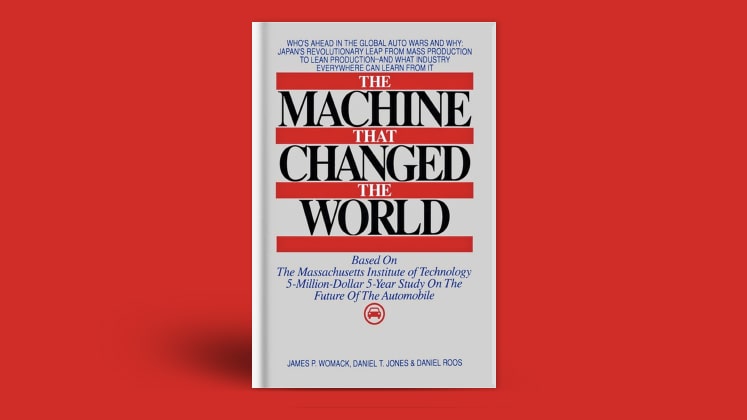
The book The Machine That Changed the World
Agility at scale
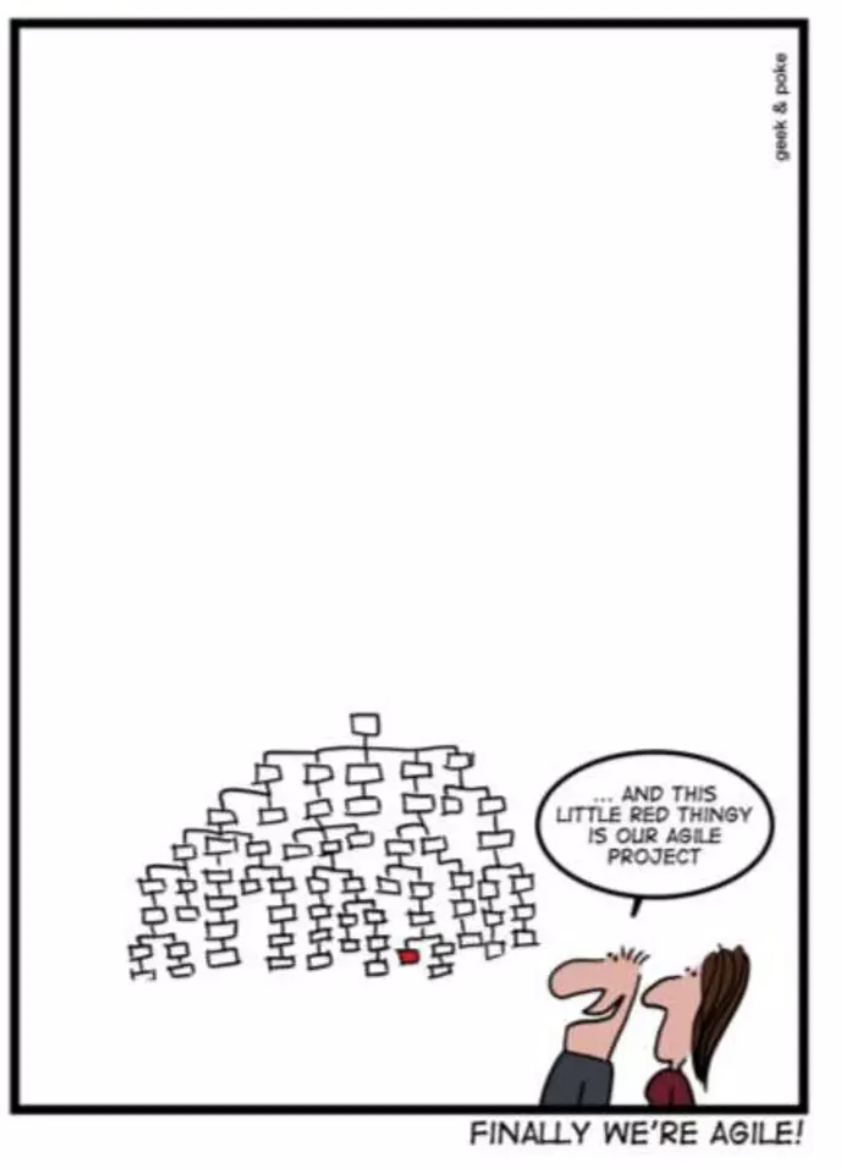
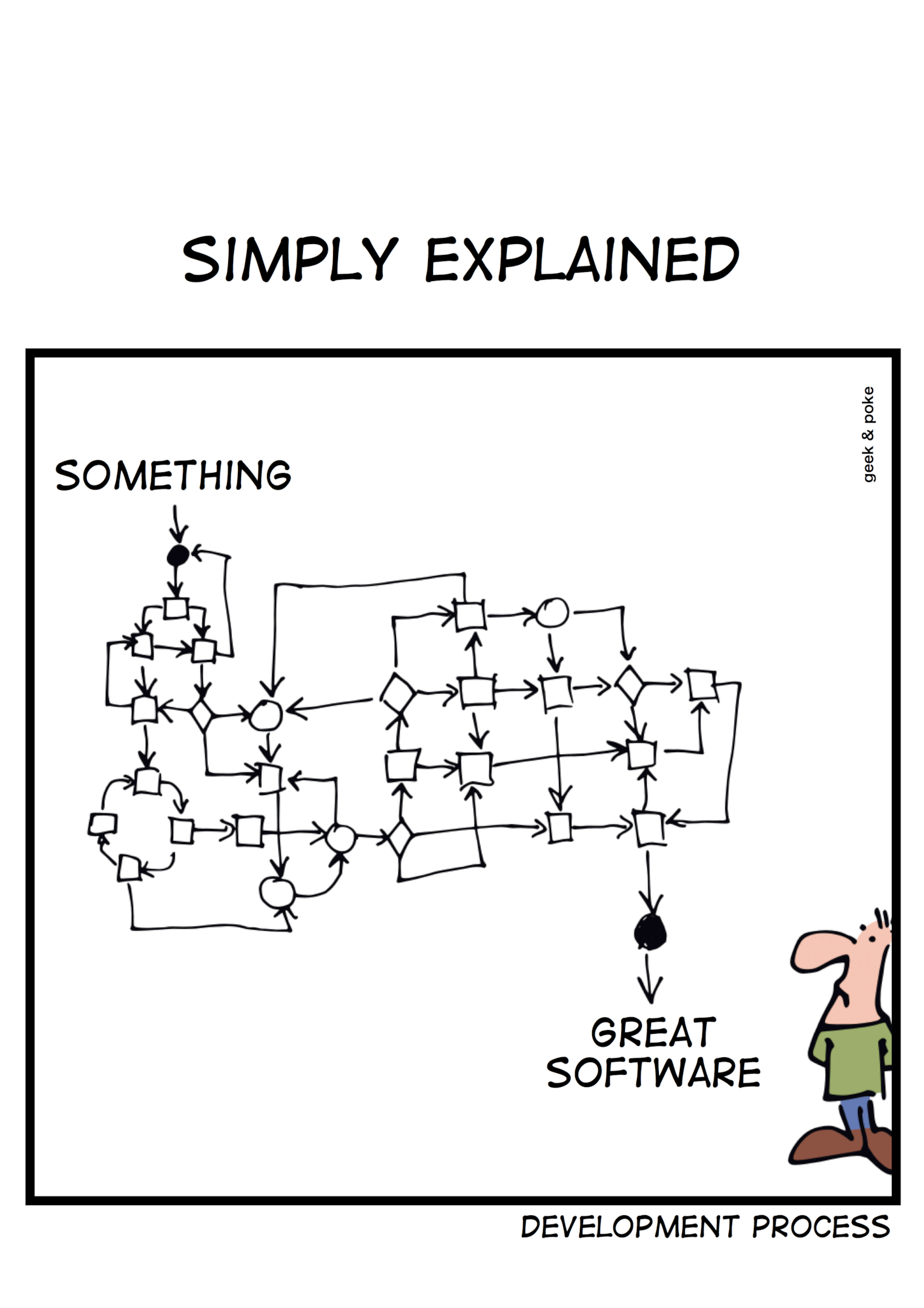
Source: geek & poke
Models for deploying agility at scale ("scale up") are as revered as they are criticized! An overengineered transformation machine for some, a brilliant organizational framework for others... one thing is certain: you can't generalize. There are many frameworks — SAFe, Nexus, Spotify, Scrum at Scale, LeSS or even DAD... and on top of that, they evolve fast.
These different frameworks propose approaches that vary in ambition and, above all, in scope. With Lean Portfolio Management, SAFe, you enter the near-industrial organization of workflows — into interdependencies at the scale of an entire company.
In any case, the challenge is to capture the value that agility targets while adapting it to several digital teams — sometimes dozens of them!
Implementing these Lean Portfolio Management frameworks at scale will require understanding how strategy gets defined, budget cycles, management control — and the involvement of top management! Complex to implement in organizations, it can prove extremely powerful in the effects it produces.
So take care to factor in your organization's size, sector and business structure before diving in. Plenty of field feedback confirms how relevant this system is in fully product-oriented organizations, such as in banking and insurance, that do nothing but software development.
If you don't take all the parameters and key criteria into account, in organizations that aren't "full product" you risk showing up with a huge sledgehammer to push in a thumbtack!
A CIO from the Pro de la Transfo community, interviewed about SAFe, confirms it:
With SAFe, there are some good concepts. You have to take the interesting bits and step away from the dogma. You can organize one department with SAFe... but the whole company, vertically? Ouch, ouch, ouch!
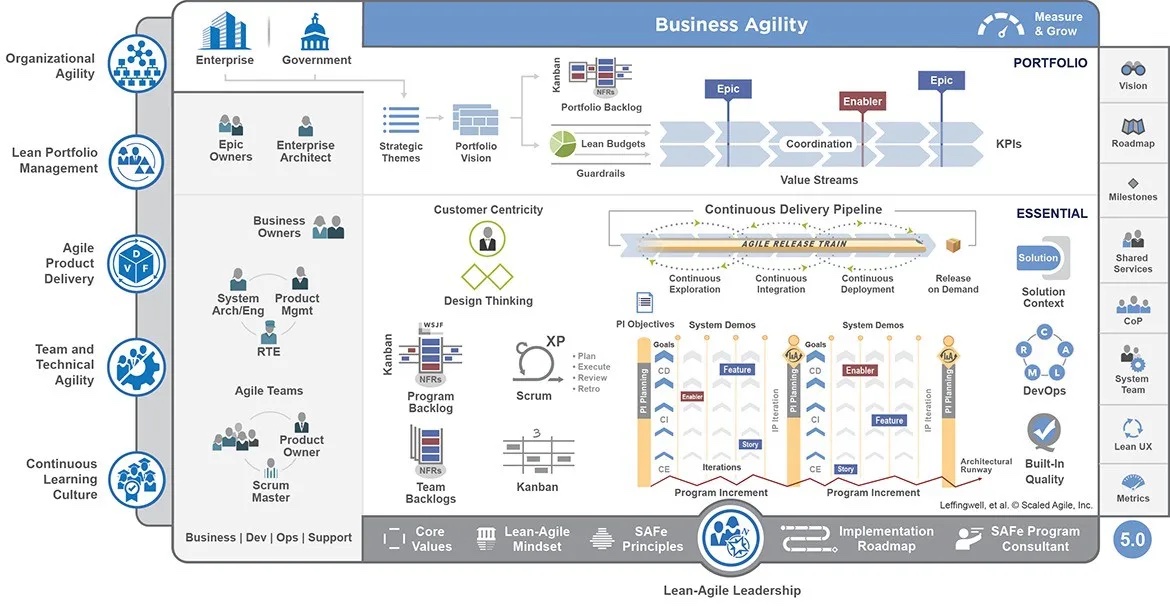
Source: SAFe for Lean Enterprises
Let's not be intimidated by this diagram and let's stick to the general philosophy of SAFe, which rests on nine principles:
- Take an economic view
- Apply systems thinking
- Assume variability, preserve options
- Build incrementally with fast, integrated learning cycles
- Base milestones on objective evaluation of working systems
- Visualize and limit Work in Progress, reduce batch sizes and manage queue lengths
- Apply cadence and synchronize with cross-domain planning
- Unlock the intrinsic motivation of your people
- Decentralize decision-making
In short, even if you don't work with an army of Lean-agile coaches inside a large CAC 40 bank, these principles are all good practices and opportunities for change.
Draw on this culture to create and sustain your own "ad hoc" Lean portfolio approach — that is, one genuinely adapted to your organization.
Lean Portfolio Management: slicing projects, the light way!
Those who master large-scale software delivery will define the economic landscape of the 21st century. — Mik Kersten, Project to Product.
Project management aims to meet specific requirements and to complete a given project within the agreed time and budget.
One of its strengths is bringing a concentration of attention and resources with "just the right" tension. A mobilization that, in theory, gets cross-functional departments of the company to cooperate temporarily, outside silos.
One of its weaknesses is that, when poorly sliced, portfolios are no longer agile! They become "obese"!
Portfolio reviews then lose their stakes, and their bandwidth for re-ordering priorities... With a potentially severe demobilization of the teams as a consequence.
The key contribution of Lean Portfolio Management will be to change the time horizon. To run on "quarters", for example — even for an ERP/CRM project! We'll come back to this further down in the article.
Finally, let us draw your attention to one tricky part of the process: the idea is not to switch entirely to product mode, but to make the product side and the project side coexist.
Because yes: even though operating in "product mode" is one of the valuable contributions of Lean Portfolio Management approaches, it is not at all suited to the vast majority of mid-sized companies and SMBs.
Making the product and project sides coexist: the two approaches are not opposed — quite the contrary, they interact!
It's somewhat the paradox of modern delivery models. We are increasingly led to create a "hybrid" delivery culture. The right mix of project culture and product approach.
The need to change how digital systems are built
One lever you can pull to keep pace with change is applying a Lean-agile approach to portfolio management, toward more "Business Agility" for your digital transformation.
The Lean-agile approach builds on the Lean principle of decentralized decision-making and of transferring responsibility to the people closest to the ground.
In academic — sometimes indigestible — terms, the definition of Lean Portfolio Management goes like this:
"Lean Portfolio Management (LPM) is an approach that aims to align strategy and execution. By applying systems-thinking approaches to strategy and investment funding, to Agile portfolio operations and to governance, giving priority to product and application development initiatives."
In more schematic — and more explicit — terms, the LPM process is as follows:
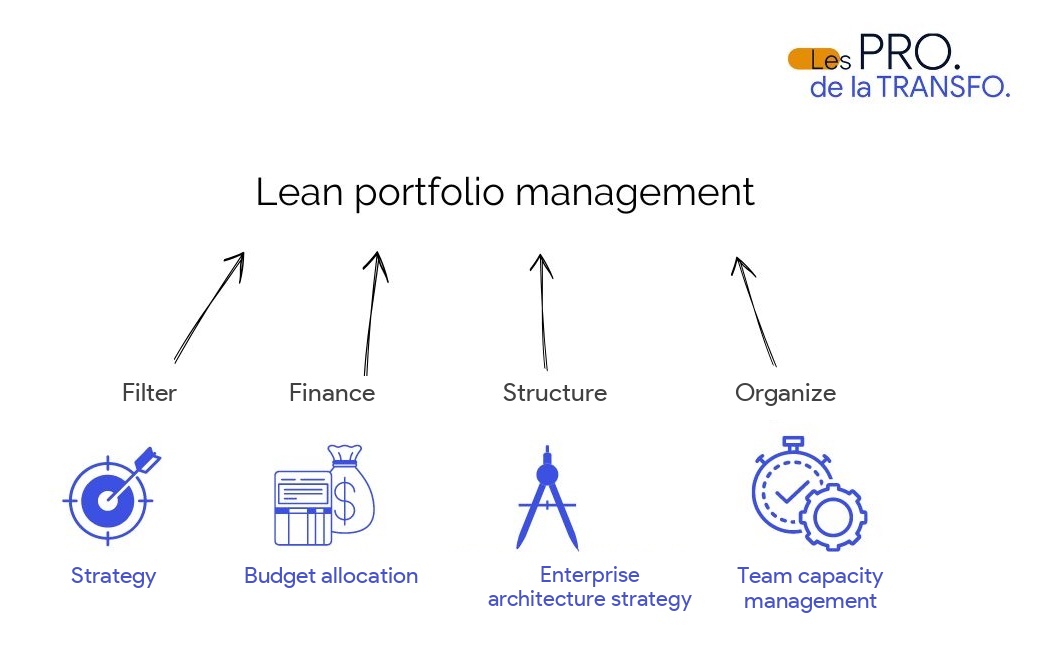
The Lean Portfolio Management process breaks down into two stages: qualifying incoming requests upstream and the operational steering of the selected initiatives downstream.
Done right, LPM increases your agility. That happens when the company's planning, funding processes and business strategy align with the business outcomes the company wants. Behind these terms, there are real men and women — from IT, executive leadership and the business — trying to align!
Lean Portfolio Management: how do you implement it?
Lean portfolio management — update in progress
Slice into "quarters" to align with the company roadmap
Moving to product mode changes the time horizon. As we saw above, one of the problems with project management today lies in a cadence too far removed from company and customer rhythms. Reformatting your portfolio for a better fit with your organization's timing is a simple, effective and profitable piece of advice for your roadmap!
The example below shows a Lean-agile annual slicing model.
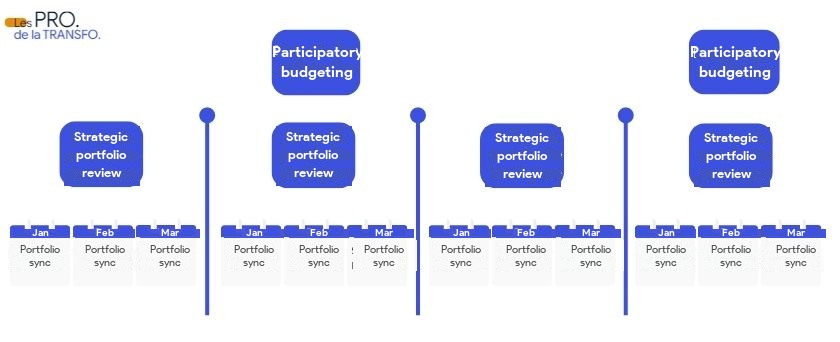
Lean portfolio management: adapt continuously!
A methodology with fast deliveries of what has been prioritized will support a more natural working rhythm than the tunnel effect.
Still with a view to reinforcing these new project governance rituals, we're happy to share a tip from an experienced CIO:
"At every milestone 'review', I take the project managers / PMO out to a restaurant to say thank you!"
An invitation to a festive moment at every major milestone!
Remember: it's team spirit you need to build!
And let's not forget to celebrate the key milestones of these rituals properly.
Explaining to the business that we took the time to select their priority project, that we managed to fit it into capacity — when all of that runs smoothly, it immediately eases the relationship between IT and the business, even in the more complicated moments.
Bet on visual management and the UX of your tools
What Lean and agile approaches have in common is making the work to be done visible — operations, the project portfolio. Whether in an obeya room, on a Kanban or a mind map, the idea is to show things in the clearest, most engaging way possible.
If you want to involve a company's employees in topics as technical as those handled by IT, better do it on an interface they'll enjoy.
PPM tools that bet on UX therefore generally offer an interface intuitive enough to support the continuous alignment of executive leadership, IT and every business unit.
Use a Lean Portfolio Management tool
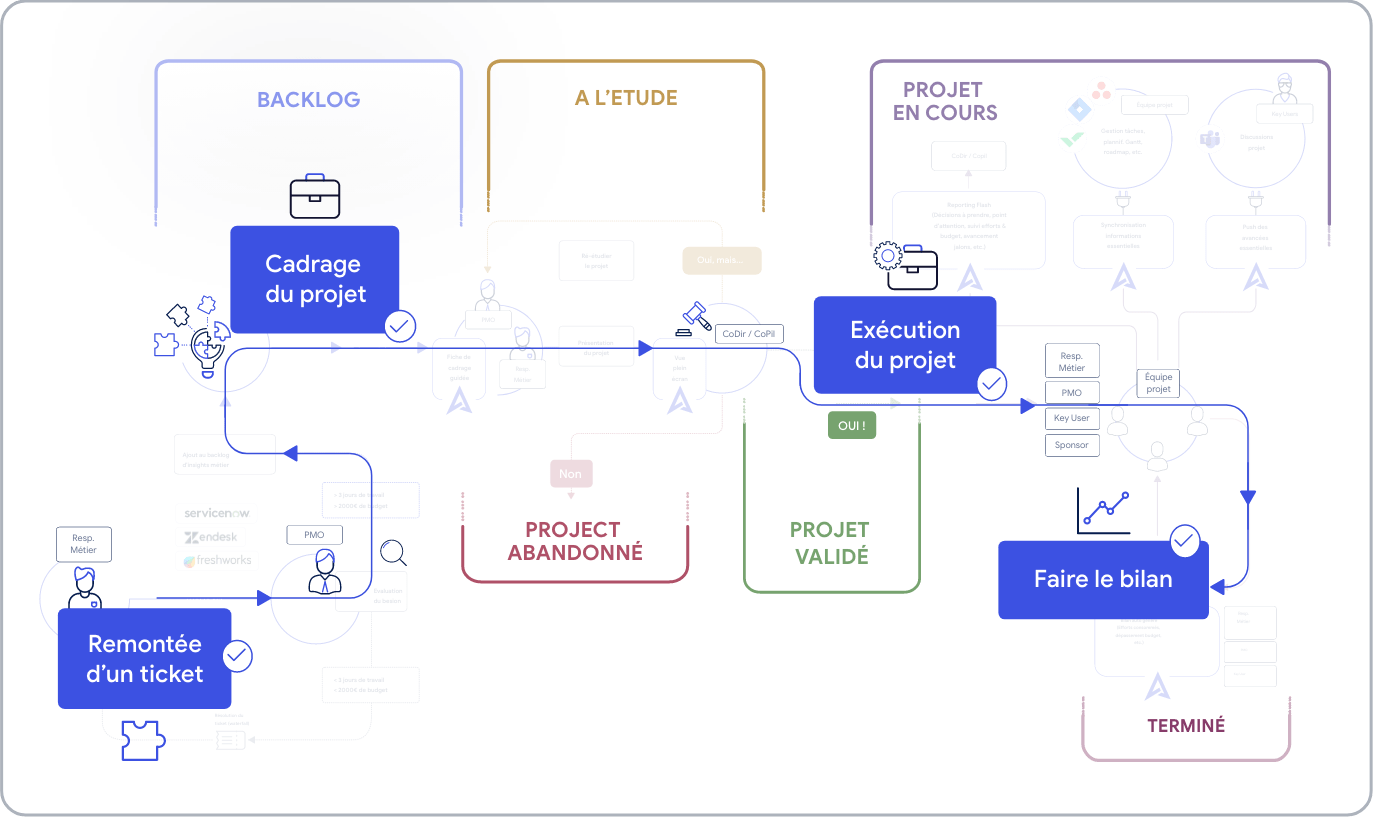
AirSaas: the solution to continuously align executive leadership, IT and business units
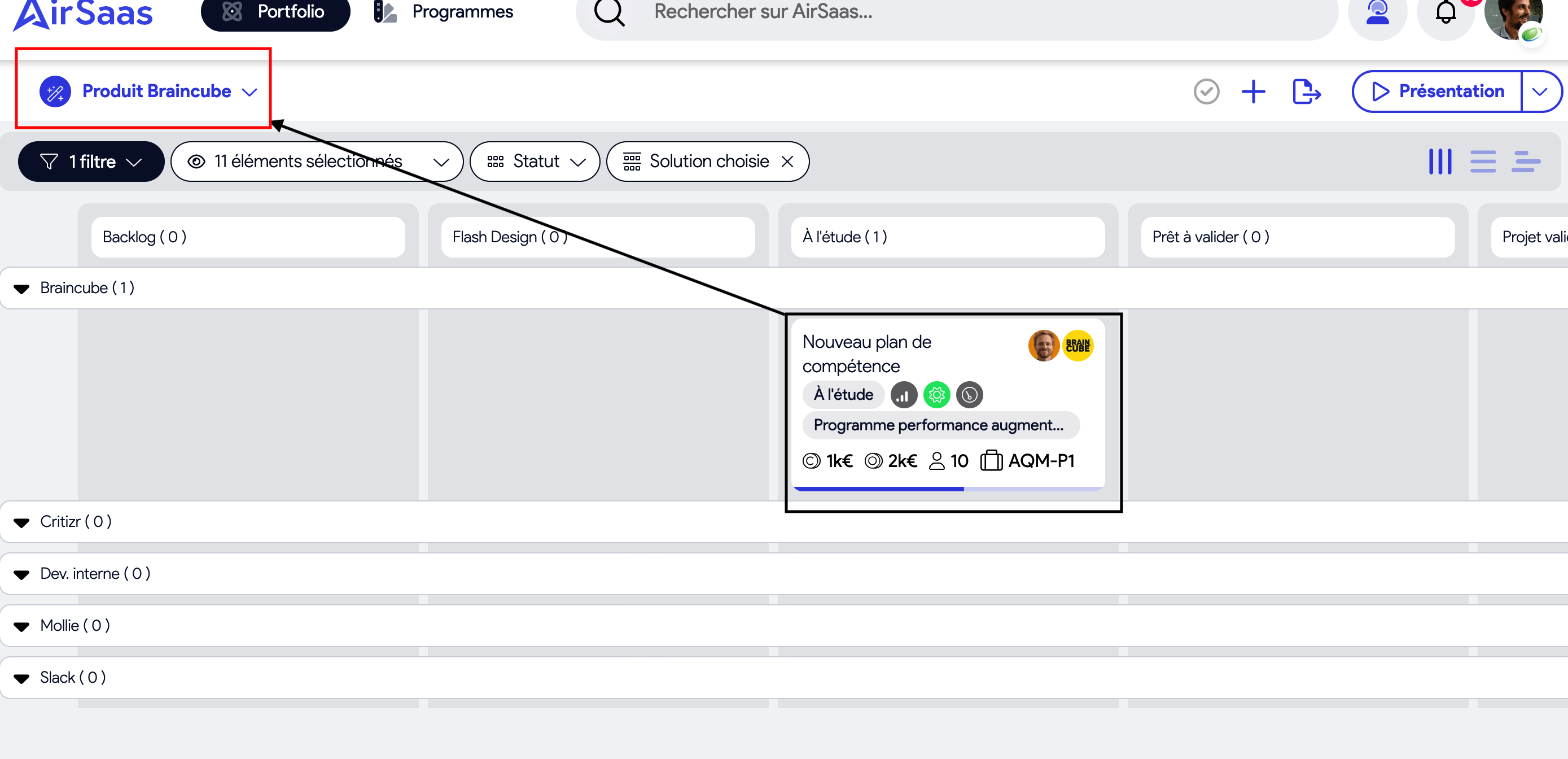
AirSaas's portfolio management solution helps companies adopt a Lean and agile mindset. It maximizes continuous cooperation between customers and suppliers, business units, IT and executive leadership by connecting their teams, products and portfolios to their goals and objectives across various frameworks. All of this to help companies achieve enterprise-wide agility.
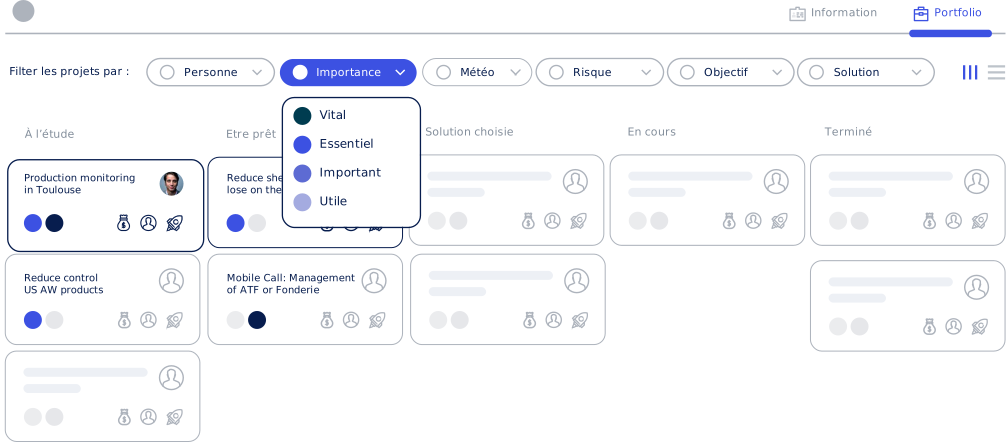
Lean Portfolio Dashboard
Give your project governance body a decision-making apparatus. The AirSaas project portfolio brings together, in a single synthetic view, the combination of indicators needed for value-driven decision-making.
Key takeaway: continuous alignment is the key!
- Moving to Lean Portfolio mode changes the time horizon.
- Lean Portfolio Management is a systemic approach geared toward continuous adaptation.
- Alignment and trust can't be decreed!... They're built step by step, through sincerity and mutual respect.
Consider Lean Portfolio Management now for a successful business transformation!
What if you took back control of your project portfolio?
Book a demo and discover the tool in 30 minutes.