July 7, 202211 min readJérôme Dard
Project tracking: how to keep your stakeholders aligned?
Contents
No successful strategy execution without your stakeholders' buy-in!
We're going to look at effective modern project management methods that will help a project team positively influence its stakeholders — and do so sustainably!
You may well be wondering: "Why should I even care about this blind spot of project management?" Because stakeholder alignment is a critical resource! Because at every single stage, your project deserves the strong, constant commitment of its stakeholders.
Yes: the budget and the efforts made by team members deeply involved in the work need the support and alignment of people who are further away but still concerned — and that over the long run. To move forward effectively, the challenge is to keep a good level of energy and engagement around the project team. A real challenge if you don't apply modern solutions and ways of working.
Let's focus here on the concept of project tracking, and on five levers to modernize this practice within your organization.
A reminder: what is project tracking?
A quick refresher if you're arriving from planet "I know nothing about projects": the purpose of project tracking is to control that execution goes as planned — according to the established schedule and the expected quality, that human, material and financial resources are respected, along with the status of milestones. It's a control and validation tool. It serves the project's objectives — so you have every reason to spend a moment on it.
As for stakeholders, they are the people who have some kind of interest in the outcome of your project. The people who will impact — or be impacted by — the project over time. There are always more of them than you think! This somewhat vague notion covers very different realities. When things are fuzzy, something's usually fishy. It's up to you to bring precision. A well-known adage in project management!
To dig deeper into the topic, check out our comprehensive guide to project management.
Traditional project tracking handles stakeholders poorly (or not at all)
- For years we've witnessed projects that either neglect their stakeholders or, at the opposite extreme, are crushed under their stakeholders' weight.
- The project management process itself shows huge variance between organizations with a strong, standardized, well-tooled project culture and those that are more informal, pseudo-"agile," or even toxic for a company.
- There's an "information gap" between project managers, executive leadership, the team, and internal and external stakeholders. An aggravating factor: when information does reach stakeholders, it rarely comes in inclusive, plain English. Because yes, tech jargon runs thick! Let's try to speak the same language so all players can reach the same objectives.
- Finally, around the projects themselves, there's a general trend of disengagement in large companies.
Is the stakeholder Power/Interest matrix still fit for purpose?
Let's talk about the stakeholder map, the stakeholder-mapping method taught in project management courses. We're taught the importance of a management plan that positions the key players on an influence/interest matrix. It's undoubtedly a good starting point for formalizing your strategy and making sure no stakeholder is forgotten. There are always more of them than you think! Careful: every project must include everyone — suppliers and subcontractors are stakeholders too.
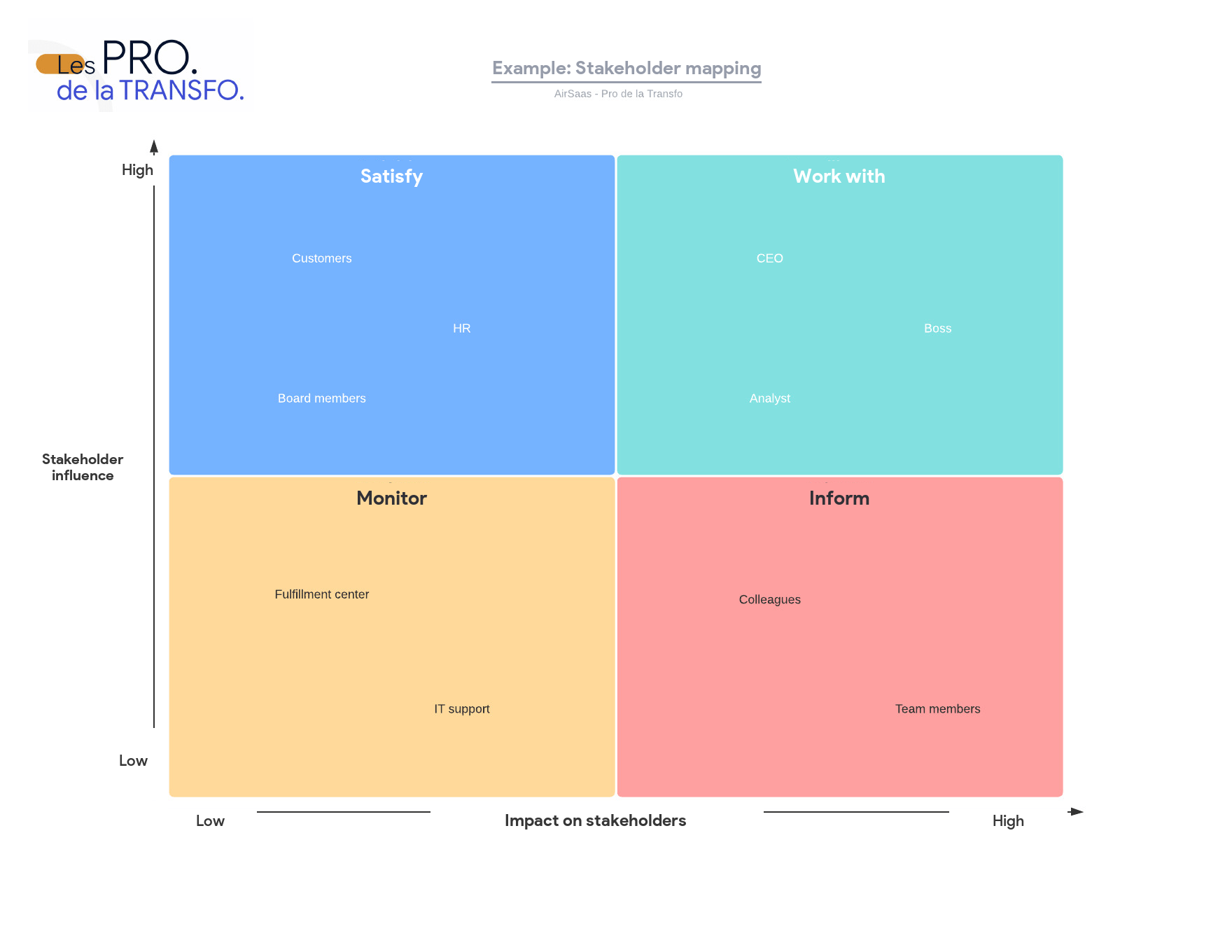
Impact / stakeholder matrix
Nevertheless — simplifying on purpose — this approach to the project plan implies focusing your attention and communication on the key stakeholders. In a way, that's missing the cultural shift brought by the digitalization of organizations. A shift that has enabled more horizontality in workplace relationships. Everyone counts. Any employee should be able to interact with project progress tracking through a variety of communication channels.
🎙 "An essential point in transformation is communication. You never communicate enough — at least not in a targeted, effective enough way. Transformation is something that can scare people. If you don't communicate, projects can be perceived as a risk."
Project tracking: platforms are changing the game
Gone are the days of steering projects by email or a project blog! We now have augmented project management. Remember the example of the automobile, and the first cruise controls and speed limiters. They're becoming standard today! In project tracking, a modernization of processes is under way. Let's not doubt these ongoing updates. And let's choose the best assistant, the best help for every member of the team.
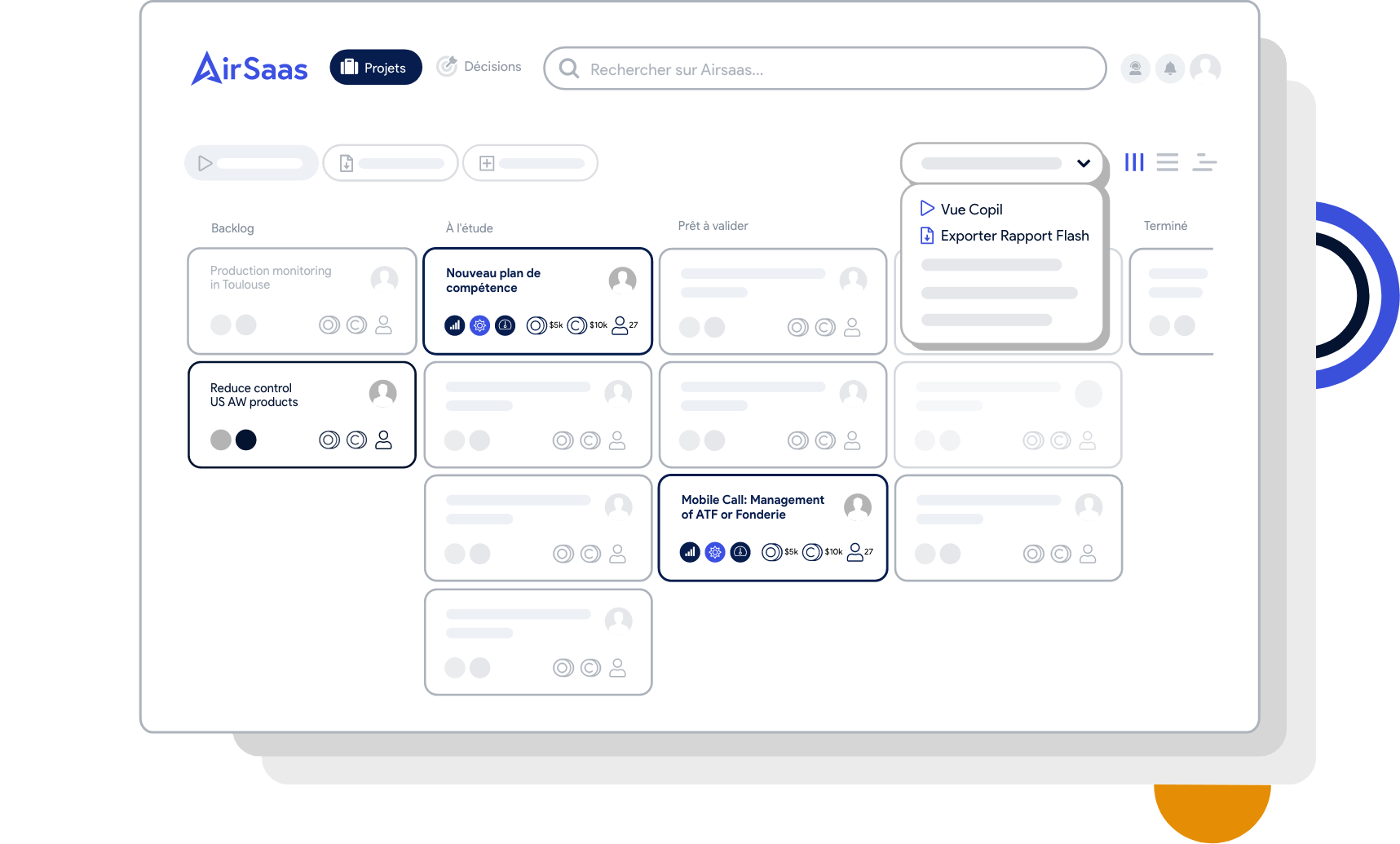
Join the project teams / stakeholders who succeed
5 (modern) levers to keep stakeholders aligned effectively
Alignment can't be decreed... it's built step by step, with sincerity and mutual respect. Each stakeholder may or may not choose to align despite the difficulties encountered — or because of them. To make our lives easier and find possible solutions, we've listed 5 action levers. Discover our selection here.
- Establish everyone's clear "why"
- Set up rituals
- Set transparency at 100%
- Restore a clear direction, or everyone will get lost!
- Surprise your stakeholders!
1. Establish each stakeholder's clear "why?"

The golden circle — start with why
From the very framing of the project plan, your first consultations should serve to identify each stakeholder's clear "why". Why do they want to be involved in the project! What do they personally expect from it?
This step will give you a clear understanding of what is fundamental to them — their "mission."
Careful: overall, they're probably fine with the project's objectives. Dig deeper! Because down in the details they may tell you "no, I don't really like that." All of this is normal. What's fundamental at this stage is to formalize the agreement. Every project manager knows it: what isn't written down doesn't exist. It's one of the constraints of the job. "Factualize" and define together, in a collective agreement, the indicators to track throughout the project.
Finally, let's repeat it: after the discussion with executives, for a proper rollout, run this exercise at every level and continue with all the transformation's stakeholders, to truly align all the planets of your digital transformation.
The power/interest matrix mapping work described above will be a useful starting point for working on this lever.
2. Set up rituals with your stakeholders
Do you know the difference between a ritual and a habit? The former is practiced by "choice," the latter on "autopilot" — and sometimes endured.
Take care of your rituals with stakeholders. Routines and rituals are what will set the pace!
Want to break out of chronic "misalignment"? Instill the rhythm the project needs. Normalize, lock in, and "ritualize" clear rituals in your stakeholders' calendars.
For example:
- Every Tuesday: a half-hour project sync and planning check-in
- Every Friday*: the flash report is automatically sent to all the project's tracking stakeholders
* yes, yes — not once a month...!
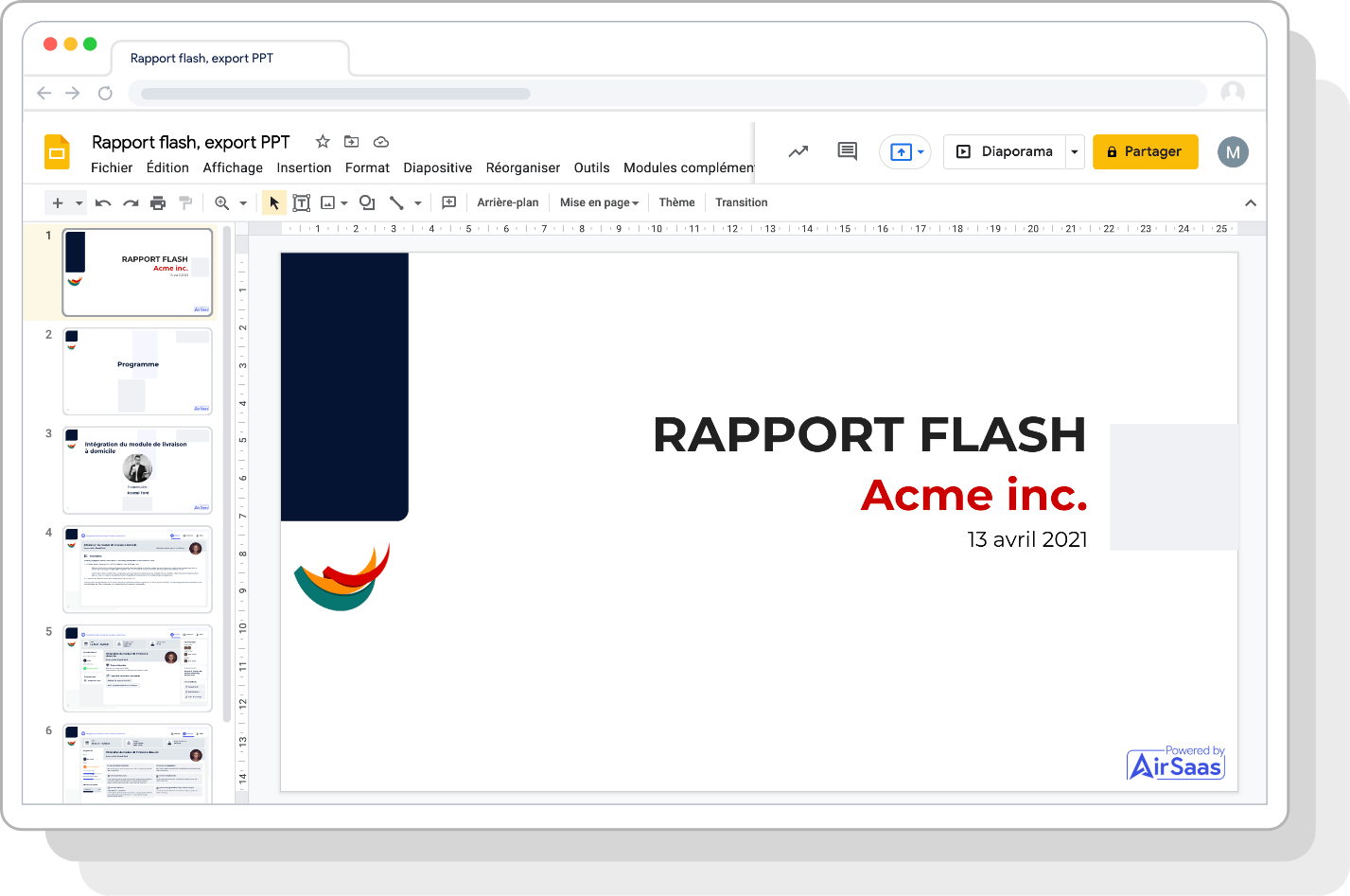
The automatic flash report is your best ally with your stakeholders
It will take time, sure — but the game is worth it. When you're involved in a piece of work, you no longer criticize it the same way. You switch into co-construction mode.
Go beyond simply listening, and respond to the concerns or grievances raised by stakeholders. Show that you're willing to have a conversation and to engage in a meaningful discussion about the issues encountered while tracking projects.
Because transformation is above all a human adventure, cross-functional communication is essential. Otherwise, it's going to sting!
3. 100% transparency = 100% engagement!
This call for transparency is undoubtedly the hardest to follow. And yet, it's a true marker of respect. It will strengthen stakeholders' trust — and therefore their engagement. It's one of the recipes for breaking the vicious circle: information silos → frustration → disengagement. No more reporting locked away in a siloed, hidden project management tool!
Be uncompromising: zero private conversations, no information silos in your project management methods. Let's say it again: without transparency, there's no engagement! The more barriers we put up and the more we try to hide, the more it backfires. Nothing good can come from a lack of transparency toward stakeholders.
Of course, sensitive information is sensitive information — it goes in your drawer and stays under lock and key. But try to avoid information or communication vacuums where nothing gets said out of fear. Otherwise, here's what's likely to happen in your stakeholders' minds: they make up stories. You don't tell them about the program and how it's unfolding? They build their own version! And it will probably be worse than reality. Remember: nature abhors a vacuum.
Be transparent about deadlines, resource management, the dashboard, the budget, the tracking tools, the data: it's the only way to build trust.
If you're failing, let people know you're failing. If you don't know what you're doing, let people know you don't know what you're doing. It's that simple.
No project ever goes as planned! Executive leadership appreciates transparency. What they don't appreciate is when you hide something and, three years later, they discover there was a deviation in the trajectory.
Good news: unlike the old "siloed" task and project management tools, with AirSaas you can ensure total transparency on project progress, decisions, objectives, resources, and results!
Goal: 100% visibility into the project's health and progress.
4. A clear direction, or everyone will get lost
Give and keep restating the project's meaning within the strategy the company has set.
Beyond the project's progress, regularly re-share the "big picture" — the overall meaning of what everyone is contributing to.
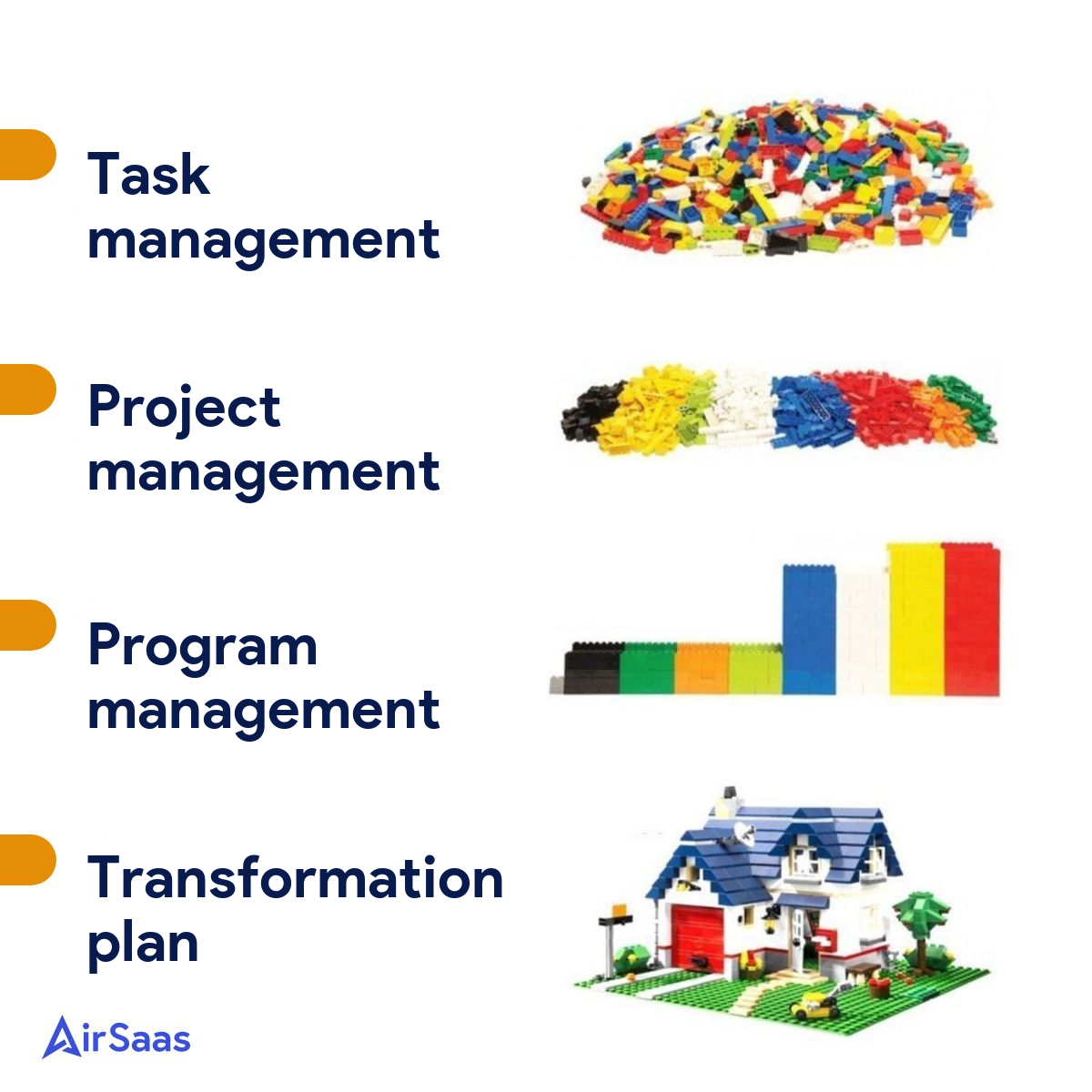
A clear vision that will "make sense" for everyone
Didn't we already say it at kick-off? Yes — and a lot of water has flowed under the bridge since. In an age of chronic information overload, it's more than likely that many of your stakeholders have forgotten half of the key information about the project's meaning and scope.
Which strategic objectives does the project contribute to? Which transformation program does it fit into? What business value does it create for the company and its customers?
In short: let's lift our heads up from the handlebars!
Confucius (him again!) pointed it out: "If you don't know where you're going, any road will take you there." Likewise, in a transformation program, if you don't have a plan, you'll end up following someone else's plan instead!
Project portfolio management — or project management on its own — requires collaborative roadmaps.
The goal remains to see clearly across project management, for decisions and prioritization driven by value, collaboratively and continuously!
And let's say it again: a deviation in the trajectory happens all the time. In a changing world, what matters is adjusting! Three-year master plans are dead: long live collaborative rolling roadmaps that stay up to date while keeping objectives on course.
5. Add some fun — surprise your stakeholders
A transformation project shakes up organizations, processes, habits... outside your project tracking meetings, take care of your stakeholders during this transition phase.
By focusing so hard on risk management, objectives and value, we end up forgetting that we all share a deep need for variety, fun, creativity... In short: mix things up! Be authentic and fun.
- Use visual tools: GIFs and all kinds of lightweight "artifacts"
- Refresh your processes by drawing on the toolbox of agile games "that get the job done"
- Thank each of the project's stakeholders with a gift at the end of a major milestone or key deadline
- Change the venue of the project committee, its time, its format...
- Invite personalities from outside the company*
* A CIO tip:
You can sometimes bring in personalities from outside the company to give fresh energy to the project's vision or execution, or call on experts who can clarify certain topics and/or eliminate certain potentially blocking cognitive biases among some stakeholders.
A double-edged tip, though. The one-off "surprise guest" can land completely out of place — a disruptive element whose added value is quite relative. If they're an expert, why not ask them to write a recommendation note on a specific topic and send it to the people concerned ahead of the meeting? In short: surprise and innovate — always with moderation and discernment!
Key takeaways
Beyond the prerequisite of a dynamic stakeholder map and the first levers presented here, let's keep in mind the human — and therefore complex — side of a transformation project. That's what gives it its flavor!
Do you have all the keys to lean on your stakeholders? You know how to put a pragmatic method in place. To finish the job, the Transformation Pros team invites you to discover a special article on the project communication plan: how to avoid failure?
What if you took back control of your project portfolio?
Book a demo and discover the tool in 30 minutes.