April 20, 20229 min readBertran Ruiz
How to make a cross-functional project a success?


Contents
Not everything is an organization problem. You don't make a cross-functional project succeed just because you manage a Gantt chart well. Methodology still matters, but the real challenge of project management is first and foremost about people — and the team at the heart of the project.
This article gives you all the keys to the success of your next cross-functional project. Pragmatic, concrete advice to lead your project to success!

Cross-functional projects: an engine for transformation
How to work in cross-functional project mode and break down company silos?
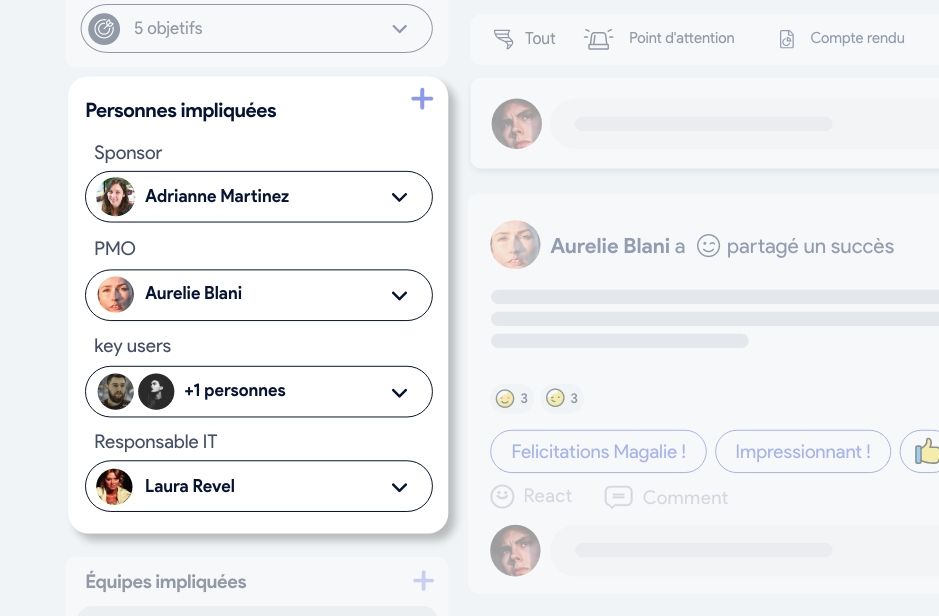
Pick your project's dream team
The sponsor's role
The sponsor, often a member of senior management, must have enough influence with the rest of the leadership team and across the company to make it easier to launch cross-functional projects and be able to put the necessary resources in place for their success — in particular by freeing up time and availability for the key players. They must have the will to shake things up, and they are one of the first champions of the approach and of the shift in perspective about the value of moving beyond the classic way departments operate.
They set the strategic line, challenge progress and play a key role in trade-offs. They also make the project manager's job easier by defending the project in the management committee and suggesting ideas aligned with the company strategy. They can also step in to help resolve conflicts when cross-functional management alone isn't enough.
Building the cross-functional team (task force)
It is strongly recommended to involve everyone who will be connected to the project as early as possible. To do that, you can set up a dedicated committee, whether a steering committee or an innovation committee. But here we'll focus on the team that will carry out most of the project's operational work. You'll want to find as many of the following attributes as possible in your cross-functional team.
Sharp skills
Whether it's the technical side of a profile or deep knowledge of a business environment, you'll aim to bring specialists onto the team for the skills you're after — ideally with some influence. Among other things, this helps evangelize the approach among the company's other employees.
Driving forces
On the front line of delivering the objectives, the members of a cross-functional project team must be drivers of change. They are the first actors in this process, which is often new. So you'll want to avoid people-related friction and blockers as much as possible, by building the team with profiles who share a positive mindset about launching the cross-functional project. A great way to motivate every stakeholder in the organization involved in your cross-functional project!
What does working cross-functionally mean?
Working cross-functionally means, above all, working without hierarchical ties, with people who often don't work in the same department and with whom it's hard to share time.
- Project management built on transparency. Especially in the absence of hierarchical ties, strong trust between the project's players is essential. The cross-functional project manager must create a dynamic in which no one has anything to gain from withholding information. They and the sponsor must stay alert if that's not the case.
- Dedicated working time. Even if the players don't work in the same department, they must be able to set aside time to work as a team, to be more effective and avoid the inertia that comes with distance and the day-to-day demands of their respective roles.
The prerequisites for successful cross-functional project management
On top of the elements above, there are things that need to be firmly in place before operational work begins.
Strong alignment with the company strategy
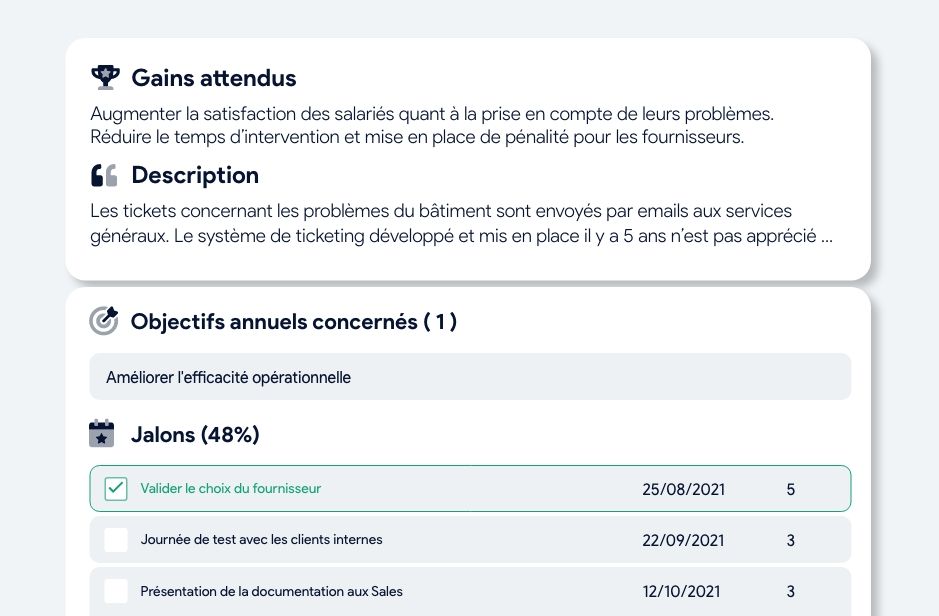
One of the golden rules for the project manager to follow as a guideline is keeping the project aligned with the company strategy. Even if it sounds like plain common sense, it can be hard — depending on the stages and hazards of a cross-functional project — to know whether you're still in line with the company's vision and strategy. When in doubt, turn to the sponsor and always make sure they have the right information.
A "PUR" problem with a strong impact on the company
Among the best practices of successful cross-functional projects, at the top of the list is the importance of the problem the project is meant to solve. It's what tells you whether the objective you want to reach makes sense, and whether it brings real value.
Properly addressing a problem through a cross-functional project has other benefits, such as:
- Putting a number on the impact of a problem
- Properly defining the features of a service
- Setting a budget
- Making it possible to value the solutions put in place and calculate an ROI
This problem must be PUR: Painful, Urgent and Recognized
It's far better to spend time truly understanding the problem and qualifying it as PUR before launching operations, than to realize in the end that the project or the solution doesn't bring enough value and that the economics don't add up.
A well-put-together budget
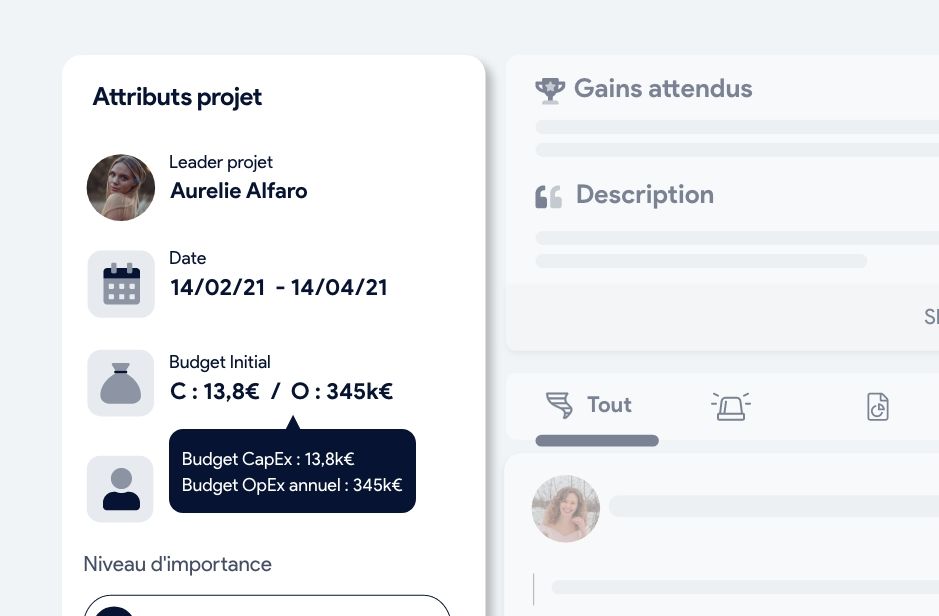
Just as failing to properly define a problem (and its impact) can doom a cross-functional project from the start, not having a precise allocated budget is another root cause of failure. Setting up a team and introducing changes in how the company operates can be very damaging to the continuity of this kind of initiative if it stalls. Indeed, if after several months of work you realize you don't want to — or don't have — the budget needed to see the project through, disaster is guaranteed. Hence the importance of defining a budget and, above all, of quantifying the problem to prioritize investment plans.
The key execution factors to make your cross-functional projects succeed
1: Rationalize

We ❤️ pragmatism!
For every problem, its pragmatic solution
Having covered the importance of a well-defined problem, it now needs its pragmatic solution. We naturally tend to want to build a complete solution that solves everything the moment we can mentally picture the perfect answer. Yet solutions that are ideal on paper (when you're outside your core expertise) turn out not to be feasible — too long and too costly to implement, especially when you're chasing the "wow effect" above all.
Aim to solve 80% of the problem — but as well, as fast and as cheaply as possible. The work you've done on the problem and the key features will help you get there.
Prioritize the key features and version evolutions
When tackling a problem, one very effective approach is to break the problem back down into the several sub-problems that make it up. Rank these sub-problems by the impact and consequences they generate, and finally ask yourself: "Why hasn't this sub-problem been solved yet?" The answer to that question will be your lever for action, and will let you define a feature of your solution that solves it.
The idea here is to focus on the most important sub-problems and build your core solution on them. You can always plan for an evolving solution, adding new features later in the cross-functional project to complete the resolution of the overall problem.
Adopt a long-term vision and an ROI-driven approach
It often happens that, in the early phases of a cross-functional project, driven by the desire to show value and "quick wins", you lose sight of the project's overall, long-term vision. So don't forget that the main objective is to solve the problem for the long run. The early phases of your project management should essentially serve that goal.
To do that, keeping an ROI-driven approach to your actions — and to what remains to be put in place — is decisive for the ongoing validation of your recommendations and of the final solution.
2: De-risk

Even a risk of vertigo can be managed.
Select the right partners — audit
It's often tempting to go with a solution or an external partner that creates a "wow effect", because it will surely win employees over and boost your project's image. But make sure your partners can actually execute within the scope of your project. Better a solution that's perhaps less sexy but works, and partners who deliver.
To that end, don't hesitate to run a thorough audit of the solution or the external partner, to make sure the solution will work and can be maintained over time.
Launch a test phase — hypotheses to validate and the right KPIs
To de-risk your cross-functional project over the long term, it's always advisable to put your solution through a test phase. To do that, it's important to put the key features into real conditions and monitor them, over a scope that's representative of the long-term project, of the environment and of the solution's constraints.
To do this, starting from the key features you defined through your problem's sub-problems, identify the hypotheses you'll need to answer to make sure the key features actually solve the problem and that the solution will be maintainable in its environment. Once these hypotheses are defined, find the right KPIs to put in place to measure whether or not you can answer the hypotheses during the test phase.
Create a roadmap and a requirements document
In a cross-functional project especially, to pace the work and get everyone on the same page, it's very useful to lock in every aspect of the project in a requirements document validated by all stakeholders. To do this, make sure to involve each player in drafting the parts of the document that concern them. Then map out the project's critical paths to define a fitting, coherent roadmap. It will let you give visibility into current, past and upcoming actions, and monitor the health of your progress.
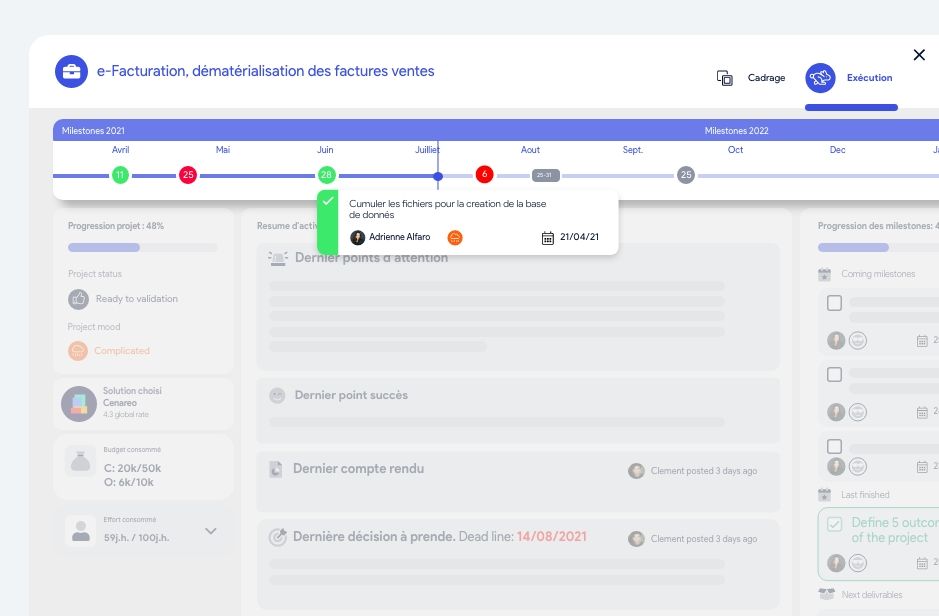
A clear view of the timeline
Break down deliverables and shorten deadlines
Another aspect of effective operational phases is to reduce the size of deliverables and increase the frequency of check-ins, to limit the mental load on team members (especially if they're juggling several assignments in parallel) and to track schedule slippage more finely so you can take the right corrective actions.
It will also help pace the project and the exchanges, and showcase everyone's work and progress.
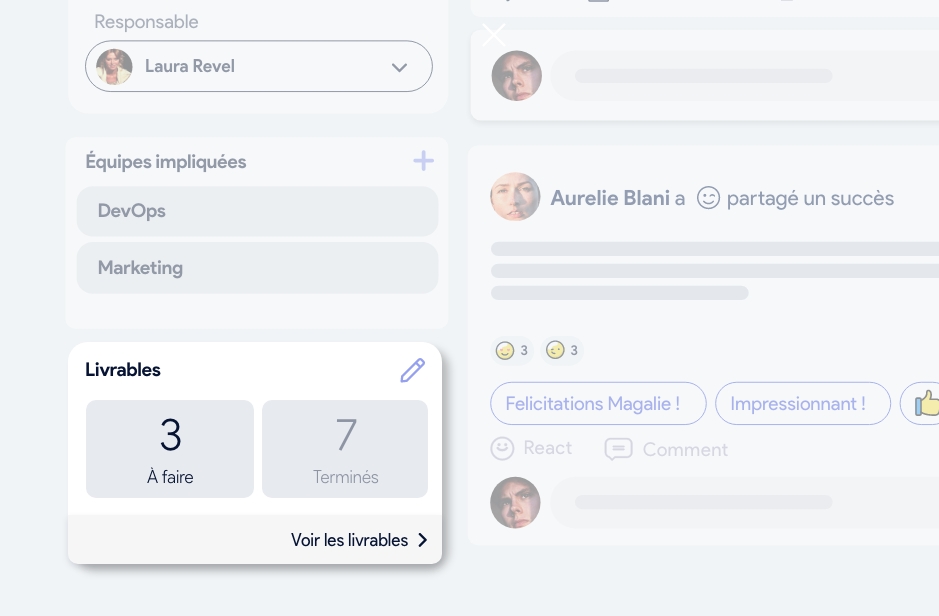
Set up weekly project tracking — the flash report
One of the levers to pace cross-functional projects and make progress more effective is to establish weekly project tracking between the task force members and the more operational external contributors. Setting up a flash report is a great way to track progress and let everyone keep a 360° view of the project.
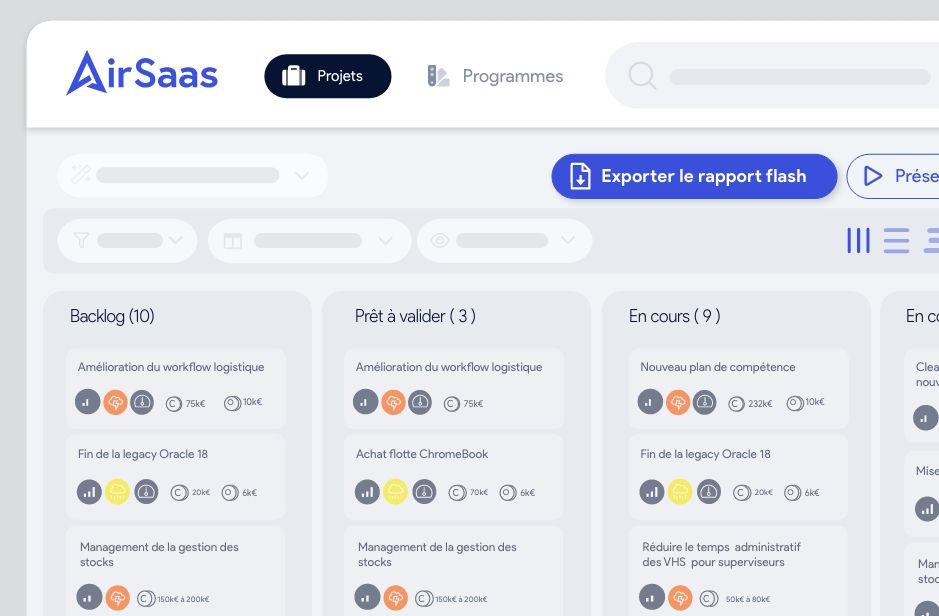
Operate with a short decision loop — the steering committee
Continuing with operational effectiveness for cross-functional projects — and to guard against the inertia of complex organizations — while building the project team you'll also set up a short decision loop with a sponsor and a few key decision-makers (as needed): a steering committee every 30 or 45 days, to present progress and the trade-offs needed to move forward.
To go further, we recommend reading the following article: How to be a good cross-functional project manager?
What if you took back control of your project portfolio?
Book a demo and discover the tool in 30 minutes.