October 8, 20217 min readSimon Vacher
Project review: a valuable opportunity to reflect on successes and mistakes

Contents
In your project tracking, you'll inevitably pass key stages (often tied to milestones). Conducting a project review at those moments ensures you're on track.
These meetings are a great way to get your team involved, boost collaboration and learn from your project management mistakes!
What is the purpose of a project review? What is a project review?
The first and main goal of a project review is to bring together all the stakeholders of a project to assess its progress and approve the deliverables it involves.
Beyond its official purpose, it is an ideal project management tool to foster team cohesion: open dialogue, knowledge sharing and collective problem-solving.
The project review is one of the main ingredients of a tight-knit project team — effective and engaged — and therefore one of the levers to increase your project's chances of success!
Project review and milestones
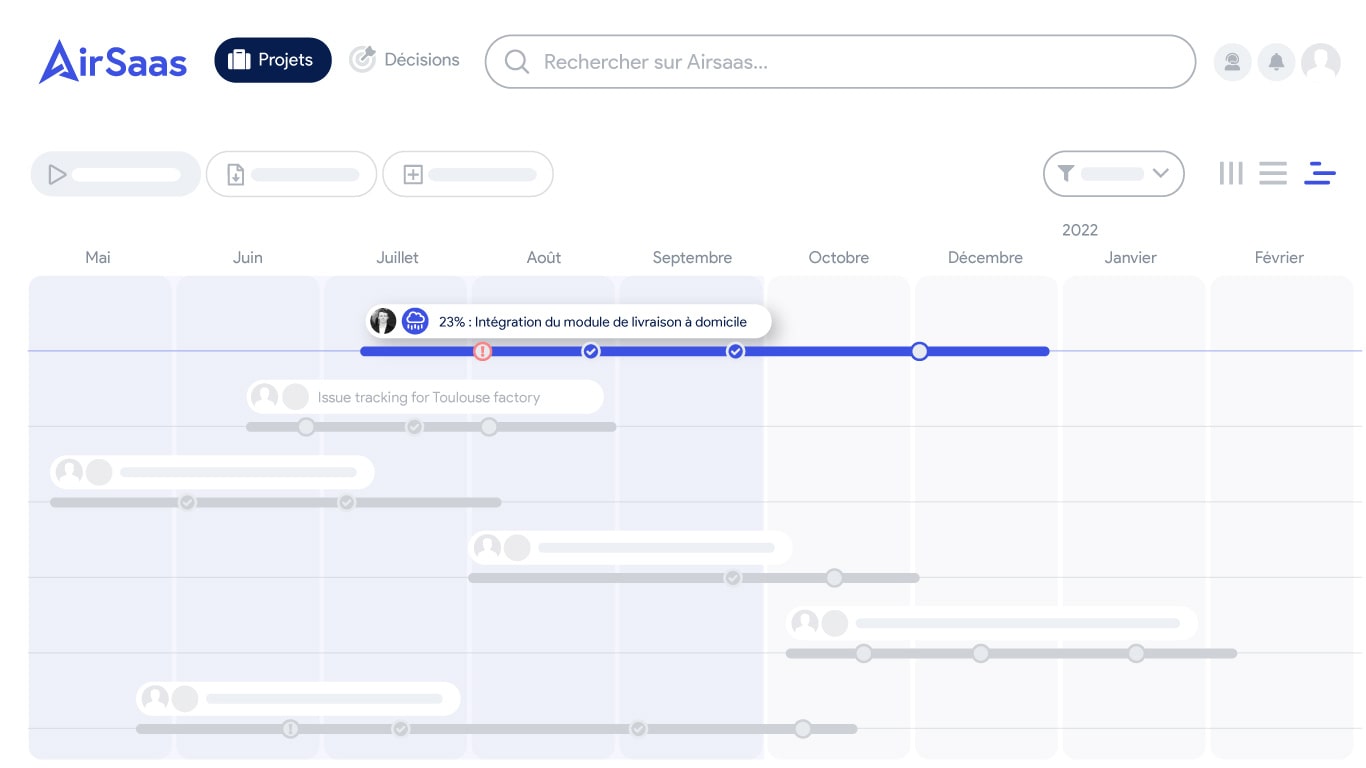
When planning a project, you build it around the various key stages that pace its execution. And those stages are generally represented by milestones: by validating a milestone, you confirm that one of the project's phases has been completed and that you can move on to the next one!
It is therefore during the project review that we formally decide to validate a milestone, and thus the project's potential progress to the next phase.
Project reviews therefore take place at the end of every major phase and are often planned from the outset by the project manager. The decisions made in these reviews are usually final and set the course for the project's next phases.
What are the different types of project review?
Some types of review are specifically focused on one aspect of the project.
The most common are:
- The budgetary project review: it focuses on controlling expenses and revenues. It is part of budget management and makes it possible to track budget variances, formulate new forecasts or make adjustments.
- The sprint phase review: the project review makes it possible to close sprint phases in "agile" projects. This lets you assess what has been done, adjust your decisions, and validate the move to the next sprint.
- The product manufacturing review: for product-focused projects, it validates every stage in the making of the product and prepares the next steps of its development.
What is the purpose of a project review?
Project reviews have multiple goals and benefits.
In particular, they serve to:
- Ensure the overall tracking of the project, and how the project unfolds
- Check that all the objectives of a phase have been met
- Monitor that deadlines and timelines are being met
- Give a single, clear and transparent view of the project to all the project's stakeholders
- Discuss the problems everyone has run into in their areas, so as to find collective solutions
- Debate potential readjustments
- Make decisions about the rest of the project
- Strengthen the team's cohesion
- Build collaborative habits among team members
When should you organize your project review?
The answer is simple: organize this type of meeting at the end of each major stage of the project. Put another way: you should bring your stakeholders together whenever you reach a milestone. These meetings act as checkpoints to assess progress and determine whether everything is ready to move on to the next phase of the project.
Who should you invite to the project review?
All the project's decision-makers must be present at a project review for it to be effective, and for the decisions that govern the project's next steps to be made on the spot.
But be careful not to fall into the trap of wanting to invite every project stakeholder! Only participants whose presence is essential should attend, or the review risks becoming inefficient.
How to run a good project review?
Precautions to take beforehand and afterwards
Beforehand:
As with other types of meeting, the time allotted to this process is not unlimited. So you must take the time to prepare it thoroughly to make the most of it.
Several steps are therefore necessary: define an agenda, a location, the list of stakeholders, but also create the visual aids that will support your presentation.
Ideally, it is advisable for the project manager to send out, ahead of the meeting or steering committee, all the information relating to the project review to each participant: that way everyone already knows exactly what will be discussed on the topic.
Afterwards:
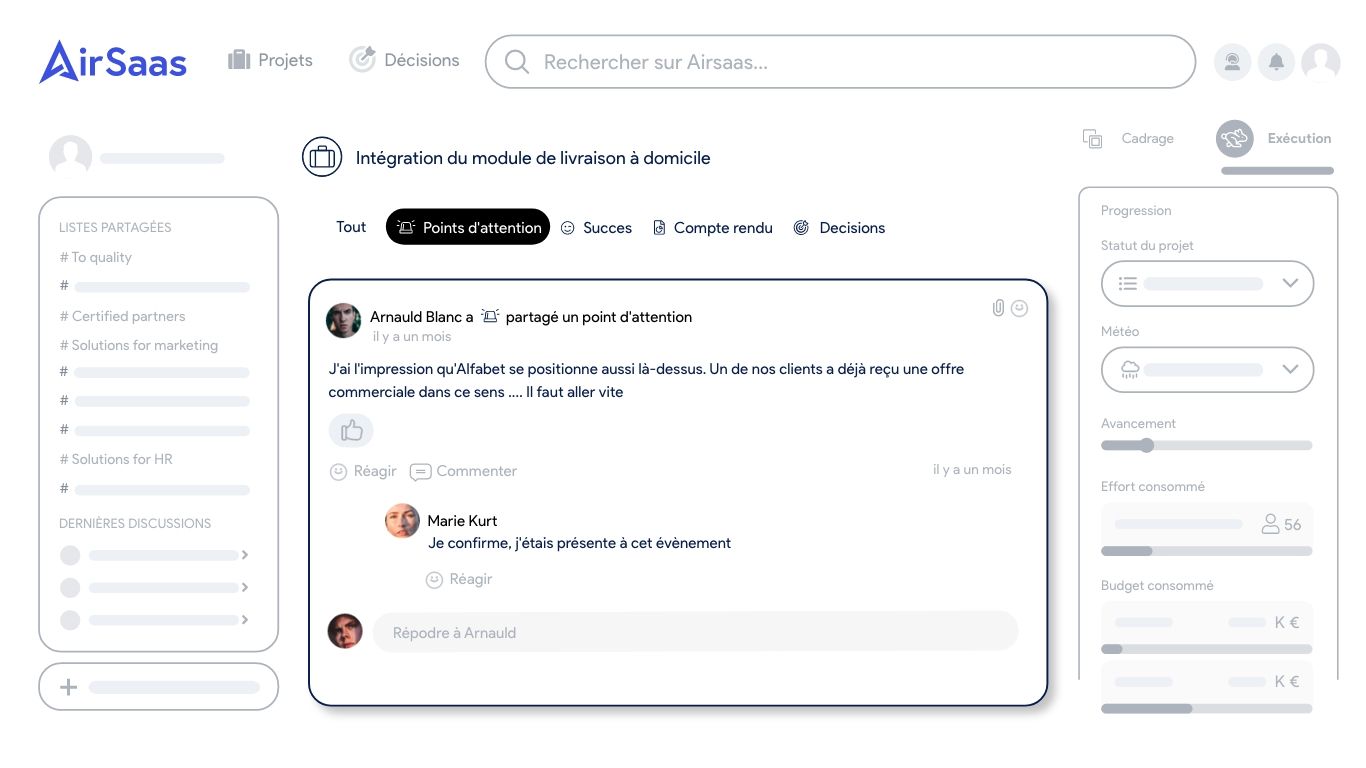
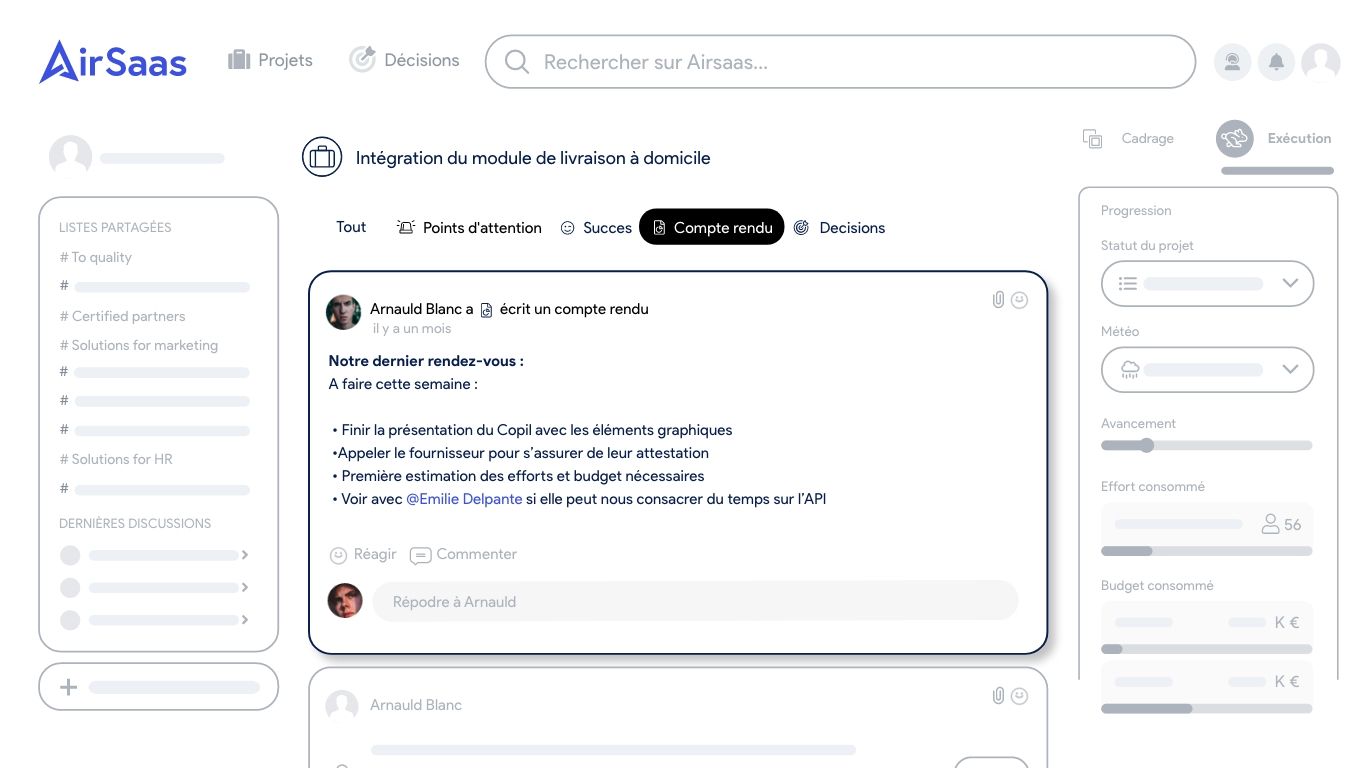
- Write a report: it is essential to send a summary of what was discussed to everyone impacted by the project review
- Put the conclusions in writing: you must formalize all the decisions made, as well as the new tasks the team will carry out in the next stage
- Ensure follow-up: set up routines to monitor the actions decided during the review.
These various steps will let you steer, empower and involve every member of your team on the project, and make sure that what was decided in the project review is properly applied!
A few tips for an effective project review
Avoid getting too far into the details
The time you have is not infinite, so don't waste it! All the more so as you risk losing your audience's attention if you dive into details that may be irrelevant to those who aren't involved in the project's day-to-day. Stay focused on the key points and keep the discussion accessible and engaging for everyone.
Take the time to highlight your successes
There is every chance that difficulties and unexpected events arose during the execution of the project phase you're reviewing. That said, a project review shouldn't dampen morale. While it's important to address the major problems, also take the opportunity to shine a light on the successes and recognize team members' contributions. Acknowledging accomplishments helps maintain a positive atmosphere and motivates the team to keep performing well.
Connect your project's past and future
You obviously need to take stock of the project phase you've just executed, draw the important lessons from it, and discuss potential adjustments. But it's just as important to look ahead: during the project review, dedicate time to the next milestone. Make sure every team member leaves motivated and aligned, aware of the importance of the upcoming phase and of their individual responsibilities. This forward-looking approach keeps team momentum going and helps the project stay on track.
Harness the power of retrospectives
Use retros to identify the strengths and weaknesses of a stage and improve future work. Discuss the various retrospective techniques, such as the "Start, Stop, Continue" method or the "Glad, Sad, Mad" approach. These methods help teams reflect on what went well and what needs improving, encouraging open dialogue and fostering continuous improvement within the team.
Make the most of interconnected tools
Tools like AirSaas, when connected to Jira or Asana, will help the CIO / PMO and project manager to track a project's progress at a macro level and identify the areas that need attention. Share tips on how to use these tools together, such as setting up dashboards or using automation to streamline workflows.
Develop a culture of continuous improvement
Discuss how to foster a culture of continuous improvement within an organization. This can include strategies such as encouraging team feedback, celebrating successes and embracing new ideas. This culture enhances project tracking and overall efficiency.
Avoid common pitfalls
Offer an overview of the common pitfalls of project management and how to avoid them. For example, discuss the risks of scope creep, stakeholder disengagement, poor communication… and provide strategies to reduce them.
Project review and project management KPIs
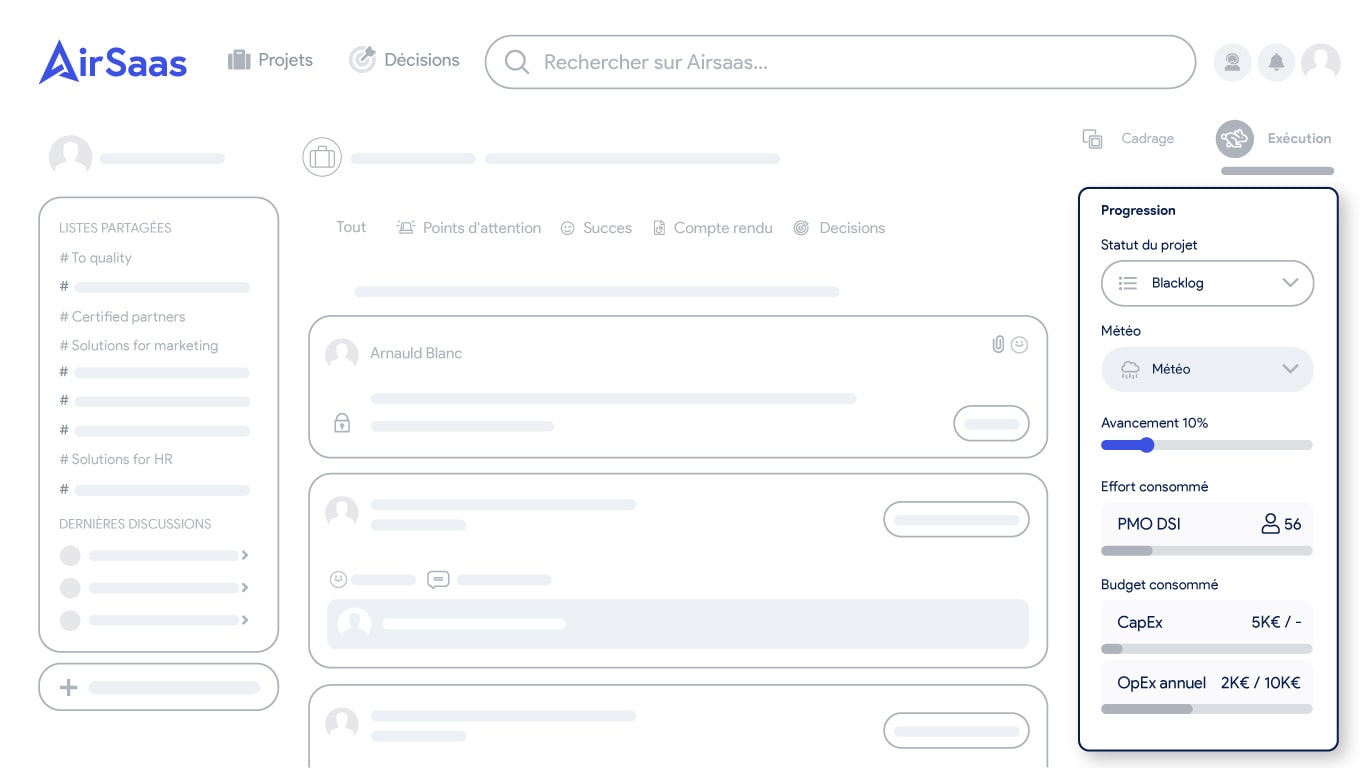
The project review is one of the most effective ways to let all stakeholders take stock of a topic's progress. In this context, it can be really worthwhile to use project management KPIs: they will be the foundation of all your discussions, and will let you objectify your performance to be more relevant in your analyses.
Using project management KPIs during your project reviews will help you be sure you've moved to the next phase of the project without missing any of the lessons you needed to learn from your difficulties.
On this topic, the recommended follow-up read is the article project milestones: a technique to sequence your projects intelligently.
What if you took back control of your project portfolio?
Book a demo and discover the tool in 30 minutes.