October 9, 20219 min readSimon Vacher
How to write a project scope statement?


Contents
When defining the scope of a project, one of the essential steps is writing a project scope statement. This statement is the concise document that lets everyone see at a glance the main elements of your project's scope. It is an integral part of the flash report that you can send to the various stakeholders. Without it, there's no good start to your project management.
You can download our project scope statement template:
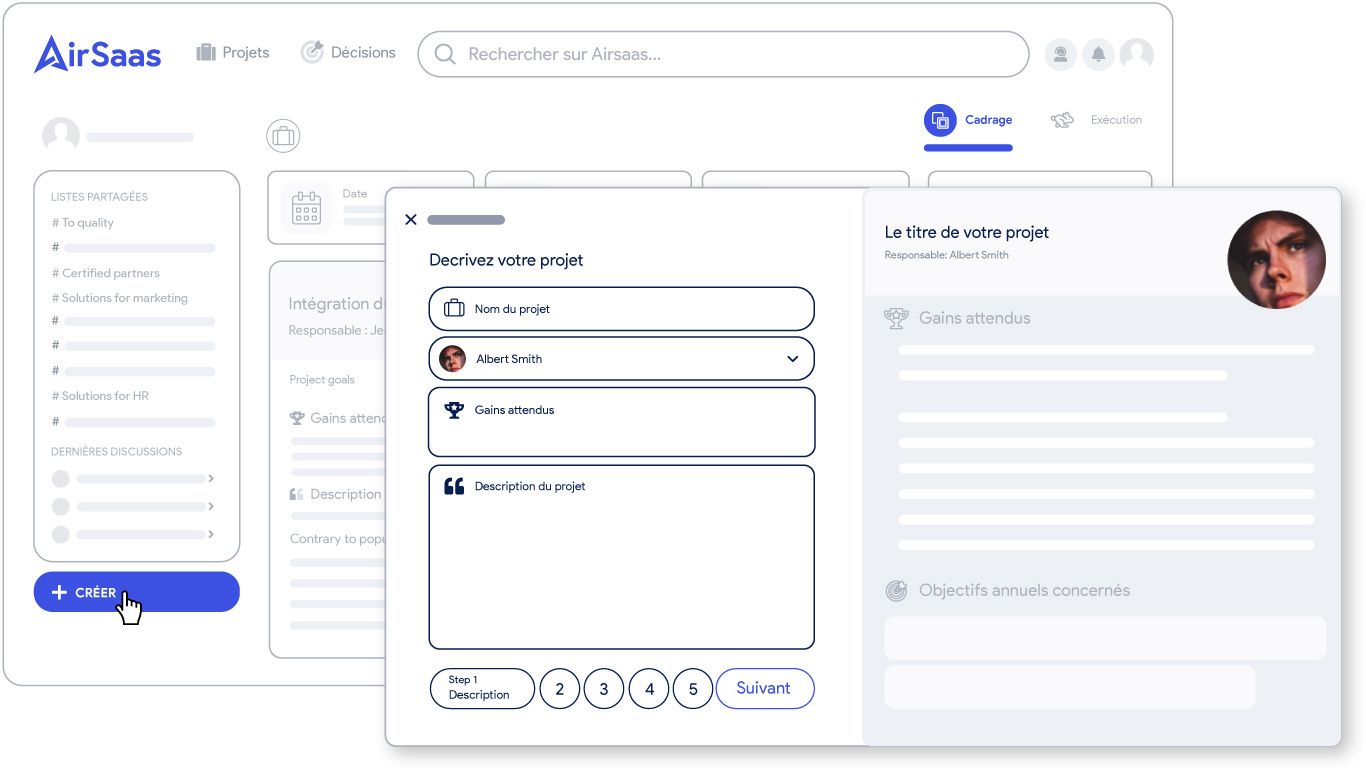
Creating a project
What is a project scope statement?
The project scope statement is a document that defines the scope of a project and its goals.
The scope statement is one of the main steps that formally brings a project to life: it moves it from the stage of a simple idea to that of a project with a guiding framework.
The scope statement should be concise: it sums up all the essential characteristics of the project: the resources available, the various stages, the elements to monitor, etc.
One of the main benefits of the scope statement is to let all stakeholders agree on the same, clearly defined project. It is an integral part of the communication plan.
Thus, the scope statement is an important step in the scoping phase: it sets out in writing the main elements of the project and lets you check that both the client and the project team fully agree on the whole project.
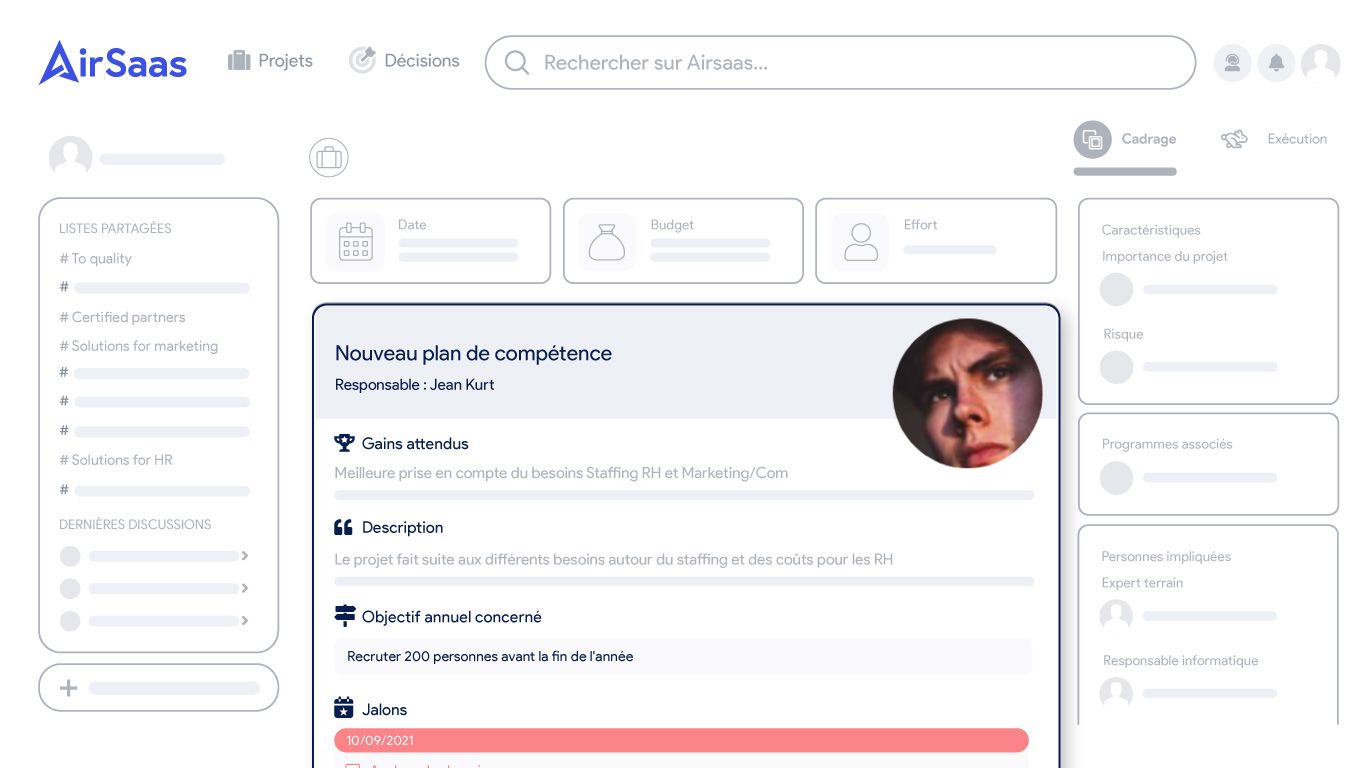
Project scope statement
Why is a project scope statement important?
One of the first benefits of the scope statement is to set in stone the major elements of a project, its content. Anyone who has ever run a project in a company knows that anything not put in writing does not necessarily exist in the eyes of all the parties involved. What's more, if your client is involved, it also lets them truly take ownership of what's at stake in the project.
Therefore, it is advisable to set your goals and commitments well ahead of the project, but also to identify the priorities, the allocated budget, and the risks to monitor.
Why you should write a project scope statement
- Check up front that all the stakeholders are aligned with the project, its needs, its resources, its scope, the solutions…
- Define the macro organization of the project
- Identify the benefits the project will bring
- Define the risks and the key points to monitor.
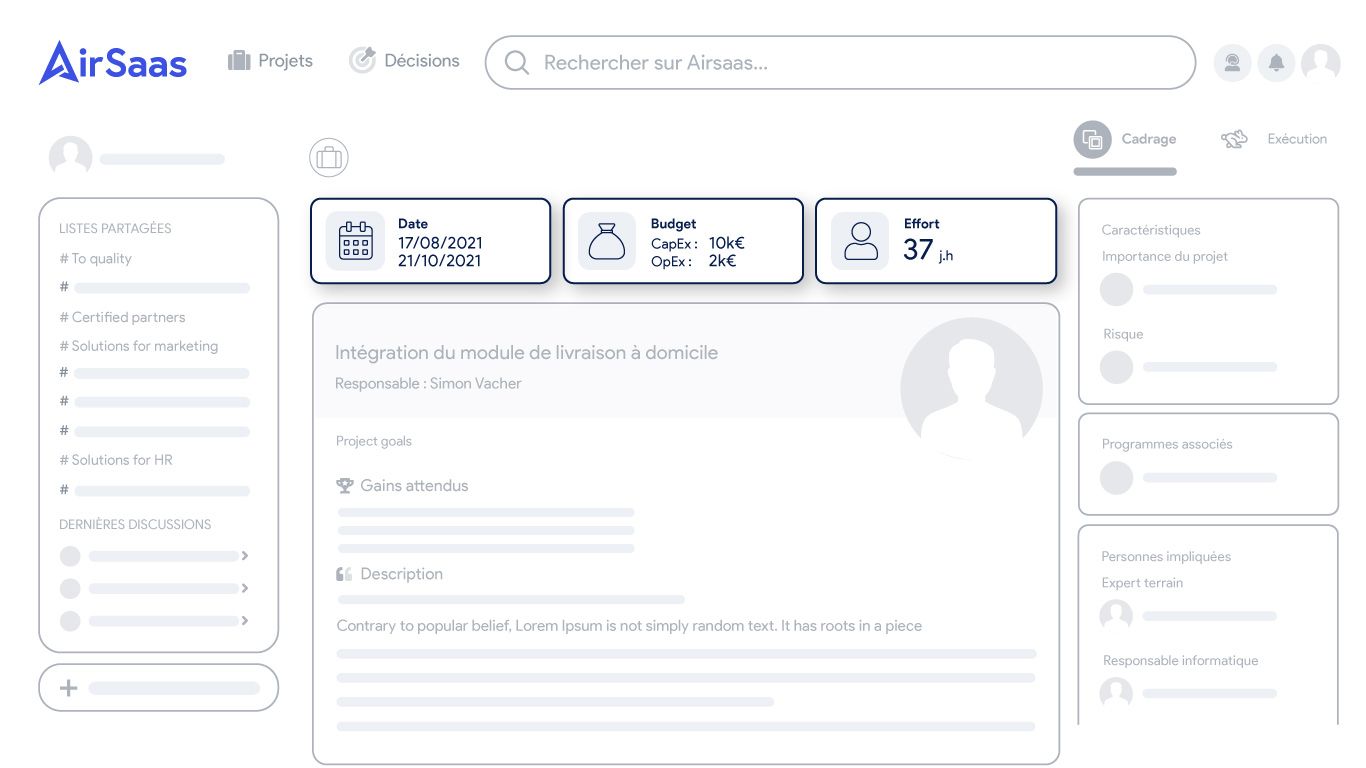
Project costs and timeline
If we had to sum up the benefit of a scope statement in the shortest way: it increases your chances of successfully completing your project.
You can download our project scope statement template:
What is a project scope statement used for? Who is it for?
The scope statement is often prepared for a meeting that will bring together all the project's stakeholders (client, project team, steering committee…).
It's a document that lays the groundwork for stakeholder discussions: that's also why it must cover the entire project and include all its essential elements.
A quick tip: these elements must be concise enough for every player to take them in at a glance!
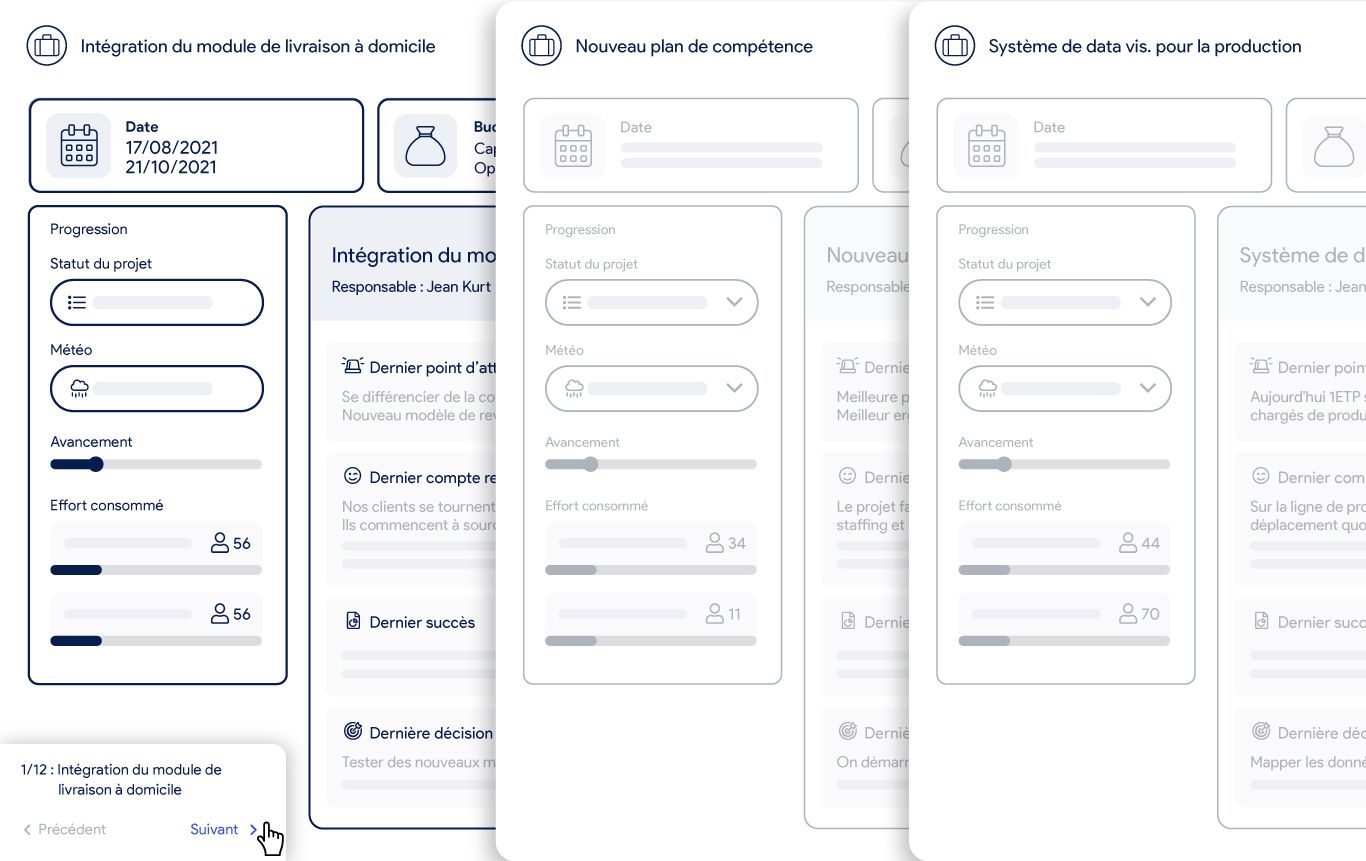
Every project should have a scope statement
How to write a project scope statement?
Let's be clear: there is no universal template for a scope statement.
Your ideal scope statement depends on your company: what is its size? What is your business? What is the project's challenge? What is your methodology for running your projects?
So the first step before writing is to talk with each stakeholder in the project: this way you'll be able to pinpoint all the stakes and expectations of your clients, as well as ask for clarifying details from the teams in charge of the project.
However, we can venture to name several of the elements commonly found in scope statements.
We therefore advise you to draw inspiration from them, while adapting them to the characteristics of your projects when putting yours together.
- The statement and outline of the project;
- The end client of the project and their expectations
- The goals you want to achieve
- The project's boundaries: scope of what will and won't be done
- The project's stages/milestones
- The constraints to respect
- The resources available, the budget
- The delivery timeline.
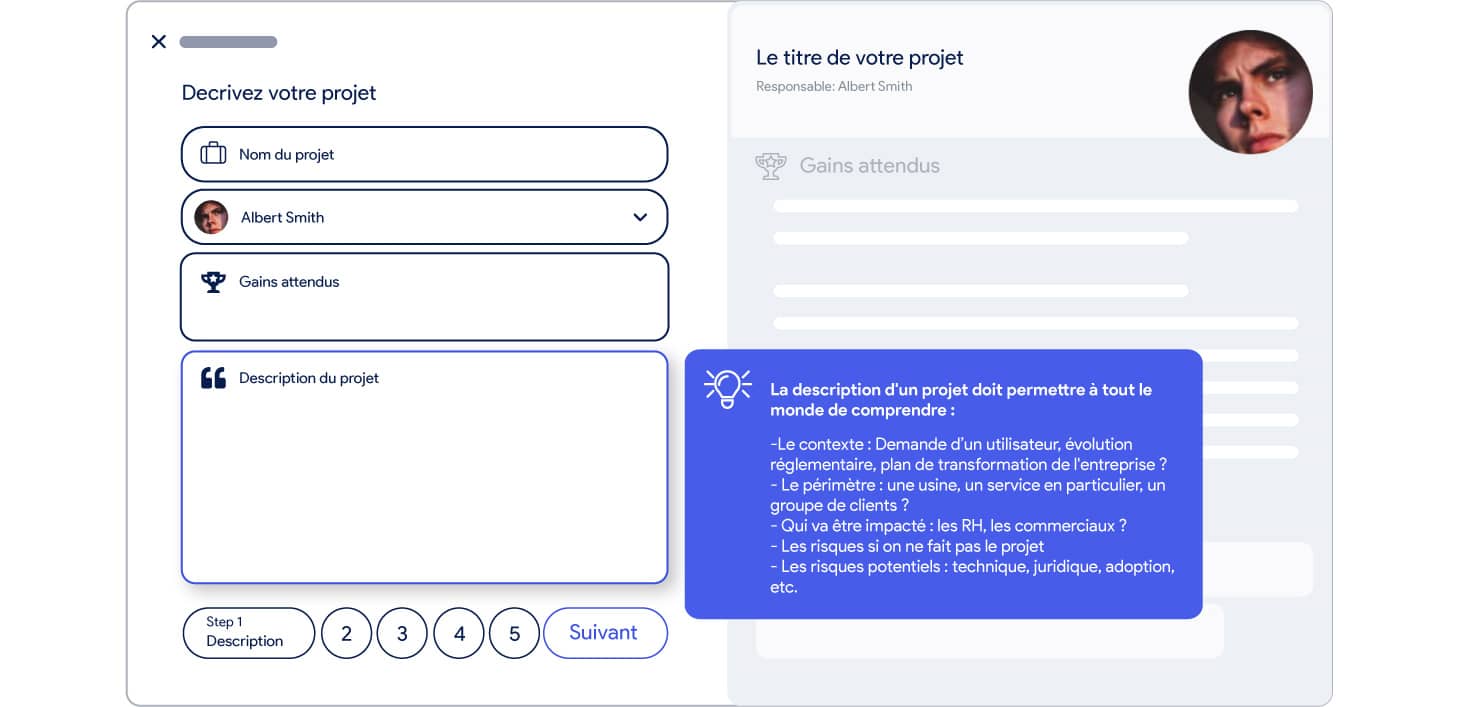
A good description is essential
Finally, keep in mind that while you can customize it according to the specifics of your project, a scope statement must meet two essential requirements:
- it must give an overall vision of your project
- it must include all the elements that seem essential to you
What's included in a project's "scope"?
These details are essential to document in your scope statement, because there will be times when the demands of stakeholders (and sometimes even of the team) sneak in and jeopardize your schedule, your budget and your morale!
Project description and deliverables included
The idea is to provide a plain-language overview of the project's deliverables. Avoid any confusion by clearly describing what will be delivered for approval throughout the project, as well as the final deliverable.
It's a straightforward description of what you're working to deliver, but it also states small details such as the quantity, the amount, the length or any other aspect that describes the project with precision.
Exclusions
You've already listed the deliverables you'll provide, but it's sometimes just as important to detail what you will NOT deliver. This lets you, right from the start of the project, avoid awkward questions or requests like "But aren't you going to…". Really, it's about setting expectations and avoiding any misunderstanding around the work you've planned.
Product/project acceptance criteria
In the same spirit of transparency and precision… Your project scope should help you agree, beyond the general goals, on what will be delivered and leave no doubt about the end of the project. The acceptance criteria can be measured, achieved and used to prove that the project is complete.
This notion is very close to that of a functional requirement, but for the scope statement we keep it "high-level"!
Beyond the sometimes subjective final approval of the stakeholders… these acceptance criteria will let you "stamp" your operational acceptance (VABF). Then it's your turn to sign the end-of-project minutes!
Tacit or explicit agreement?
Project scope statements create an agreement by their very nature, but sometimes you need proof! So include a signature field in your scope document and ask your main stakeholder or your project sponsor, and possibly the stakeholders, to sign the document!
And to close on this point, let's remember one thing: writing a scope statement is learned both in theory and in the field. By doing it again and again, the project manager will identify the elements that are essential and draw lessons from them. With determination, you'll end up with the scope statement template that suits you perfectly!
Project scope statement: vary the formats!
Providing an overall and precise vision can sometimes prove tricky. Using one of the mind-mapping tools can help you better organize data and ideas visually and, ultimately, stage the content of the project scope statement.
The advantage is to offer both an overall view and, when you click one of the sub-branches, a detailed view within the same medium.
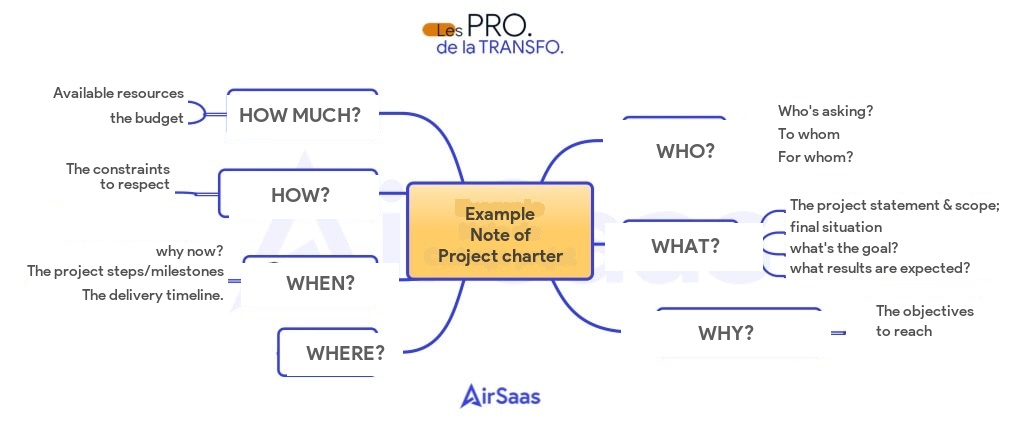
Example of a mind map summarizing the project scope statement
This visual summary does not replace the document; the goals pursued are simply not the same.
Within a scope statement, you'll find the logical arguments, writing with nuance and detail. For the mind map, the aim is to emphasize the "overall" view of key information, your macro planning, etc. — all with just the right number of words, the visual summary. Here we're working on change management, a decision-support tool of sorts.
To create this map with software, you have plenty of choice… there are hundreds of them! From the simplest desktop software to SaaS platforms interconnected with the various cloud services… the most widely used solutions are MindManager, X-Mind, and Mindmeister for the paid options. For the free option, Freemind is the reference.
You have everything you need to bring this new synthesis "medium" into your project communication plan.
The 5 W's method for project scoping
Also called the Five W's method (for what, why, who, when and how), the empirical approach known as the 5 W's allows for an exhaustive questioning of a subject. Combined with mind mapping, you get the combined form with a simple structure.
Commonly used in project management as well as in quality management, as an initial approach to root-cause analysis. This basic matrix will let your project manager organize the information, contained in the statement, for your company's stakeholders.
Adapting the Lasswell Matrix for the project scope statement:
- Who? : who is requesting this project, who could we do it with, on whose behalf…
- What? : the statement and outline of the project; the final situation? What are the expected results? With what, in relation to what…
- Where? : location of the project, of the workplaces, of the various departments,…
- When? : from when, until when, within what timeframe… Dates, periodicity, duration… why now? The project's stages/milestones, the delivery timeline…
- How? In what way, under what conditions, by what process…? What governance structure?
- How much? The resources available, the budget? etc.
- Why? The goals you want to achieve. Cause, trigger, justification by the causes that led to… (the "reason" for being, the belief)
Project scope statement and project resource management
As explained earlier, the scope statement must let you see at a glance the allocation of resources across the various tasks of your project.
However, assigning the right resources, in the right quantity, at the right time, in the right place is an art: the art of resource management! We therefore advise you to take particular care in thinking through your resource management, if you want to give yourself every chance of succeeding with your project.
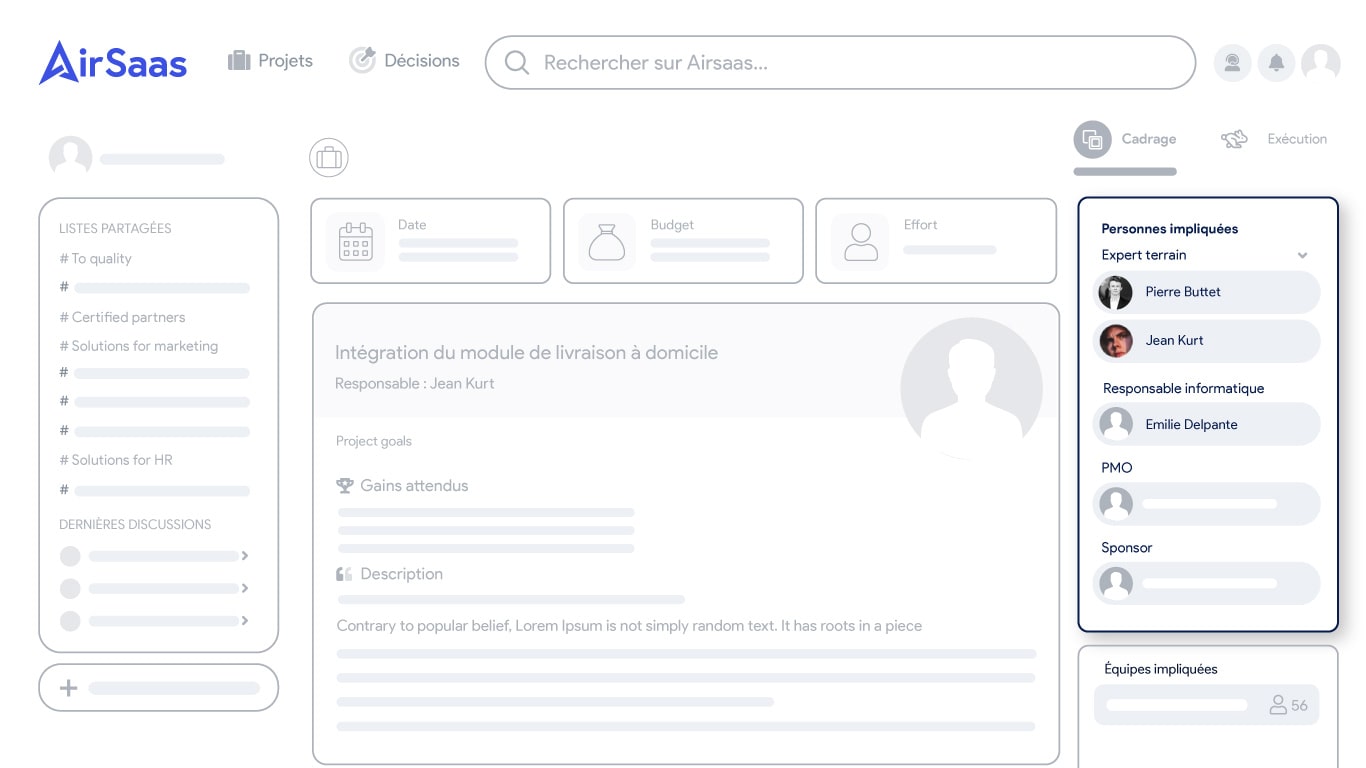
Highlight the people involved!
Acknowledge the people involved!
This last point is not trivial… from the project scope statement onward, remember to name the people, their precise roles and accountabilities. We all know that the availability of business teams is far too often widely underestimated. Alongside the sponsor and the project manager, the roles of PO and/or digital referent are almost a part-time job sometimes! From your scoping onward, sincerely name and value the people who will be called on to commit and step out of their comfort zone.
The list of lessons learned and tips above is not exhaustive… but more than enough to get you started!
After you've succeeded with your launch goals, think right away about the project's closing phase by discovering the end of the "series" now! Get a wealth of tips with the article from our special project management report: How to run an effective project review?
You can download our project scope statement template:
What if you took back control of your project portfolio?
Book a demo and discover the tool in 30 minutes.