June 30, 20228 min readJérôme Dard
Steering committee: definition and common misunderstandings

Contents
In companies, everyone talks about projects... but nobody is talking about the same thing! Worse, we very often see that the basics of running a steering committee meeting simply aren't mastered. The same goes for mission titles and job names... Everything gets watered down.
Whether you're an executive, CIO, transformation director, PMO, BRM, BU manager, PO, scrum master, developer, or a senior or first-time project manager, in the lines that follow we've put together a conceptual "cheat sheet" for you. The idea: revisit what's really at play behind the key words and expressions regularly used in a project steering committee.
To name things badly is to add to the misfortune of the world.
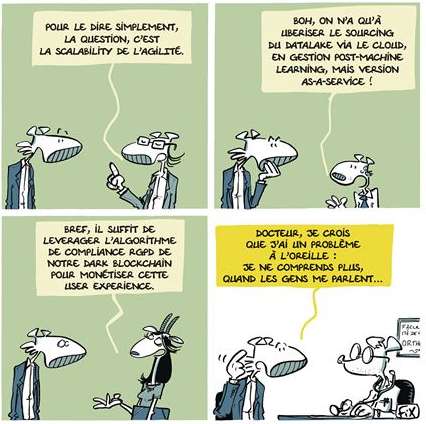
In short, there are two problems to consider as the project unfolds: understanding, and being understood.
Understanding the real and symbolic scope of each key term, to understand what's being talked about — and above all to grasp what's left unsaid.
Then, being understood, by your peers within the project, and/or by the steering committee stakeholders less "acculturated" to how a technical project works.
We're going to demystify 5 simple notions: sponsor, SteerCo, milestones, project manager, key user and reporting.
For each term, we'll look at the theory and the practice, and at the main mistakes and/or misunderstandings. Finally, we'll illustrate the topics with insights from the "Transformation Pros" interviewed on the CIO Révolution podcast produced by AirSaas. Value first!
This article is part of the series Steering committee (SteerCo): the basics, which gathers the essential, simple and pragmatic things to know about the project steering committee.
SteerCo: 5 key expressions to understand each other better
Here's your micro semantic survival kit to understand each other better at your next steering committee meeting.
Milestones: your best GPS
Project milestones are like road signs telling you how far along your journey is. They mark the end of a stage and a checkpoint in the project management process. They guide the SteerCo's steering — the project's GPS!
In practice, these milestones are what set a project's rhythm. They align teams around objectives and break projects down into several key stages. But don't overdo it! Setting too many makes effective tracking unreadable.
The common misunderstanding about milestones
You don't transform an organization by starting out inviting teams to do task-by-task project management. The goal is to structure, communicate and then steer a transformation plan. In project steering and reporting, I share the status of milestones, not tasks!
If a project can be broken down, don't hesitate to break it down as much as possible, so you end up with several small problems rather than one huge, highly complex problem to solve. Small problems that can be solved in the short term call for an intermediate deliverable that lets you validate, refute or readjust the objectives and the gains.
Project manager: the end of the "lone hero"
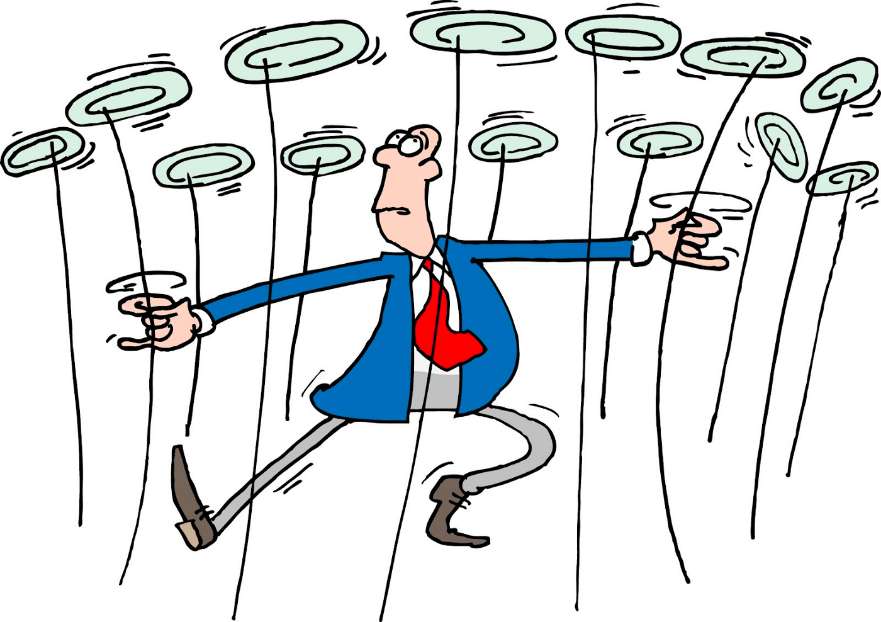
In theory, the project manager is frequently presented as a Superman. The pilot, in charge of leading the project and managing its (smooth) execution. Of driving a cross-functional, short-lived team. The guarantor of the "Cost-Quality-Time" triangle, with even a new passion: risk management.
In practice, most projects don't go that way, because cooperation can't be decreed! Project managers work to influence, to align with the sponsor and the business. Human relationships are paramount in this job and make the exercise very subtle. Sitting outside the classic hierarchy, this cross-functional project management role is doubly delicate.
Two common mistakes and misunderstandings about the project manager
- Confusing the project manager with project leadership. The word "chief" suggests far too strongly a solitary, non-collaborative exercise of power. But it really is a group — a "leadership" formed by the trio of technical project manager / business project manager / project sponsor — that is accountable for steering. "Co-management" is in the DNA of digital transformation!
- Confusing project and program. This may be the most damaging syndrome for your steering committee. The energy lost through this mix-up is colossal. You don't steer the construction of several houses by focusing on details! Failing to look at your portfolio from the top will send you into certain drowning.
I strongly believe in dual steering, because having a lead who is neither business nor IT keeps things neutral and preserves a critical eye. Everything must be explicit, roles must be concretely defined in advance, and trust must reign.
Steering committee: beware of responsibility leaks
In theory, the steering committee is a team whose role is to decide. A SteerCo is a meeting usually made up of one member from each business function involved in the project.
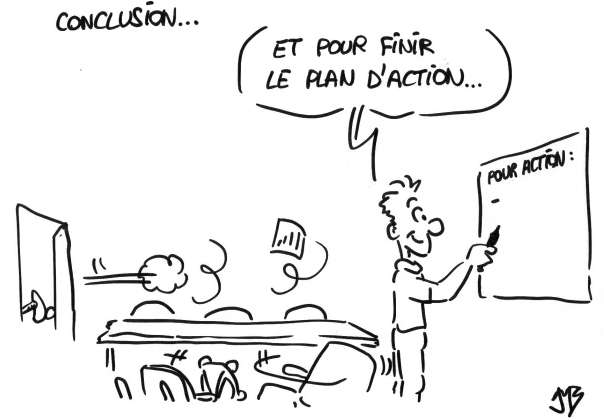
In practice, the trade-off topics raised in the steering committee are complex, and the time available is limited. What's more, you rarely have every department represented at each SteerCo. Sometimes you witness a gradual disengagement — or even a genuine, highly problematic leak of responsibility!
Two common mistakes and misunderstandings
- Confusing Coproj (project committee) and Copil (steering committee)
COPROJ: Micro = task allocation
COPIL: Macro = trade-offs and decisions
- The "separation" of responsibilities
While each steering body has its own role and accountabilities as the project unfolds, the project team and the steering committee are both responsible for its success.
Set high standards. The steering committee must demand performance from the project team while simultaneously showing where its help will make that possible. Demand clear information, open dialogue, respect for the facts, and written expectations and responsibilities for both the steering committee and the project team.
Key user: the worst and best ally of change management

When you ask a "volunteer" to be the SteerCo key user on the big upcoming ERP project
In theory, the key user is the representative of the end users. They're one of the best placed in the steering committee to assess — and innovate on — the value created by a new service.
In practice, this role requires a subtle mix of solid field vision and the ability to step back to spot the possible workarounds.
Common misunderstandings and mistakes about the key user
- The key user doesn't pass information back down to the group of people concerned.
We say "key user" — but the accurate meaning would rather be: "a group of key users and their representative"!
It's essential that they have both enough leadership to decide in the meeting and enough intelligence to know when they should no longer decide alone — and go back to communicate with and consult their "base" for decisions with a more political dimension.
Setting up the steering committee also made it possible to involve the key users from each business function, so they could relay the best practices passed on by the IT department: a crucial role for successfully managing change!
The business side's role is paramount, and it's a real workload, a real mission. Organizations sometimes don't allocate enough time, training and compensation to value this highly strategic project role and keep it durably "engaged".
Reporting: a continuous flow, or nothing
In theory, the PMO/project manager's role is to produce periodic dashboards and reports to communicate the project's key metrics to the steering committee. Ideally, they should be as concise and visual as possible.
In practice, they spend hours — even days — on it. And there's nothing more discouraging than being invited to work on a giant Excel file once a month when you're not the person who spent dozens of hours building it.
In short: using a platform will simplify your governance (list of decisions to be made, SteerCo view, etc.)
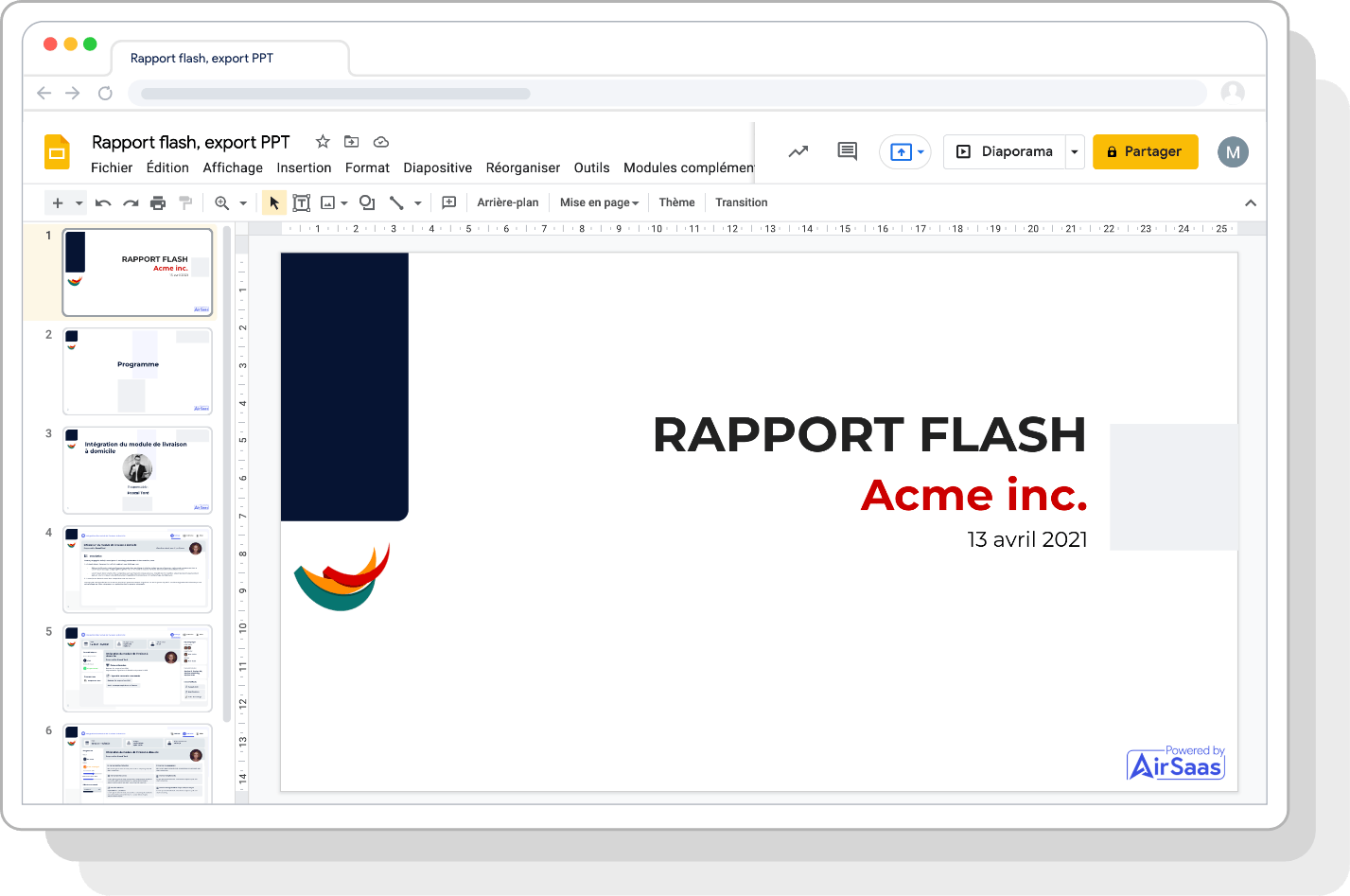
Generate your flash report in one click and send it out regularly to your stakeholders
The common mix-up about reporting in a project SteerCo
Confusing reporting with a dashboard! Complete reporting includes both a dashboard and the minutes, the highlights, etc. Numbers and facts.
Communicating with the steering committee continuously fosters transparency and decision-making within companies. The steering committee can and must have access to framing and implementation data between meetings.
Using PPM-type software, with a sufficiently intuitive interface and permanent access, makes collaboration between technical and business profiles easier.
Tracking the execution of the transformation plan quickly became complex. Teams spent too much time on reporting. We lacked execution-tracking tools to really focus on the impact of what we were trying to do. Our MVPs didn't turn into minimum viable products but into maximum viable products.
Well done — you've just refreshed what you need to grasp to limit the confusion. But once we understand each other, it doesn't mean we get along! Relationships between committee participants can indeed be tense, even aggressive.
How do you handle difficult personalities? How should you react to aggressiveness? We dug into our own experience, analyzed the state of the art in the literature, and asked our Transformation Pro friends, to bring you 7 tips that will make your office life easier. It's right here: How to handle aggressiveness in the steering committee meeting?
What if you took back control of your project portfolio?
Book a demo and discover the tool in 30 minutes.