June 3, 202311 min readJérôme Dard
The 10 project portfolio mistakes (not) to make when setting one up

Contents

Project manager / CEO / CIO / PMO realizing they've ticked all 10 mistakes of the AirSaas TOP 10
Sometimes we've mastered "the" latest ultra-sophisticated agile framework of the moment, yet the most basic fundamentals of project portfolio management, leadership, strategy or human relations get neglected. Rookie mistakes could be avoided with a checklist to run through before takeoff!
No project selection or prioritization process, misunderstanding the concept, letting offside plays go unpunished, communication misfires, sloppy tracking and control....
In your view, which mistake will hurt the most when you set out to implement a project portfolio management approach?
You're in for a surprise!
We invite you to find out with this "top 10", which offers food for thought and real-world feedback from CIOs/PMOs/CEOs and pragmatic experts in the field. The goal: don't fall into (all) the traps of organizational transformation.
Handy: the mistakes are ranked from the most minor and forgivable (10, 9, 8) to the most blocking and damaging (1, 2, 3) for your organization's transformation...
If you recognize some weak signals, symptoms or syndromes in more than 5 of these mistakes, talk to us... we have support services that will spare you the "false start" ^^ and even a guide to the 10 best practices!
10 - Communicating about every project, to everyone, the same way!
Stakeholders must be properly informed and kept up to date on project progress. Regular meetings, status reports and the right communication tools can clearly help improve communication.
The problem: Teams, email, project committees, SteerCos, leadership meetings... too many bodies, too many audiences, too many channels and tools — you've forgotten or neglected one of the key targets among your stakeholders. Nobody likes finding out a project is happening without them!
Yes, communicating well takes time, and so does doing it continuously... which is why we suggest relieving project managers by automating the non-strategic part of this process with a platform. Forget the human factor! Get help from platforms — we're in the 21st century!
Just below, a reminder of the "stakeholder map", the stakeholder matrix, a good first approach to this process. A starting point to formalize your strategy and leave no stakeholder out, because there are always more of them than you think!
Bonus: from this map, establishing a clear "why" for each player will help you avoid an internal-comms "disaster". ^^
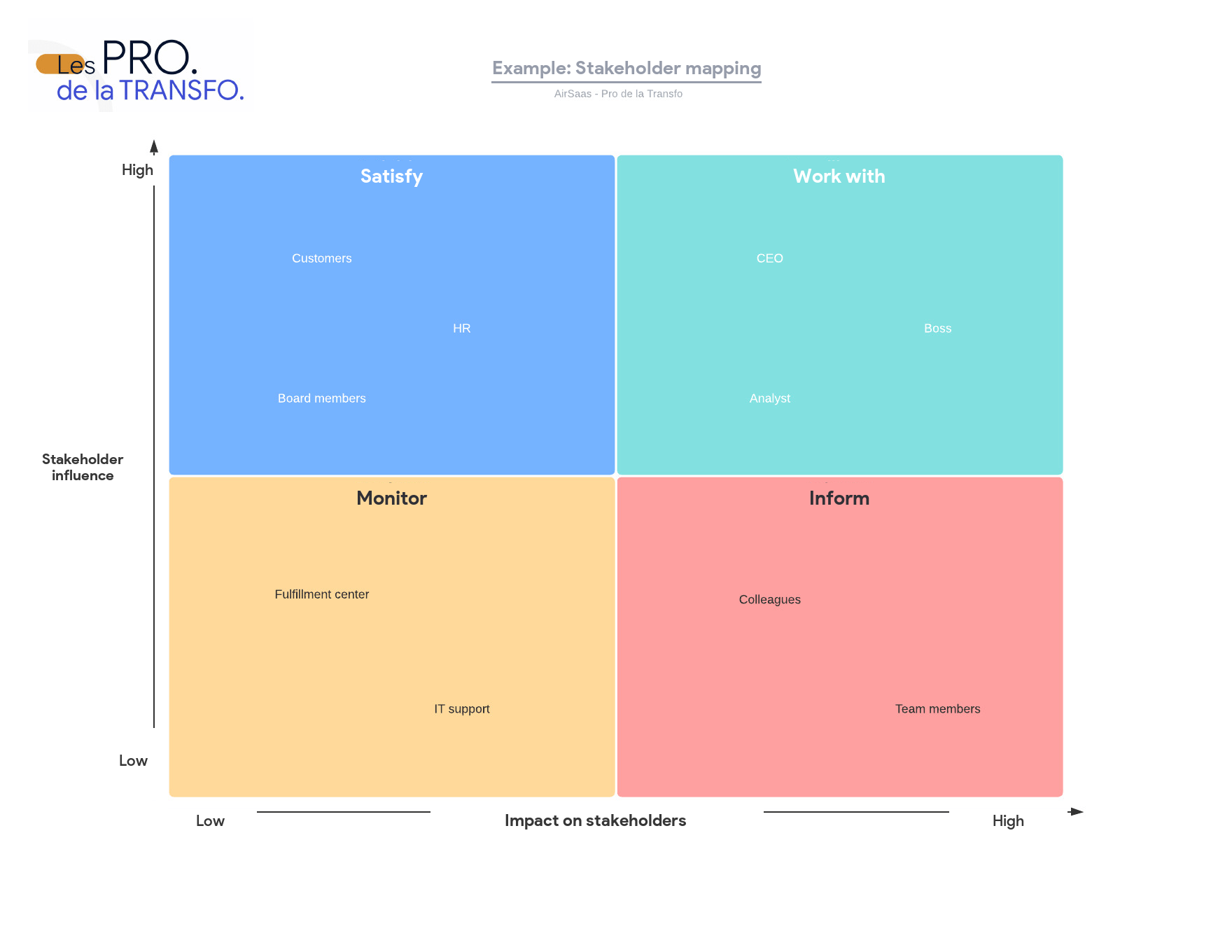
Stakeholder impact matrix for project managers
9 - You don't have (real) visibility into your portfolio's health
Nobody likes delivering bad news about the health of a project program or a specific workstream...
Beyond reporting, the challenge lies in collecting that information. So aim to make it easy for the people involved to speak up, so they communicate transparently and continuously, and actually want to make the projects' health easy to read, with the key information to know behind each status change...
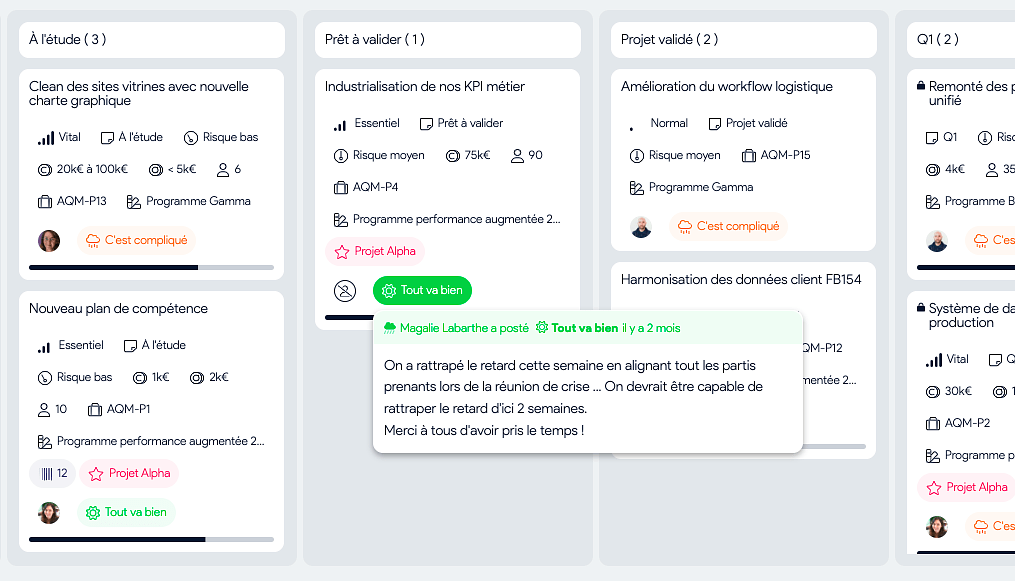
AirSaas project portfolio and health view — what if you could read the latest health update right from your project portfolio?
8 - Choosing Excel to carry your transformation
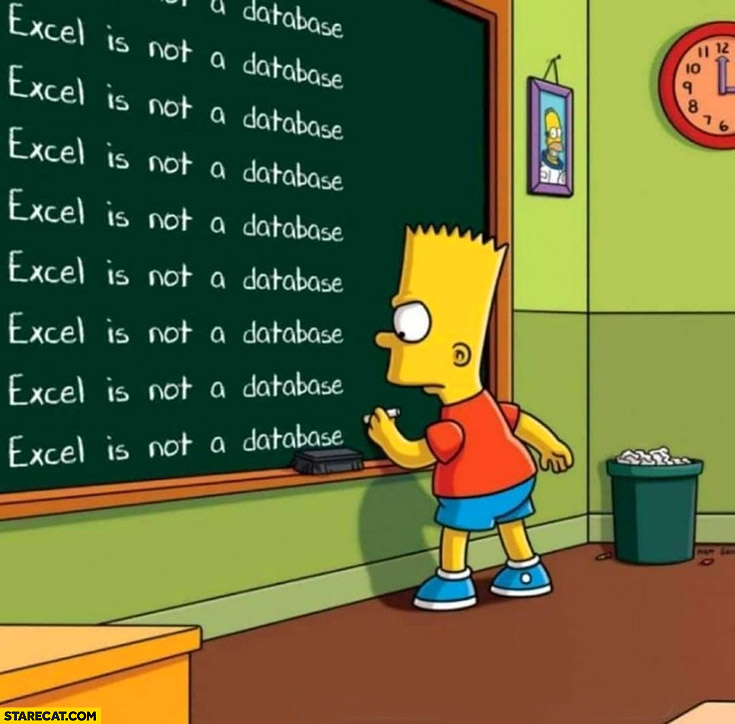
Talking strategy in front of a spreadsheet? Really?
Yes, you read that right! Some PMOs/CEOs/CIOs still digitize their project charters and strategic project portfolios with a spreadsheet. Behold the art of losing your audience, your productivity and your priorities across several transformation projects.
Let's say it once more, dear readers:
- Excel is vulnerable to fraud and human error
- Excel doesn't encourage collaborative work
- Excel is limiting for decision-making
- Excel is ill-suited to business continuity
- Excel is fairly hard to understand for anyone who didn't create the file...
The project portfolio (also) serves to showcase your activity and convince your leadership team/ExCom and your investors! Because yes, marketing the IT department matters.
7 - Ignoring your capacity and starting from an unrealistic need
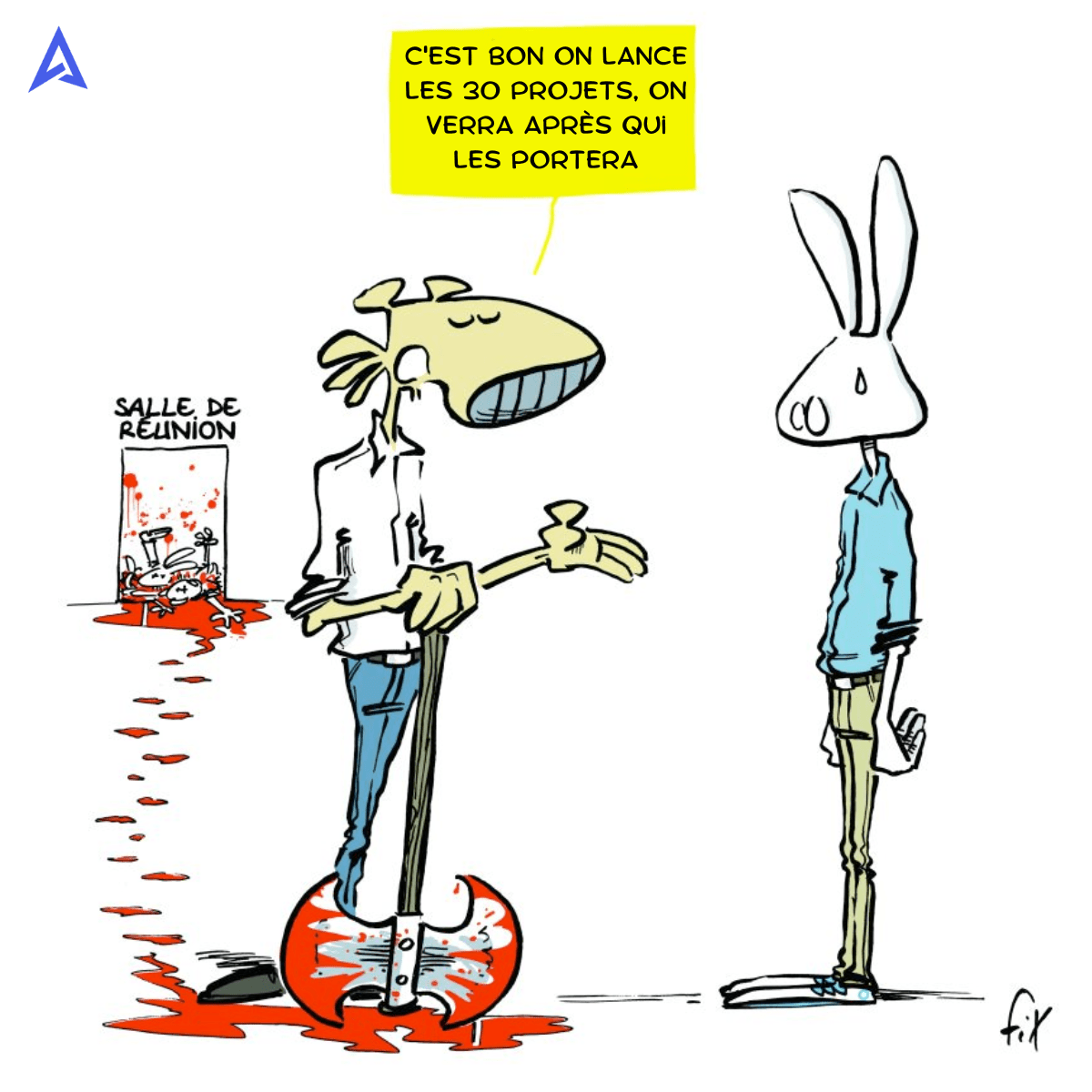
Watch out — a project manager and a PMO in the middle of a capacity debrief
The importance of building a culture of make-it-simple and MVP!
Call it agile culture, lean startup, product company, effective methods... it doesn't really matter!
The point is not to "over-specify", over-promise, over-build... so you don't over-consume your human resources in the first place.
Instead, learn to be satisfied with imperfect things, stay focused on value and customers, and don't create artificial "over-complexity" — that famous organizational fat!
In short, the opposite of project proliferation... let's champion a form of sobriety in transformation!
Decluttering your project managers' plates — fewer toxic workstreams, more cooperation — will make your life easier and contribute to team continuity, a key factor in agility.
Feedback from a CIO on the CIO Révolution by AirSaas podcast: "Have a conversation with your CEO about capacity — lift that taboo."
6 - Choosing a "too big" PPM tool, disconnected from project management with Jira, Monday, Asana...
Congrats — your delivery teams are super efficient on Jira? 👏
But you struggle to track project progress? Sometimes the scope isn't well understood? Some projects slip?
To get past this "project governance / project delivery" alignment problem... we recommend connecting your tools.
For example, AirSaas integrates with Jira. Frame the project in AirSaas and, once approved, connect it to your project on that platform.
Milestones will be synced and progress will flow straight up into AirSaas.
Each audience gets a view tailored to them. The leadership team and operational teams will share one vision.
Without listing them all, here are a few of the flagship tools your project managers work in and that you can connect to with AirSaas — project and task management: Wrike, Jira, ...
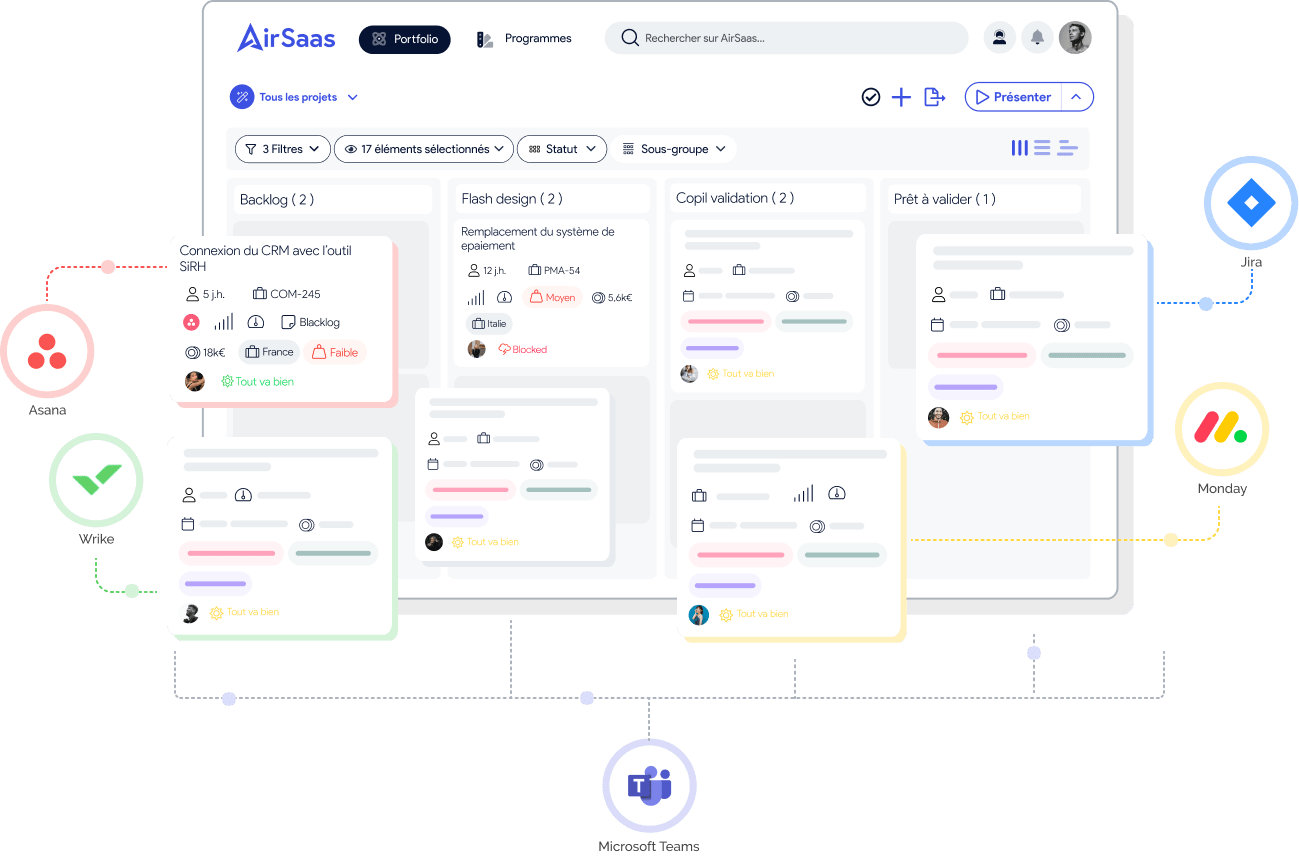
Another strategy for project management and transformation steering is possible for your project managers / PMO / leadership team
5 - Not slicing "obese" projects into digestible ones

Milestones — the art of modern project management for your project portfolio
Very large projects are complex and hard to manage. Portfolio managers should split a big initiative into a set of small sub-projects. Setting up teams per small project, giving them more clarity, autonomy and comfort works better than running one big, complex project with overwhelmed team members.
Conversely, you don't want to run too many projects with many of them sitting unfinished in the portfolio. That drags the portfolio down in terms of costs, resources and timelines, and it also compromises the value delivered to the business. The last thing you want is projects in your portfolios that become irrelevant.
To break out of this pattern, adopt fine-grained slicing and quarterly prioritization. Aligning with quarters anchors projects in the company's rhythm, which creates momentum and makes commitment easier.
4 - Letting low-priority or low-value projects enter and/or stay in your portfolio
A project portfolio is there to give you clarity and let you make tactical choices!
Generally, in large organizations, projects are selected and funded by project sponsors and in turn managed as part of a project portfolio. Once they're picked up for planning and execution, several projects are running in a portfolio at once. It's a typical mistake we see at AirSaas around prioritizing projects within a portfolio: no specific priorities are assigned to the projects! Teams keep working on average projects while crucial projects get pushed back and start derailing.
Knowing when to stop a project! Quite an art for CIOs, project managers and PMOs.
Another frequent mistake in the same vein: when leadership adds new projects to the portfolio with no initial review. The famous "royal decree", also known as the "boss's decision" effect.
Yes, this "authoritarian" mode still has a bright future ahead of it... sometimes even the most refined processes get bypassed!
In those cases... managerial courage is required, and if no genuinely value-centered reason is put forward... change companies!
3 - Sending project reports with random formats and frequency
One of the most common mistakes of the PMO/project manager role: the heterogeneous nature of the reporting ritual — its content, its format, its frequency.
Losing 4 days a month building a report for the SteerCo whose format changes every time AND lands at a more or less random frequency.
As a result, decision-makers:
- Struggle to track progress — the famous question: so, where are we?
- Spend more time trying to decode the PPT slides than the substance of the topics...
- Don't read them...
Make decision-making easier! A tiny, common-sense change with big impacts. With AirSaas you have no more excuses for not sending a good, good-looking flash report.
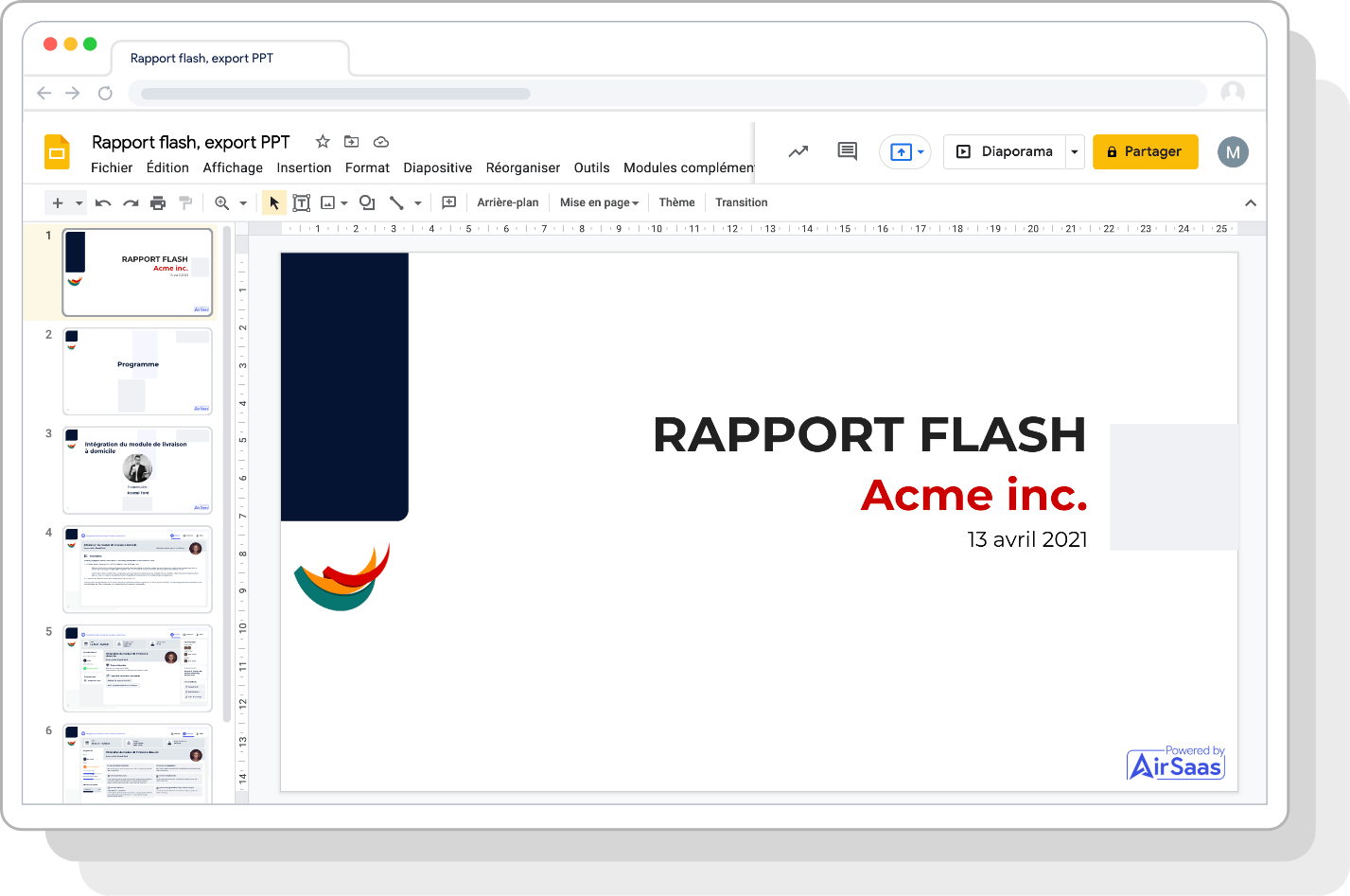
AirSaas flash report — everything to make decision-making easier
2 - Neglecting steering by milestones and decisions
A bit like a homeowners' meeting, your steering committee deserves a clear decision-making protocol!
And yet it's clearly hard to get an overall view of the decisions to be made and their context in a synthetic form.
And after the fact, without content, it's hard to have the history of the important decisions (made or not) on any given project. Hard to understand how you got there...
Using a platform will simplify your governance (list of decisions to make, SteerCo view, etc.). You'll no longer be caught off guard because you didn't have the right information.
Yes, it sounds obvious... but sometimes the fundamentals get forgotten. Focusing on milestones, decisions and attention points — versus task-level micromanagement — will set the right altitude for your steering.
Decisions — everyone talks about them... But where are they? --> What if you had access to every pending decision and the key history during the SteerCo? "A decision kanban changes a company's life"
1 - Not updating your company's OS: its governance and rituals!
Your company's OS update in progress
Yes, this is where the biggest potential gains are!
Around the tool, invest in thinking through the key governance topics: rituals, roles, cooperation, steering by milestones and decisions, transparency "by design", breaking down vertical and horizontal silos, new roles for management. In short, every axis of implementing a new cultural model.
And to support this new role structure over time, training, support and coaching are "must-haves."
Because when you think you've understood the concept of PPM and, to move faster, you skip support — even light support — the risks of misunderstanding or rushing are too numerous! To name just one, the most classic... Thinking the tool is magic and will move things forward all by itself!
First, a PPM tool is just a tool (pleonasm!) — it is not an approach in itself!
To get this point across around you, use the metaphor of the knife (the tool) and the approach (the way you use it — to cut food, or a finger!).
A tool therefore cannot solve the problems inherent to the organization, such as unclear project processes, a fuzzy way of formalizing project requirements, indecisive or even absent management, no risk assessment or response planning, etc. As you know, the list of dysfunctions can be long!
At best, a PPM tool can be an excellent catalyst for team members and for project portfolio management: it can bring the portfolio's stakeholders together, let them collaborate, bring more transparency with automated communication, surface portfolio information in a more meaningful way, highlight early-warning indicators, etc.
We wish you and your team every success in this cultural transformation.
Conclusion
We hope you enjoyed reading this article and its selection of 10 mistakes.
Setting up a project portfolio is a critical step for companies looking to transform and modernize their governance and project management. That said, mistakes are normal — you don't do this every day! And rest assured: once it's in place... you don't redo it every year!
Setting up a project portfolio in a company is certainly an investment, and it can get complex if certain parameters are neglected and if too many mistakes are made by team members. By avoiding these 10 mistakes from the start, you can ensure an effective, successful rollout of your new governance, toward a more effective dynamic! To help you pick the right moment to get started, we've prepared an article on when to implement a project portfolio approach. Discover a PMO's first-hand experience of this process: The project portfolio as a way to grow people and the organization.
Want to learn more?
What if you took back control of your project portfolio?
Book a demo and discover the tool in 30 minutes.