March 1, 202311 min readJonas Roman
PMO role: how to find the right stance with the leadership team?

Contents
The PMO may well be the backbone of project governance, yet its relationship with the leadership team often remains a balancing act. Too much control, and the teams reject it. Too much service, and it becomes invisible to senior management.
How the PMO positions itself with the leadership team and with project managers conditions everything: the quality of decisions, the speed of execution, and ultimately the success or failure of projects. Yet few PMOs clearly identify this lever. The result? The PMO ends up playing the role of the fuse whenever something goes wrong.
Two profiles often find themselves in difficulty:
- The PMO who comes from project management: they stay too close to the field, keep "doing projects", and don't know how to evolve their stance. You can be a very good project manager and a very bad PMO — and vice versa.
- The PMO who doesn't come from the field: they gravitate around the leadership team, alienate the project teams, and end up relaying information disconnected from operational reality.
This article details the symptoms of a dysfunctional positioning, and offers a framework to find the right stance between senior management and the teams.
The symptoms of a dysfunctional PMO
Executives in progress
Misunderstandings and frustrations
You can't address the history of these relationships without first explaining why this topic deserves attention.
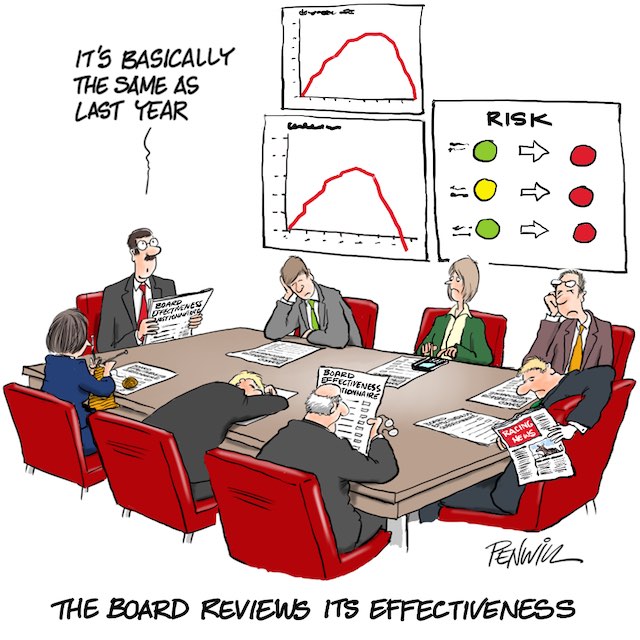
There are often dysfunctions or unforeseen events in a project. But when these dysfunctions affect a majority of projects in a program, or even an entire project process, it becomes important to look for the elements those dysfunctions have in common in order to address them.
Among the signals that may indicate dysfunctions in the management of project programs and in the relationships between the stakeholders of the process, we very often find latency in projects and frustrations.
The result: misunderstanding and frustration for project managers when unmade decisions or reversed decisions destabilize project management, or when projects are deprioritized or abandoned. Misunderstanding and frustration for decision-makers too, when project managers commit to completing a milestone or deliverables and in the end they are not met.
We can confidently say today that the PMO has a role to play in resolving these issues — and even that much of it stems from the PMO's own role.
Its inability to be part of the solution often lies in its positioning toward stakeholders. Several problematic stances stand out in the history of these relationships: the "pass-through" PMO, the PMO too focused on the leadership team, or on the project managers… Here is a focus on the symptoms to watch for.
To understand when and why this role becomes essential, read why set up a PMO.
The pass-through PMO

A "pass-through" Project Management Office?
This is the position the PMO adopts when its role is essentially to report to stakeholders. It brings little or no value to the process, its action is restricted (often by how the company defined the role), and it passes actions and information from the field up to the leadership team — and conversely the information and directives issued by the leadership team down to the project managers.
A pass-through PMO is a bit like going through life as a mere spectator. There is absolutely no point in creating a PMO role for it to be worn that way.
It contributes to widening the gap between the leadership team and project managers, where communication is weak and exchanges not very constructive — when they exist at all! The dynamic often stays very top-down, with decisions disconnected from the reality on the ground.
The PMO too focused on the leadership team
A Project Management Office too focused on the leadership team
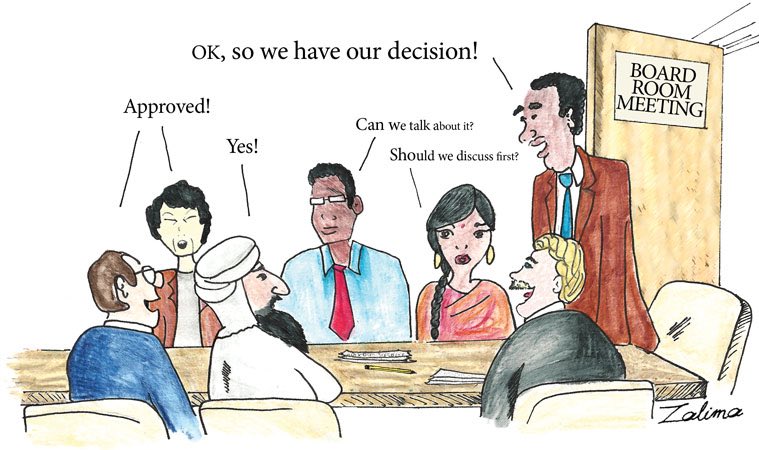
PMOs have traditionally been more oriented toward their relationship with the leadership team, making it a priority to provide the information and elements the leadership team wants. With a "little big boss" relationship with project managers, and a PMO–leadership team relationship acting as a "united front" against the project managers.
It makes providing lots of reporting a priority of its role, and the project teams end up feeling controlled and micromanaged. But in practice, the teams get neither decisions nor support from the leadership team, nor a PMO enabling smooth project management.
Little by little, the PMO alienates the project teams and watches team commitment collapse.
In the end, you get leadership teams making decisions on false data, because too much reporting is asked of the teams — which doesn't make their life easier, especially in "best effort" mode. You end up producing information for information's sake, multiplying "bullshit" data that mostly serves to cover people rather than freeing quality time to move strategic projects forward.
As a consequence, this breeds mistrust and defiance toward the PMO among project managers, which in turn leads the PMO to base its project portfolio steering on false data coming out of project management. And therefore, in turn, a senior management that also steers on false data. Leadership then believes things are moving forward — and when it realizes they aren't, the PMO "blows", waiting for the next fuse.
The PMO (too) focused on project managers
On the other hand, a PMO who comes from project management will often struggle to position themselves and will dysfunction too. Because they will "do projects", get heavily involved with the project managers, and won't move decisions forward with the leadership team. The reason: decision-makers won't have understood the state of play of the various situations they're asked to rule on.
The PMO therefore won't manage to obtain those quick decisions for project management, because the members of the leadership team will have lost sight of the projects' elements and won't have enough information — or a clear enough level of understanding — to distill the right decisions or the right insights to the project teams.
The "right" stance of the PMO with its leadership team
Decision-makers need to understand the state of play — the reality on the ground — in order to be able to provide the right decisions and corrective actions.
To do this, the PMO's role is to give a clear picture of the reality on the ground, on the progress and evolution of project management. It must be able to communicate at the right level, synthesizing the key information so as to always put events back into the cognitive frame of the project's objectives and the company's strategic objectives. Information must be communicated to the leadership team in the form of actionables, allowing it to make quick, easily implementable decisions.
The "right" stance between the PMO and project managers
The PMO must be close enough to the teams to understand their problems and help them with the operational process, the approach and project management — making their life easier. But above all, it must be able to obtain, for the project managers, quick decisions on the key elements they need to move their actions forward.
It must support project managers, enabling them to identify and anticipate difficulties as well as the resources needed to complete the objectives.
In the case of project managers working in "best effort" mode, the PMO plays a training and coaching role for departments and teams, helping them build skills and reach sufficient autonomy in managing these projects — while also fostering employees' commitment to project management.
The desired role of the PMO in the overall process
The ideal PMO role is that happy medium to be found between "not doing the projects" and "helping people by trying to make their life easier in project management".
At the same time, the PMO has good access to information. It can therefore surface the right actionables, communicating them at the right level of discourse to the leadership team, which makes it possible to obtain quick decisions and corrective actions.
The PMO must bring clarity and anticipation to ease communication and understanding between project stakeholders, and thus make tracking and progress smoother.
How to position yourself well as a PMO?

Guideposts for implementation
A facilitator, the trusted third party
The PMO must split its time between these two stakeholders, be an ally of both parties, and play this facilitator role to smooth communication and access to the necessary information in order to move projects forward.
To be able to grease the wheels, it must not position itself in a customer–supplier relationship. It must build a partnership with both parties, as a trusted third party would, to make sure it can create win-win situations between all parties.
This will also serve to remind all employees and governance bodies of their rights and duties. Hence the importance, in the project approach, for the PMO to clearly define and communicate the roles and responsibilities of each stakeholder, in order to guarantee that the process works well in achieving the projects' objectives.
Between a rock and a hard place, no worries!
Mind the PMO's business processes!
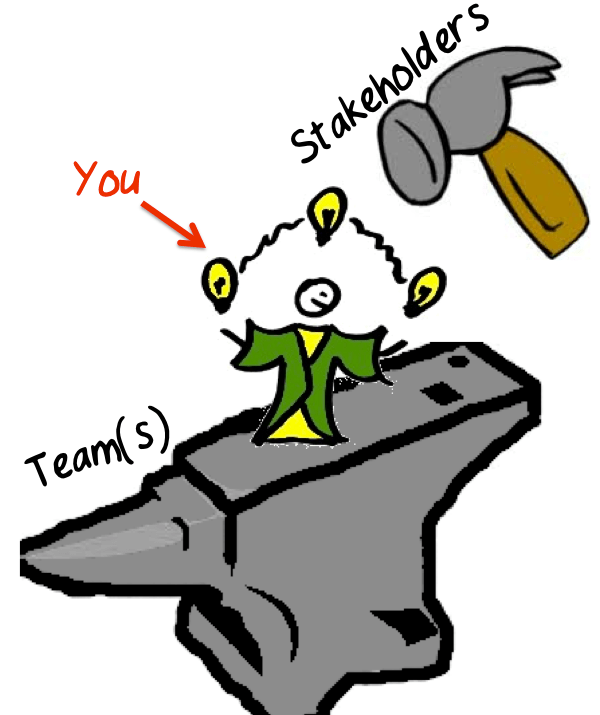
The PMO can sometimes find itself in this delicate situation — where, in the event of dysfunctions, it faces a high concentration of frustrations from the various parties.
Here, to handle these situations well and keep a cool head, it's important to stick to the facts, stay out of the emotional register, and put on the "problem solver" hat. Being able to smooth communication and find win-win situations will let the PMO get through these delicate phases — uncomfortable, certainly, but often unavoidable when managing projects at company scale.
Structuring a project approach based on the SRR to position the players well
One of the PMO's tools to streamline project delivery and communication, leading to fast decisions, is the project approach it puts in place.
One methodology that proves very effective is an approach driven by commitment, milestones and decisions, centered around the SRR (for Meaning, Role, Ritual).
The SRR concept makes it possible to clearly define and communicate everyone's roles and responsibilities, while giving it meaning for everyone and putting in place rituals that help everyone properly adopt the concepts and the project culture.
The challenge of the relationship between the PMO and the sponsor in the process
The project sponsor is the person or organization that initiated the project and assumes final responsibility for it. As the saying goes, it's "the one who pays".
It's important for the PMO and the project sponsor to maintain a strong, effective working relationship to guarantee the project's success. Here are a few key elements that can help define the relationship between a PMO and a sponsor:
- Communication: it is essential that the PMO and the project sponsor communicate regularly and effectively to make sure every aspect of the project is managed appropriately.
- Responsibilities: the PMO is responsible for managing the project, while the project sponsor is responsible for the final decision and for approving changes. It's important that these responsibilities are clearly defined and that each understands their own role in the project.
- Collaboration: the PMO and the project sponsor must work together collaboratively to reach the project's objectives. This can include setting priorities, solving problems, and making the decisions that don't require the leadership team.
In short, it's important for the PMO and the project sponsor to maintain a strong, effective working relationship to guarantee the project's success. That means clear, regular communication, well-defined responsibilities and active collaboration.
What is the right metric for a PMO in the company?
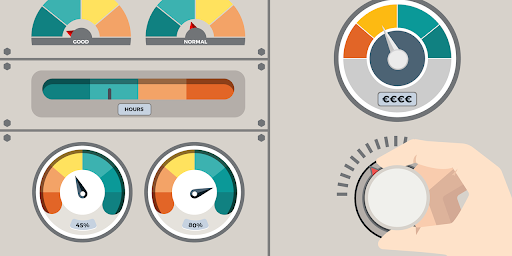
Everything to help top management and the PMO turn the "dials" at the right level
You may have guessed it by now: one of the missions and indicators perfectly suited to the PMO role these days would rather be the ability to get decisions made, and how quickly it helps the leadership team make the decisions that improve project management.
Its ability to get these quick decisions made will come from its ability to communicate at the right level with the leadership team, to smooth the exchange of information between the leadership team and the project teams, while making the latter's work easier in order to guarantee the integrity of the information and help with the operational delivery of projects.
If the leadership team has few decisions to make, it may be because not enough information is coming up from the project teams. Conversely, if many decisions get escalated to the leadership team but few are actually made, that won't work either. Finding the right PMO role is a subtle balance — but an achievable one!
What if you took back control of your project portfolio?
Book a demo and discover the tool in 30 minutes.