February 25, 202312 min readJonas Roman
How to set up a PMO?

Contents
Welcome to the pragmatic project management office
When does the question of setting up a PMO arise?
When do you start? It's a question we get asked very often. Indeed, this role has become more and more important for companies in order to cope with the acceleration of innovation and the explosion of cross-functional projects.
However, it seems that the same obstacles come back when considering setting up a PMO. Is the company big enough to justify creating this type of position? Are we structured enough internally to set it up?
The size of the company is less important than the number of projects and the investment they represent. The smaller the workforce and the larger the number of projects, the greater the involvement of teams in "best effort" mode.
With employees who take on the role of project manager in addition to their usual duties — a role for which, if it is not their core expertise, you can expect lower efficiency — many projects become very difficult to carry out successfully.
In many cases, failed projects can cost a lot more than hiring a PMO.
The question of how structured the company is should be taken the other way around here. The role of a PMO is to help structure an approach and a culture aimed at upskilling all employees on projects and thus improving the success of these projects, while also contributing to better efficiency for employees.
It can therefore be an important element in structuring a company to cope with an increased load on the core business. It's always better than putting a majority of projects on stand-by or into chronic failure.
Three criteria for deciding to hire a PMO?
- First criterion, a purely ROI-based one: in the ratios generally observed, the right time to set up a PMO is when the sum of cross-functional or transformation projects reaches €400K to €500K. Provisioning 15% to 20% of the value of your project portfolio for setting up a PMO seems to be a good practice to secure current investments but also to improve the efficiency of future investments.
- When projects get out of hand! Second context to take into account to take the plunge. When your ERP project has been slipping for 18 months… it's a sign that you're running out of "oil". Recruiting a PMO, or bringing in an external one, will also save the time key employees spend on projects and thus help them better manage their core activities.
- Finally, a third, more subjective criterion: when the CEO feels like things are dragging! This is a sign that this topic needs a bit more steering. Don't settle into a lack of efficiency, transparency and trust.
Need to dig deeper? Check out our article "Why set up a PMO?"
What do you need to put in place before a PMO arrives?

The keys to a successful implementation
Before a PMO arrives, it is important to put the following elements in place:
- Identify the company's needs in terms of project management and determine how a PMO can help meet them.
- Define the role and responsibilities of the PMO, as well as the resources it will need to perform its duties. (Don't hesitate to let this vision evolve by seeking outside advice or based on what candidates bring to the table.)
- Choose a manager for the PMO who will give it the means to succeed, in particular by providing the necessary resources and enabling it to open the right doors and have the right influence in the company.
- Communicate about the PMO to everyone in the company, in order to make them aware of its role and responsibilities, and to provide them with the information they need to work in collaboration with it.
By putting these elements in place before the PMO arrives, you ensure that the PMO has the minimum resources needed to perform its duties and that everyone in the company is aware of its role and responsibilities. It will also allow you to reduce potential issues that may arise during the PMO implementation process.
Careful — the four points above form the basis… But it won't be enough for an effective start as a PMO!
Through our discussions with CIOs, executive leadership, sponsors… we have become convinced that there are three additional prerequisites.
- The PMO reports to top management. Yes, it is a strategic role!
- The PMO is positioned as a facilitator versus a controller who p***es everyone off. They must inspire and unite!
- We (really) give the PMO the capacity, the permission to challenge sponsors and decision-makers… You kill this role if the PMO gets shot down every time they raise an issue.
What profile to look for?

Project managers or PMOs?
To find the ideal profile for a PMO position, it's important to look for someone who has:
- Solid experience in cross-functional and/or transformation project management
- Communication and collaboration skills, to work effectively with the various members of the project team and to manage relationships with the various stakeholders.
- Organizational and planning skills, to organize the various projects between them and to help manage them so that they are carried out on time.
- Risk management and problem-solving skills, to identify and manage risks that may arise during a project and find solutions to solve them.
- In-depth knowledge of project management tools and technologies, to consolidate their approach in order to better manage the company's projects.
- The plus: A candidate with a very good culture of transformation projects, a good vision of the challenges and solutions based on hands-on experience, and close to a network of peers on these topics in order to stay up to date on the evolving challenges of business transformation.
The PMO is also expected to act as the link between project managers and business teams on one side, and the executive and top management on the other. For this you will need a profile capable of operating in both spheres: their role being to help and facilitate, they must understand the needs and have the technical prerequisites to support teams and departments in their execution role, but also a strong business appetite and understanding to communicate at the right level with the Codir/Comex.
Project skills are the minimum, the basis! As you will have understood, the old-fashioned PMO-as-controller role won't work with just the minimum service: we are looking for a team-captain profile rather than a petty boss. We are looking for a natural educator — they must inspire and unite!
The optimal situation is when you have a PMO who has grown internally and is coached by someone external if need be. They will have the legitimacy — and the tips — to find their posture.
What difficulties should you expect at the beginning?

Welcome to project portfolios
When setting up a PMO, it is possible to encounter the following difficulties:
- Resistance to change: some members of the company may be reluctant to work with a PMO and may struggle to adapt to new ways of working.
- Lack of suitable tools: "for those who own a hammer, everything looks like a nail".
- Communication issues: different members of the company may not be on the same page when it comes to the PMO's goals and responsibilities, which can lead to misunderstandings and difficulties working collaboratively.
- Lack of support: the PMO may not have the necessary support from management, which can limit its effectiveness and its ability to perform its duties adequately.
- The lack of exemplarity: if your leadership team doesn't lead by example, don't expect business teams, the PMO and project managers to compensate… Through a phenomenon of hierarchical mimicry, everyone will adapt to the "norm", good and bad ^^
To avoid these difficulties, it is important to carefully plan the implementation of the PMO and to communicate clearly with everyone in the company to explain the role and responsibilities of the PMO, as well as the benefits it can bring to the business.
What is its best position to take action?

A road map alone is not enough
There are several elements to consider in order to identify the position in which to integrate the PMO so as to obtain the best results:
The entity with the greatest project maturity in the company:
The objective is for the PMO to be in a position where they will be able to act fairly quickly. They will need to focus their energy on developing or restructuring project operations and governance, and be able to soak up the strategic direction given to their actions by top management. If they spend too much time upgrading or converting the team they work in, their energy and results are very likely to suffer.
The ideal here is for the PMO to work within the company entity that is most mature in project management and that shares the vision of the structuring to come.
An entity with influence and goodwill:
The other aspect, almost more important than the previous point, is that the PMO must be able to act and have support from the entity that has the most cross-functional dimension in the company, and that is the most appreciated by the company's employees and other departments. If it reports to influential, well-liked people, this will make it easier to spread a new culture and will avoid the obstacles PMOs run into, as well as potential ego wars between departments.
Proximity to the Codir/Comex
Finally, one of the key roles of the PMO is to be able to obtain quick decisions for projects from Codir/Comex members; they must be in a position to give them all the information needed for those decisions to be made. To do this, they must sit close to these decision-making bodies — for example by having a direct manager who is a member of the management board.
The secondary benefit is that, by reporting to a member of top management, this will also pre-empt potential project obstacles linked to ego and to the desire of some employees to shine at the expense of the projects' objective, or to assert some form of toxic authority.
How to communicate and put the PMO in the right conditions?

To have or not to have a communication plan
To communicate effectively about the PMO and put it in the right conditions, here are some tips:
- Communicate clearly about the role and responsibilities of the PMO to everyone in the company. Explain how the PMO can help them with their work and how they can work collaboratively with it.
- Give a presentation of the PMO during a kick-off meeting to inform everyone in the company about the new ways of working that will be implemented and explain how they will make their lives easier.
- Give the PMO the tools to work well, communicate well and interact with stakeholders so that it can perform its duties effectively. This may include project governance tools, software, or any other type of resource that will be useful to it.
How to organize or reorganize project governance?
The key stages of governance
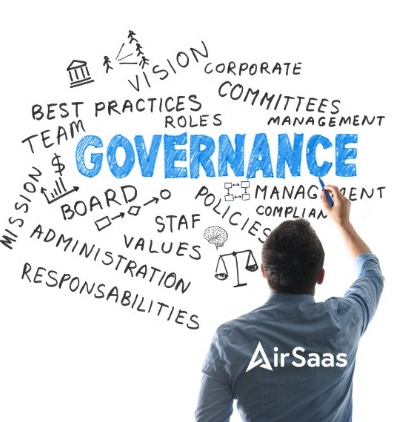
Project governance can be a sensitive subject, especially when it is reorganized following the arrival of a PMO. The aim is to set up effective, well-suited governance that will facilitate project management, global monitoring and decision-making — not to trigger ego wars or amplify resistance to change.
To organize or reorganize project governance in the company, you don't need to have graduated top of your class from the Project Management Institute:
- Make sure the organization's strategy actually exists and is shared! Give meaning: a strategic plan every 5 years is not enough, it must be kept alive!
- Then, go down one level to the major identified programs. Are they identified? Because yes… before even trying to improve governance, you have to check that everyone knows "where we are going collectively".
- Then, agree on prioritization cycles aligned with the budget cycles in place.
- Finally, come back to the human fundamentals. Good project governance will always mean having a sponsor, a project manager and a business lead who is genuinely available. Not to mention the creation of new key synchronization and communication rituals, regular and respected!
Only then does the question of tools come in, as the final key. Yes, governance assistance is a "must have". And yes, every tool carries a philosophy with it. Favor management through commitment, milestones and decisions. AirSaas was specifically designed with this in mind.
Don't underestimate the importance of "quick wins"

Project management is an art!
Quick wins are actions that are fast and easy to implement and that quickly deliver positive, visible results. They are essential when creating a new position — especially a PMO, which is often a lesser-known role (when it is new) and a source of resistance to change when poorly onboarded into the company. Quick wins allow you to quickly show your added value and to build trust in and commitment to your action among colleagues and management.
It is important to find quick wins that are in line with the company's goals and that can be achieved quickly, without requiring significant resources. This can be, for example, putting more efficient work processes in place, or solving problems that have been identified as obstacles to project performance.
Of course, the PMO should not focus only on quick wins in the early stages of the role; in parallel, they will have to carry out deeper actions to put the project approach and the strategic projects in place, whose results will only be visible over the medium term.
On the other hand, supporting the PMO in delivering quick wins will give credit and weight to their action, and thus make it easier to earn employees' trust in and commitment to the approach.
What if you took back control of your project portfolio?
Book a demo and discover the tool in 30 minutes.