
Contents
If you manage IT or business projects, you must have heard about demand planning and capacity planning. Two concepts that are often confused, although they respond to very distinct challenges.
On the one hand, demand planning consists in listing and prioritizing everything the company wants to do: new features, enhancements, strategic projects...
On the other hand, Capacity Planning aims to ensure that we have the necessary resources (human, technical, budgetary) to carry them out.
And that's where it often gets stuck.
Many companies spend time defining their demands, but without checking whether they are realistic given the available capacity. The result: unsustainable roadmaps, overloaded teams and trade-offs made in a rush. Conversely, some companies are focused on their resource constraints without having a clear vision of business needs, which leads to under-used teams and a lack of value created.
The challenge is therefore to balance these two approaches: to make what we want to do coincide with what we can really do. This is where a good governance framework comes in, with the right tools to manage both demand and capacity.
In this article, we will look at the fundamental differences between demand planning and Capacity Planning, why they are inseparable, and above all how to integrate them intelligently to avoid falling into the trap of unfeasible projects or overloaded teams.
What is demand planning?
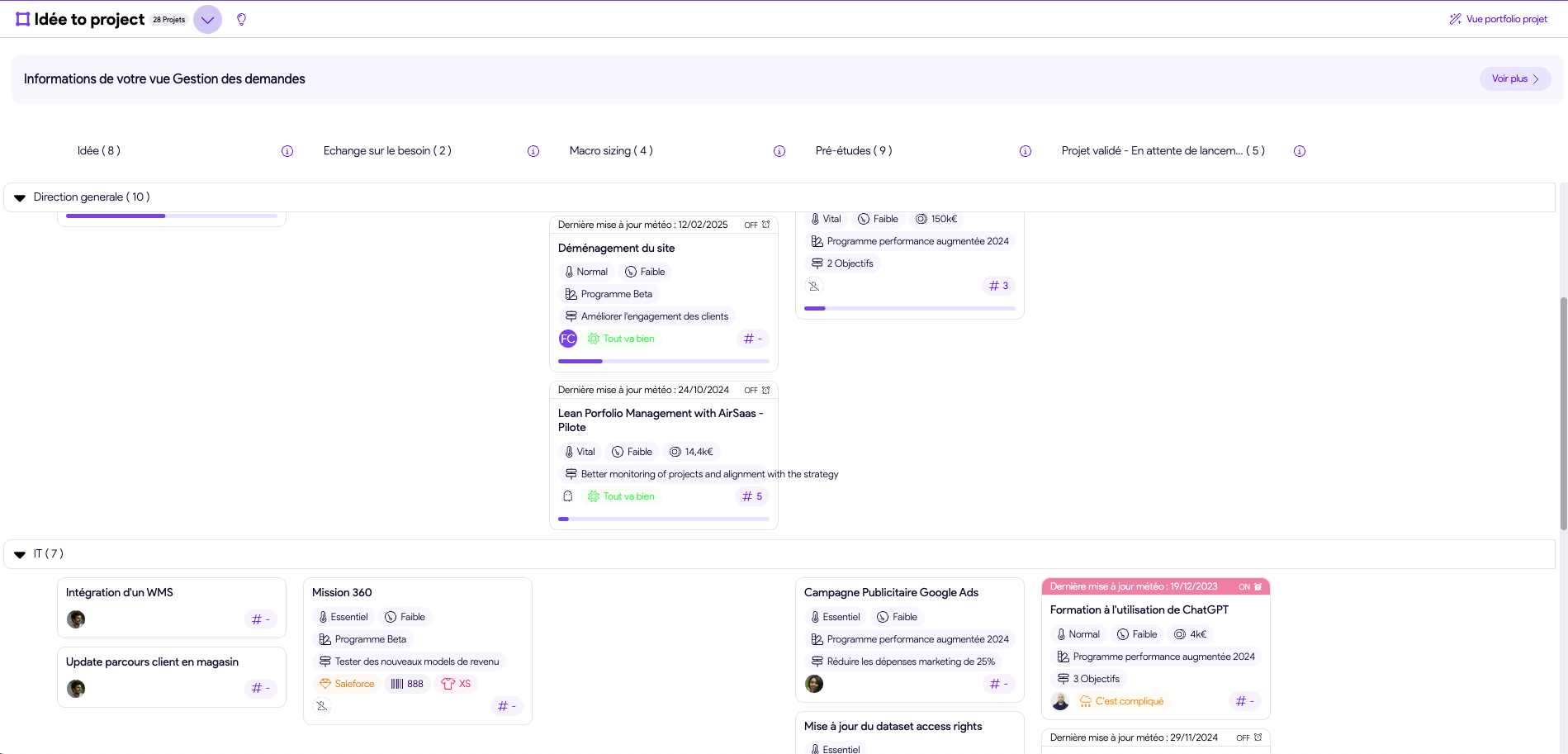
Demand planning (or sometimes demand management) is a process that aims to predict the company's future demand for projects. Its main objectives: to meet customer demand (external as well as internal), and to promote transformation and innovation within the organization.
In short, demand planning consists in collecting the company's future needs in terms of products, services or features. It allows you to channel incoming projects, to make sure you only launch initiatives that have a real chance of succeeding.
What is Capacity Planning?
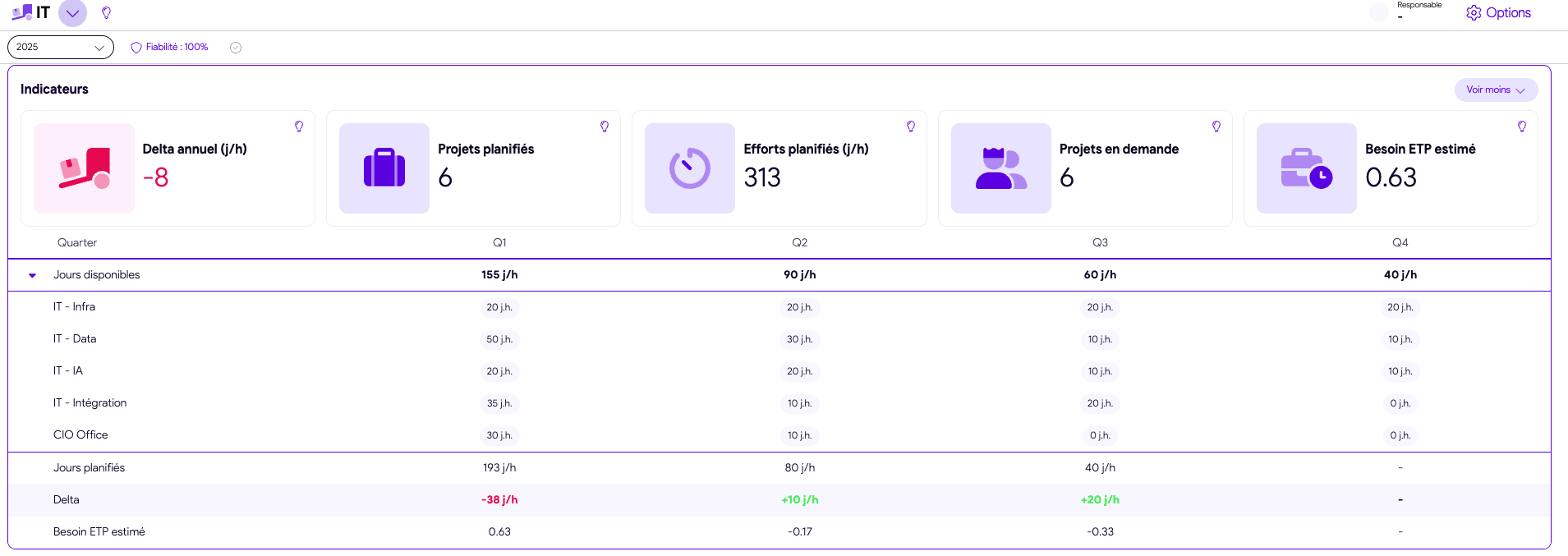
Capacity Planning, or capacity plan, is the process of planning the resources required to meet needs that have already been identified. The goal of capacity planning is to ensure that the available capacity is sufficient to meet demand.
In short, Capacity Planning consists in evaluating and optimizing the available resources (human and financial) to respond effectively to existing or planned demand.
To dig deeper into the subject, go to our article "Capacity Planning: definition and basic principles".
Key differences between demand planning and capacity planning
Different goals
First of all, these two methodologies are not used for the same reasons.
On the one hand, demand planning aims to anticipate the needs of the company's various stakeholders. The emphasis is therefore placed on forecasting these needs, through an analysis of historical trends and customer behaviors, but also by collecting the expectations of the organization's various players.
On the other hand, Capacity Planning focuses on the allocation and management of resources to meet these needs. This approach therefore focuses on adapting available resources to forecast needs. It ensures that the company has enough resources, whether in terms of production capacity or workforce, to meet demand.
Different data used
Different methods mean different data to work with.
On the one hand, demand planning relies on the company's historical data, its forecasts or trends, as well as on the requests raised by business teams.
On the other hand, Capacity Planning focuses on the current capacity, its constraints and its projections in terms of workload.
Hence the need to adopt different tools to carry out these two methods successfully.
We tell you more at the end of this article about the tools to design your Capacity Planning - but if you can't wait, you can already discover the Airsaas solution and its macro capacity-planning features.
The complementarity between demand planning and capacity planning
While these two methods are useful for project management in the company, they do not have the same links with your project portfolio.
Demand planning can influence your projects because it allows you to identify periods of high demand, peak workloads, or deliverables that need to be developed quickly to ensure that the business maintains its competitive edge.
Capacity Planning allows you to ensure that you can execute your projects smoothly, without being held back by a lack of resources.
In short, while demand planning answers the question "What projects should we do?", Capacity Planning lets you ask the question "Can we do these projects?".
This is why capacity planning and demand planning are so complementary! The two methods form two sides of the same coin: the balance between needs and resources.
By combining these two approaches, you can maximize the operational efficiency of your organization. Reliable demand planning allows your Capacity Planning to run on solid foundations, while a well-managed Capacity Planning ensures that demand forecasts can be met without disruptions or delays.
Together, they create an integrated strategy, where demand guides priorities and resources ensure their execution.
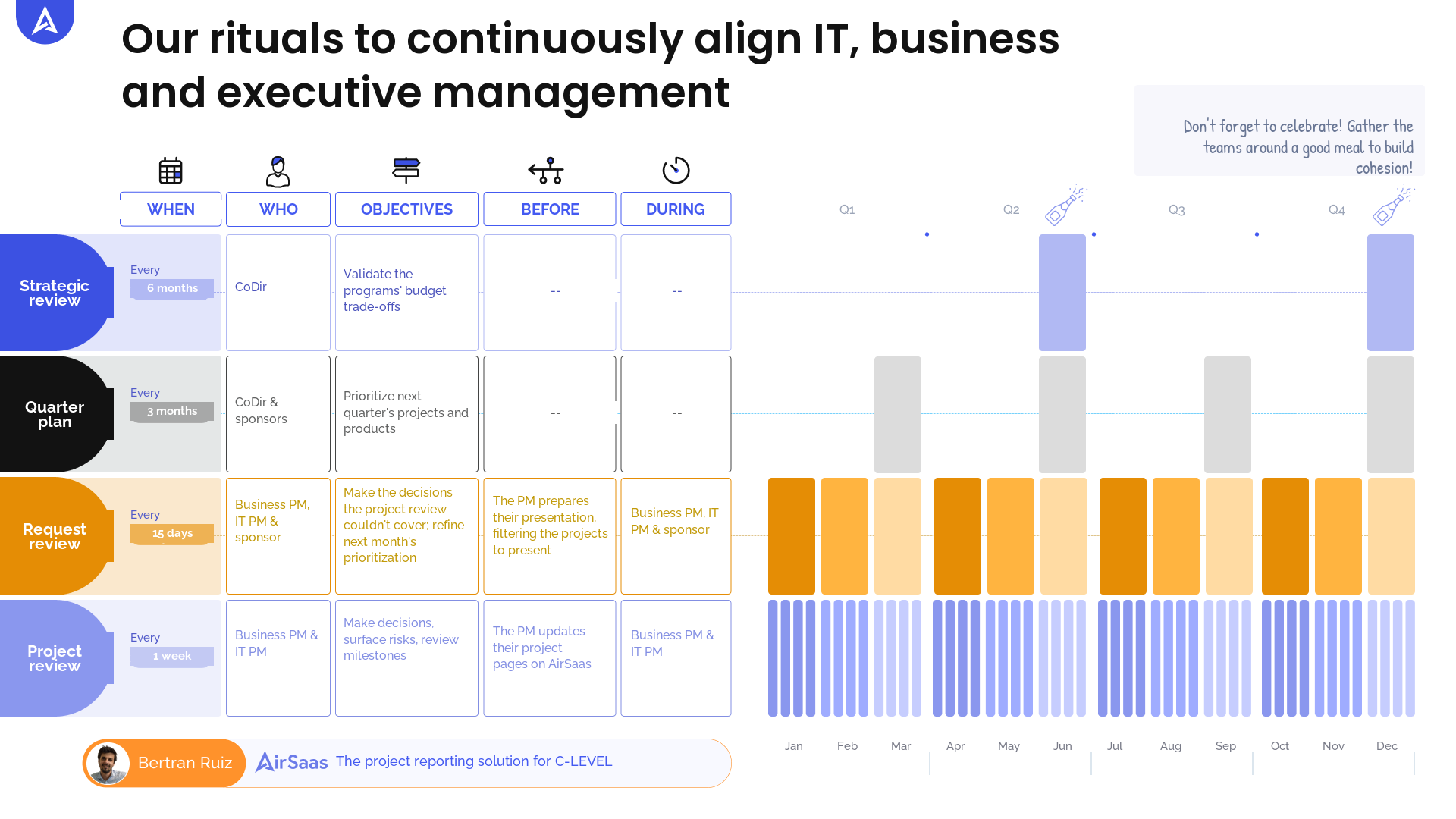
The idea: schedule demand-management meetings (or request reviews) every two weeks with IT - Business duos, allowing you to collect demand from the various stakeholders. The elements collected then allow you to organize your Capacity Planning over a longer horizon - quarter, semester or PI, depending on your organization's cadence.
Want to learn more?
What tools for controlled Capacity Planning?
Designing a Capacity Planning requires you to collect all of your company's current and planned demand, then align it with the resources available over the period.
If the method is completely new to you, don't hesitate to check out our seven-step guide to designing your capacity plan.
But if you've already created a Capacity Planning, you know it: working from a single Excel spreadsheet can quickly become a real headache. Your capacity plan needs to be collaborative, and easily updated as demand and resources fluctuate.
To help CIOs, PMOs and project managers better manage their company's production capacity, we designed the Airsaas Capacity Planning feature.
It's simple: on Airsaas, you design one capacity plan per team for the period you want: quarter, semester, or PI. That way, you focus on the company's real build.
Each team reports in Airsaas the resources it can make available for your projects.
Then you simply create scenarios to assess where to allocate your resources according to priorities. A simple step, thanks to the Capacity view, which lets you see at a glance where your projects are blocked, and what additional resources you need.
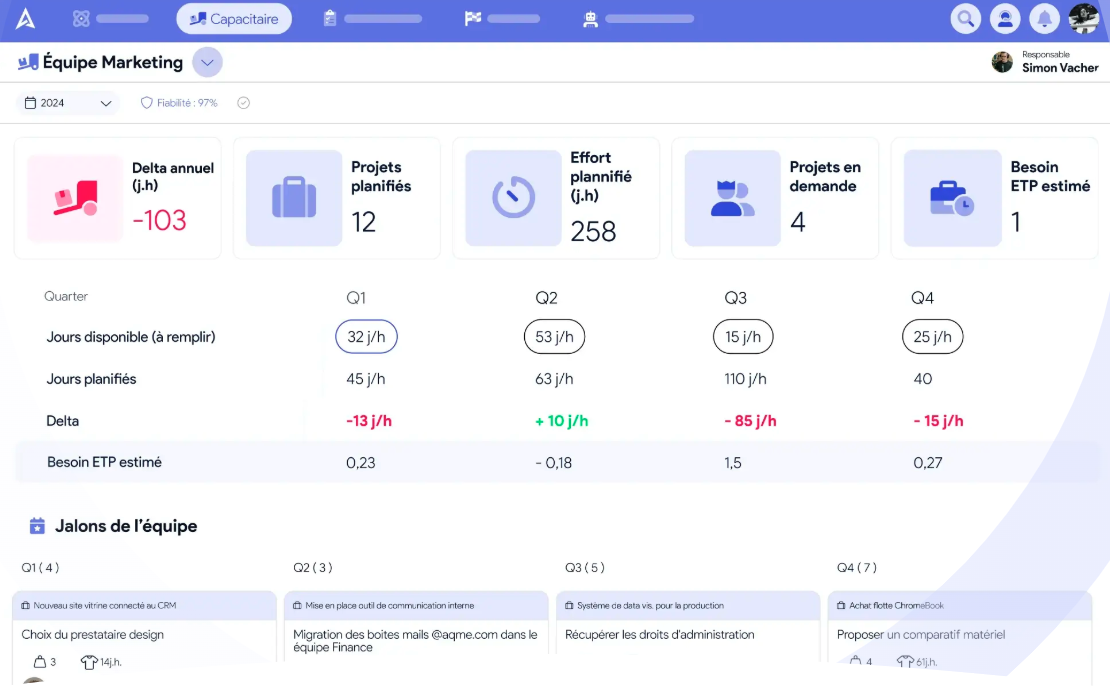
Stop wasting your (precious) time on per-person, per-task capacity plans: opt for pragmatic Capacity Planning with Airsaas!
And now that you've fully understood the major differences between demand planning and Capacity Planning, you're ready to get started on your capacity plan.
Request an Airsaas demo, and let our project portfolio management platform streamline your company's transformation.
What if you took back control of your project portfolio?
Book a demo and discover the tool in 30 minutes.