April 7, 202218 min readJonas Roman
How to run a steering committee meeting?


Contents

Running a steering committee meeting successfully is an achievable goal for any project manager, as long as both the meeting and the project manager are well prepared.
You'll find all the fundamentals of this approach in our reference article: Steering committee (SteerCo): the basics.
A 45-minute steering committee meeting agenda
Use this example when the committee has one main decision to make. Share the project update and the decision options in advance, so meeting time is spent resolving the issue. Adapt the timings to your committee’s responsibilities.
| Time | Item | Expected output |
|---|---|---|
| 0–5 min | Confirm the decision and follow up previous actions | One agreed decision to make today |
| 5–10 min | Review material changes in scope, cost, milestones and risk | A shared understanding of what has changed |
| 10–30 min | Compare options and resolve the main trade-off | A decision, an owner and any conditions |
| 30–40 min | Address dependencies and escalations | Named owners and due dates |
| 40–45 min | Read back decisions and actions | An agreed decision log and next review date |
Example decision — fictional case: the integration team has 20 days available, while two proposed deliveries require 15 and 12 days. The committee agrees to deliver the first and defer the second, unless at least seven days can be removed from its scope. Record the trade-off, its business impact and who will confirm the revised estimate. The remaining five days do not make a 12-day delivery feasible.
The pitfalls to avoid during a steering committee meeting
Half-decisions and non-decisions
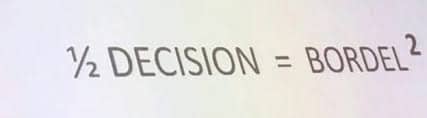
As we saw in a previous article: a half-decision = double the mess, and it's probably the number-one KPI for the project manager and the steering committee. Have all the decisions that needed to be made in this meeting actually been made? What would the impact be if they weren't made, or only partially? Did the project manager provide enough of the information needed to make every decision?
While the last two questions should be asked during the preparation of the committee, the first is a matter of facilitating and managing the meeting. This article aims to highlight a few key points to make sure you walk away with the deliverables you need and that are expected of you.
Not knowing how to make the call, or always seeking consensus
Hence the importance, for the project manager and with the sponsor's support, of clearly explaining the rules of the game. In many organizations the project manager may be more junior than the senior managers attending the committee. And yet, just as in their interactions with more operational stakeholders with no reporting line, they must know how to move things forward and secure what's needed to execute the project well.
Don't forget that, in a way, the project manager represents the sponsor. As such, they also embody the sponsor's will to keep things moving. They must know how to refocus the meeting and manage the events and personalities that could disrupt the committee.
They must also know how to make the call and take positions (in line with the strategic priorities defined with the sponsor) to steer the project in the right direction and gain operational efficiency. Trying to get everyone to agree, all the time and all at once, is the surest way to waste as much time as possible or to reach non-decision deadlocks.
This isn't about making authoritarian decisions with no regard for the other stakeholders' positions. It's about setting a framework to focus on, leaving aside what's superfluous in light of the information the sponsor and project manager hold, in the company's overall interest. Because in the end, they are the two people meant to have the clearest view of the project.
Tensions, frustrations and unspoken issues

The previous point, like others (power dynamics, change management…), can create tensions and frustrations among the project's stakeholders.
It's important to defuse tensions and frustrations outside the steering committee, ideally beforehand, to preserve the project's effectiveness and positive momentum. You wouldn't want certain frustrations or tensions to cast doubt on the project's feasibility or value for the wrong reasons.
The idea is to identify upfront what's creating tension or frustration and for whom, so you can put the right actions in place: this might mean the project manager taking into account the objections or attention points of certain stakeholders, addressing them, and — if the disagreement persists — involving the sponsor in resolving it. That's not always easy, but a transparent, sincere approach from the project manager should be enough to avoid "burning" themselves operationally with stakeholders.
The most critical issue may be the unspoken ones, because they can have a strong impact on the risks and problems weighing on the project. The project manager must know how to build a climate of trust and how to draw in those who hold back — whether under peer pressure, because they don't dare speak up in front of other senior managers, or simply because they're not involved enough. Know how to dig deeper when you sense you're not being told everything.
Poor time management

This factor — easily avoided with good preparation and a good time-keeper — is responsible for many non-decisions and poor information flow. So it's important to have planned enough time to cover all the key points (and don't hesitate to do a dry run of your presentation and interactions if you have doubts about the timing).
It will also be important to keep good time and to know how to handle the time-consuming events that can arise in the meeting (monopolizing the floor, digressions, behaviors… — all points developed further in this article).
Coming prepared to the project steering committee

Clear, well-defined objectives, prepared in advance with the sponsor
The project manager must ensure that, by the end of the committee, all the trade-offs, decisions and unblocking of hot topics are handled, in line with the role of this type of meeting:
- Make decisions and trade-offs.
- Ensure the project runs smoothly and check that it is aligned with the company's overall strategies.
- Assess the quality and health of the project at each meeting. If certain issues need improvement, the key stakeholders can raise them so they get resolved.
- Give the project manager the power to act and to use the company's resources to drive execution and progress.
- Resolve conflicts between departments, and issues related to cost, time, risk, resources, quality and scope.
- Monitor the project's progress against the agreed objectives and resolve the problems preventing the project from progressing on time.
An effective presentation deck
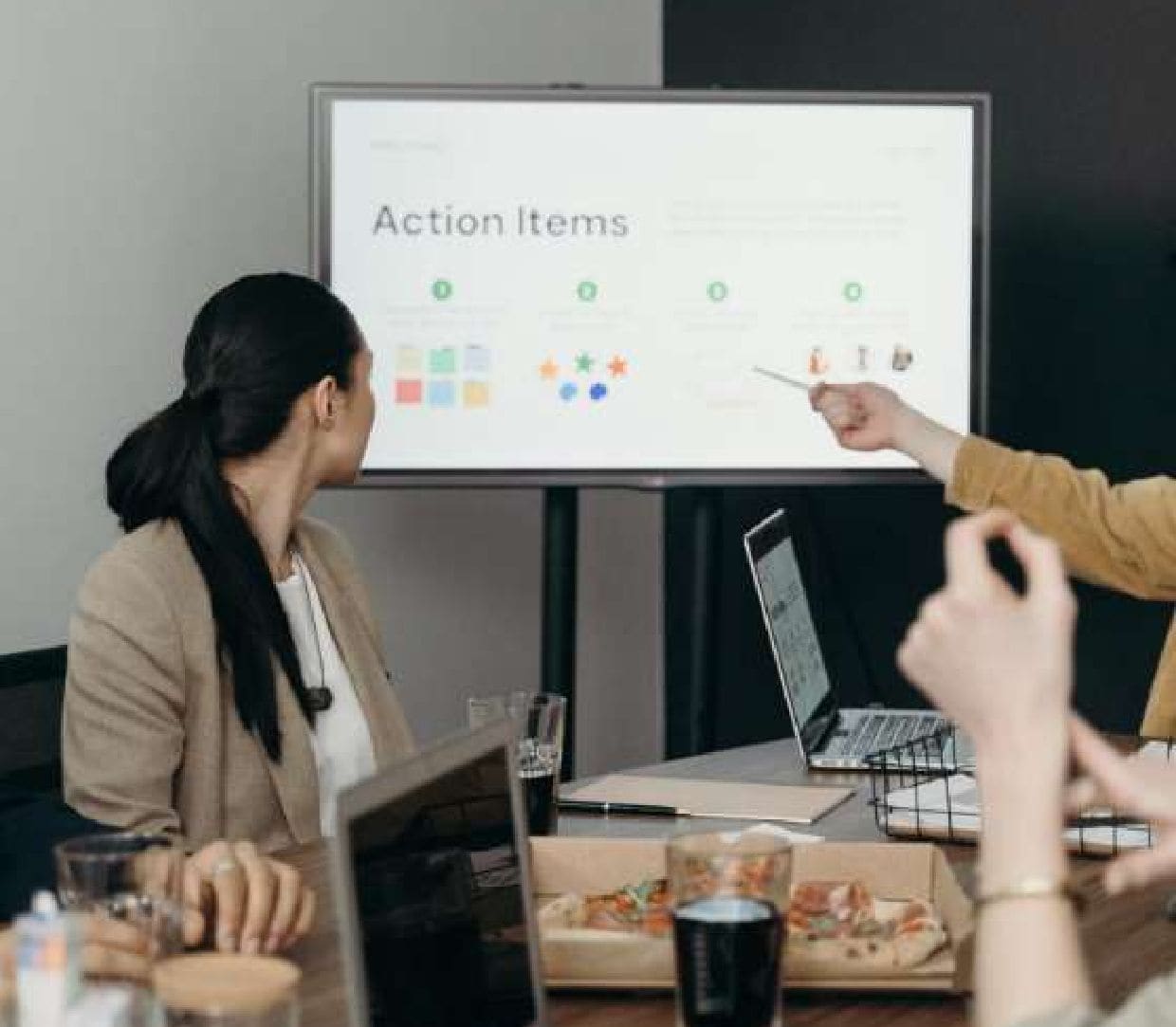
Used well and built well, it's a formidable tool to drive the meeting around the essentials and distill all the key information in an organized, concise way, enabling decisions and trade-offs during that same committee.
The right participants
Which project and company players should you bring together in the steering committee meeting you're going to run? Here are a few points to ensure sound decision-making and a smooth run of this key moment.
- Participants must have influence, authority, and decision-making power over their respective departments and resources.
- The project's internal drivers and evangelists should be invited.
- External contributors with the skills and authority to bring expertise to the project can be worth including in the meeting.
Knowing the committee members' positions
One of the project manager's ongoing tasks is to know, throughout the project, each member's position and stance on the various topics and the points of tension/objection — and to have a strategy to defuse them (in agreement with the sponsor).
The points above are only a reminder of a few key aspects; if you want to learn more, see our dedicated article: How to prepare a steering committee well?
You don't need to know everything to use everything

- Know your numbers. The project manager must know all the key figures at their disposal and have a clear strategy to obtain the missing ones. On the other hand, when it comes to very operational, specific details, they can be imprecise — but never wrong. Knowing how to surround yourself with, and involve, those who have the expected knowledge is essential.
- Know the technical scope of the project and its blocking points/frictions/risks. They must understand them, have them explained, but above all be able to restate and simplify them to make them easier for everyone to grasp.
Understanding the internal dynamics and using them to the project's advantage

In a company, especially beyond a certain size, there will almost always be internal politics or individual agendas at play — opportunities for some to put themselves forward, or to delay/block the project's progress if it doesn't serve their interests or those of their core responsibilities.
Knowing and understanding the impact of a project's progress on the various stakeholders will let the project manager anticipate one of the main causes of failure: people, fear of change, and power dynamics.
It's therefore up to the project manager to understand and analyze these aspects as early as possible in the project, in order to defuse those risks — either by setting up win-win strategies, or by calling on the sponsor for the most blocking aspects so they put the company's overall interest back at the center.
Not taking the blockers' reactions personally is an opportunity for the project manager to use their personal objectives positively, if they can align them with the project's interest.
Communicating at the right level
Know your audience

It's obvious that the project manager must adapt their message and the committee's content to their audience and to the level and amount of information members need to make decisions.
Since there are often executive-committee members and/or senior managers in the steering committee, favor a slightly more high-level presentation, reframing the project and presenting it at the level of the company's objectives, stakes and strategy. So avoid going into too much detail — give enough context while going straight to the trade-offs.
Don't fixate on details and frustrations

Managing details should stay within the operational scope. The project manager's role is to synthesize them well, to emphasize what worked and the blocking factors. Just enough to understand an issue — no more, no less.
Senior managers and steering-committee members are there to make sizing decisions about the project's direction or access to resources, and to understand why the trade-offs are critical.
So know how to group the details and business frustrations behind a bigger stake and a more important trade-off, so that managing the details follows from it and becomes obvious for the project manager.
Don't get too technical

Unless you want to lose part or all of the room along the way — and have the steering-committee members leave with more questions than answers — the right approach for the project manager is to know how to simplify the technical aspects to get to the essentials, while giving enough information not to give the impression that it's unreliable or unfinished.
The project manager is allowed to be imprecise on certain technical aspects, but never allowed to be wrong. Making decisions on false data or information will always show up at the end of the chain as a major risk or a cause of failure. This principle should extend to all committee members, and the project manager must always cross-check information from several expert sources in order to reframe or clarify the wrong contributions.
Know how to connect the operational to the "big picture" strategy for your audience

To run a steering committee well, the project manager must always ask what information — and what level of information — their audience needs, and at what level the members of their audience can and usually operate. And without putting the details back into the context of the strategic stake or the macro vision, nothing would let all members understand why it's relevant for them to get into execution details.
The project manager must be a source of proposals for solutions that fit the overall vision. They must be able to take part in, spark and take positions not only on operational matters, but also in more high-level exchanges. Their role is not to arbitrate, but to frame, facilitate and put the other members in a good position to arbitrate.
Invest in the positive!
In a steering committee — and even in this article — it's hard to talk about project management without talking about risk management and blocking factors. But even though that's part of the game, your steering committee can be quite different from what's done elsewhere if you promote achievements and successes.
Remember to highlight what works and what has worked; ritualize the praise and the thank-yous. It's the chance to showcase the company's strengths and to encourage good involvement, good dynamics and a positive impact on the project's stake and on the outcome for the company as well as for end users. This will give more energy and meaning to your project teams, instill a much better mindset, and sustain stakeholder engagement.
Don't leave objections unanswered
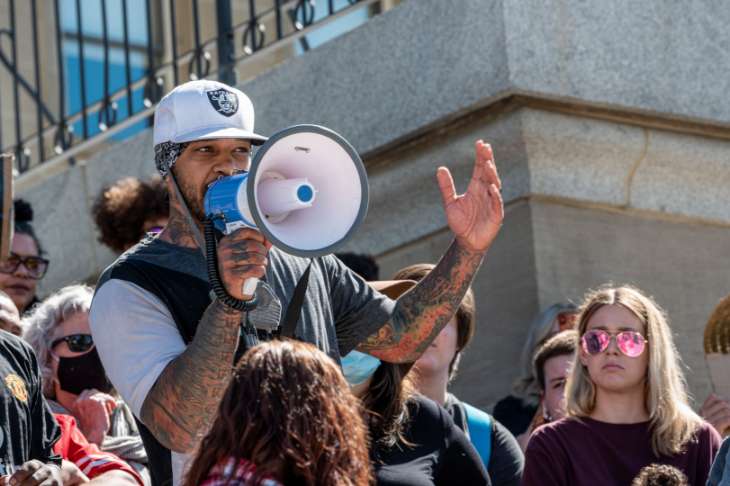
Know objections in advance, and know how to postpone answering the ones that stray from the agenda
For more on this part, you can read the articles "How to prepare a steering committee?" and "Project steering committee: 5 tips to make everything go smoothly."
Handling a meeting that goes off the rails
In case of overly serious difficulties (aggressiveness, refusal to move forward, palpable tensions), don't hesitate! This is the moment to take a break, analyze the situation, and take corrective action with the sponsor.
How to handle negative people
Without going into an overly exhaustive list, we can name three recurring cases.
For people who tend to monopolize the floor or digress, don't hesitate to refocus the discussion on the meeting's objectives and emphasize that you've heard them and will address these points later. If that's not enough, use one of that person's remarks to give the floor to another member — preferably an ally who will naturally bring the meeting back on track.
For aggressive or systematically opposing personalities, calm the debate by refocusing on factual, objective elements, and invite the most reluctant to propose solutions to their own objections, to restore a constructive approach.
If the only goal is to destabilize the facilitator or the meeting, and they don't want to play the game by being a source of proposals, calmly and kindly remind them that whoever isn't part of the solution is therefore part of the problem.
For more reserved people who could give rise to unspoken issues, encourage them to speak up by emphasizing the value of their input and their skills.
Having allies

The facilitator and/or project manager won't always be in the ideal position to handle every objection or manage every attitude and behavior that doesn't serve the project's interest. For that, they must be able to rely on other members who are more legitimate in certain situations to take a stand and defuse things.
In addition, the project manager should have around them, within the project team, drivers who share the same vision and who will help move the project forward. The more support the project manager has from influential people in the company, the more valuable levers they'll have to advance the project without burning bridges with operational teams or business units.
If you're not part of the solution, you're part of the problem

And to find solutions, there first have to be problems — and you have to know how to identify them well.
If there's one area of expertise where the project manager should excel, it's identifying and resolving risks and problems. Risks are problems in the making, and anticipating the key problems well is the project manager's number-one skill (i.e. "flushing out the wolves").
There's nothing extraordinary or "cutting edge" about the idea of combining "project manager" with "risk management" and "problem solving."
The secret here is to adopt the most pragmatic approach possible, going straight to the essentials. The more the project manager sets aside what's superfluous in the project, the more they'll limit the risk factors and the problems encountered. Put every new aspect/change/feature added to your project through a risk/reward reflection.
And if the project manager can't have control over the risk/problem, then they must be proactive in seeking a solution to cancel out the consequence should the problem materialize, and lean on their sponsor or the committee for the tough decisions.
What does this have to do with running the steering committee? Because all problems tend to crystallize during these meetings, and the project manager's role is not only to surface the identified problems, but to be a source of proposals and to have options and strategies to submit to the sponsor or the steering committee to resolve them.
Best practices and the right attitude to run your steering committee

Energy
Have you ever been in a meeting that feels like it will never end? Where you find it slow… too slow… and you're already thinking about everything you could have moved forward if only you weren't stuck in this meeting where the facilitator lulls you to sleep with never-ending sentences — when halfway through the sentence you'd already understood where they were going? It's not always that they like the sound of their own voice; maybe it's that they don't communicate effectively and at the right level.
The project manager 2.0 must not be that person. They know they're bringing together the company's senior managers in the committee — people who are, all in all, sharp enough and busy enough that everyone appreciates getting straight to the point, with energy and clear, concise sentences. Preparing the steering committee will help the project manager achieve the efficiency that's expected and appreciated.
The energy level of the steering committee will depend on the energy set by the facilitator. As we now know, emotions and attitudes are contagious, and committee members will mirror the facilitator's energy. And if they're flat, the meeting's dynamic will be flat and heavy — even dull and inattentive. Such leadership isn't always easy, but it's learned or acquired with a bit of experience and by adopting the following tips.
Among these tips, note that the content, topics and collaborative moments should flow together smoothly and logically. And don't hesitate to be original — for example by opting for collaborative presentation tools, or by changing the setting, rather than the same old meeting room.
Optimal time management

Who is the right time-keeper?
Ideally it's someone other than the project manager, which lets them focus on facilitating the steering committee and free themselves from that mental load to concentrate on the substance of the exchanges and on how the meeting unfolds.
This other person should be an involved driver of the project who fully grasps the importance of getting through all the essential agenda items — an ally of the project manager who has influence or the goodwill of the committee members.
It will also make the project manager's facilitation easier if they're not the only one who has to interrupt or refocus participants.
How to enforce the allotted time?
In addition to the points above about derailments and monopolizing the floor, it's advisable to build a margin into the planned time during preparation to absorb some overruns. Let's be clear: a steering committee is like a project — however well prepared, there can always be surprises, so you might as well plan for them. And if all the points are covered before the end of the meeting, no one will feel bad about having been efficient — quite the opposite.
Note the key moments and actions, as well as the decisions

Define who takes notes and in what format
The facilitator can hardly run the committee and take notes at the same time. The ideal is to find someone rigorous and supportive of the project to be sure the information is captured. Don't hesitate to give them a note-taking template that matches the meeting-minutes format used in your company.
Why take notes?
It's important to take notes to show that everyone's opinion and participation has been taken into account, and also to formalize the decisions made, the next decisions to make, as well as the next steps and who must carry them out for the project's upcoming milestones.
It sends a message of rigor and efficiency and lets the project manager roll out the next steps properly, because the minutes also act as a moral contract to rely on.
Improving the way you run a steering committee is an ongoing practice. Next step: decode the decision-making process of this body to be clear on How to decide in a steering committee?
What if you took back control of your project portfolio?
Book a demo and discover the tool in 30 minutes.